First, use your existing ventilation to remove shower moisture from the room. A dehumidifier is no substitute for bringing in fresh air and extracting stale air. If humidity remains persistently high after you have addressed the causes, choose a model based on room temperature, space, noise and water drainage. Before using a dehumidifier in the bathroom, always check that the specific model’s instructions and the available space allow for it.
Who is this relevant to?
People dealing with persistent shower moisture
You ventilate after showering, but the moisture keeps coming back. First, identify the source of the moisture and assess your ventilation. Then decide whether additional dehumidification could help. Milieu Centraal and GGD Leefomgeving offer advice on ventilation and reducing moisture. Consumentenbond lists a dehumidifier as a possible extra measure when humidity remains persistently high after the causes have been addressed.
People with limited space for safe placement
In a small bathroom or flat, check before buying where the appliance, plug and water collection container can fit safely and practically. Check the instructions for the specific model and intended location.
People looking to keep noise or running costs down
If the appliance is in the same room where you live or sleep, noise at each setting and actual electricity use may be important considerations. Duux publishes noise levels for different settings on the Bora 12L. Running costs also depend on how long you use it and which setting you choose.
What should you look for?
Address ventilation and moisture
Choose this if: an extractor fan or window removes shower moisture and the room dries out afterwards. Milieu Centraal recommends increasing ventilation during activities such as showering and keeping normal ventilation running.
The trade-off: you won’t need another appliance, but recurring moisture means you should check the source and make sure your ventilation is working properly.
Add a compressor dehumidifier
Choose this if: moisture continues to linger despite addressing its source and ventilating a normally heated room. Compare capacity at the stated temperature and humidity conditions, as well as noise, controls and water drainage.
The trade-off: the appliance removes moisture from indoor air, but it doesn’t extract that air outdoors. Performance may also decrease in colder rooms.
Choose desiccant technology for a genuinely cool room
Choose this if: the intended location stays cool for long periods and the model is suitable for that temperature according to its specifications. Qlima markets the DD 808 for colder rooms.
The trade-off: being suitable for a cool room doesn’t, in itself, tell you anything about running costs or safe placement in a bathroom.
| Point to consider |
What to look for when buying |
Who is this most important to? |
| Persistent shower moisture |
Check ventilation and the source of the moisture first. If the problem persists, compare daily capacity alongside the corresponding temperature and relative humidity, as well as the humidistat. |
If moisture keeps coming back after you ventilate, you’ll want to know whether an additional appliance could help and under what conditions it works. For around 36% of consumers, persistent moisture is the main priority when buying. |
| Safe placement and water collection |
Check the instructions for the model and the specific location. Also compare the dimensions, tank and any option for permanent drainage. |
In a small bathroom, you’ll want a practical spot for the appliance, its connection and water collection. Around 29% of consumers put safe placement and water collection first. |
| Noise in a living room or bedroom |
Compare noise levels for each operating mode and check what difference any night mode makes. |
If the room is also where you live or sleep, you’ll want to know in advance how noticeable the appliance may be at the setting you need. Around 21% of consumers prioritise noise in their living space. |
| Use in a cool room |
Note the temperature where you intend to use it, then compare the operating range and measured energy use under similar conditions. |
If you’re using it in a cool spot, you’ll want a model that suits the temperature and a way to weigh up its running costs. Around 14% of consumers are primarily concerned about performance and electricity use in a cool location. |
Common buying mistakes
-
Thinking a dehumidifier can replace ventilation
A dehumidifier collects moisture indoors, while ventilation removes moist air from the room. So the appliance doesn’t replace the extraction of indoor air.
First, check the extractor fan, air supply and any possible sources of moisture. If mould keeps returning or you suspect a structural problem, ask your landlord or a professional for advice if needed.
Without properly extracting moist air, the moisture problem may persist while the appliance uses electricity.
-
Confusing daily capacity with tank capacity
The stated amount per day is not the same as the tank’s capacity. How much moisture an appliance removes from the air depends partly on temperature and humidity.
Compare capacity alongside the test conditions, tank capacity and independent measurements taken under conditions that match your room.
If you choose the wrong model, you may find yourself emptying the tank more often than expected.
-
Assuming a bathroom mention means it can go anywhere
A protection rating or general product description doesn’t automatically mean an appliance is suitable for every spot in the bathroom or for every electrical connection.
Check the instructions for the specific model and location. Don’t use a model in the bathroom if its instructions don’t allow it.
-
Choosing based only on wattage or a quiet night mode
Actual energy use and noise can vary depending on the operating mode and how long you use the appliance. Duux lists 35 dB on the lowest setting and 46 dB on the highest setting for the Bora 12L. According to the product information, night mode dims the display.
Compare noise and energy use under relevant operating conditions, and check exactly what night mode changes.
If you use the appliance for long periods, electricity use and the noise it makes at the required setting may affect your day-to-day experience.
Brands to consider
Qlima
Qlima offers, among other products, a compressor dehumidifier and a desiccant model that the brand recommends for colder rooms.
- According to Qlima, the D 612 has a humidistat, a 1,8 l tank and the option of permanent drainage. The manufacturer also lists IP24 protection for this model.
- Qlima recommends the DD 808 for colder rooms. This doesn’t confirm that it’s suitable for every bathroom location or cheaper to run.
Duux
The Bora 12L is a compressor dehumidifier with a humidistat, tank and option for continuous drainage.
- Duux lists a 1,7 l tank. The noise level is 35 dB on the lowest setting and 46 dB on the highest.
- According to Duux, performance decreases in colder rooms. The product information doesn’t confirm that the appliance can be placed safely right beside the shower.
De'Longhi
The Tasciugo AriaDry DEX210SF is a compressor dehumidifier with a laundry function and continuous drainage.
- For this model, De'Longhi lists a capacity of 10 l/24 u at 30 °C and 80% relative humidity, an input power of 250 W and a noise level of 36 dB(A).
- These are model specifications, not an independent measurement of the moisture peak after a shower. They don’t confirm that the appliance can be placed in a bathroom.
Products for additional dehumidification
These Joybuy products are compressor dehumidifiers for situations where shower moisture continues to linger despite ventilation. Compare the stated water collection and controls with the space available. Product information about a room size or function doesn’t automatically confirm that a model can be used in a bathroom.
 Image unavailable
CONOPU 16L dehumidifier, 2,5 l tank
The listed adjustable humidity control and continuous drainage may be useful if you want to keep managing moisture without having to empty the tank by hand each time.
The product information lists a capacity of up to 16 l per day, a timer and a sleep mode. The capacity is a product claim, not an independent measurement. The tank holds 2,5 l.
View at Joybuy
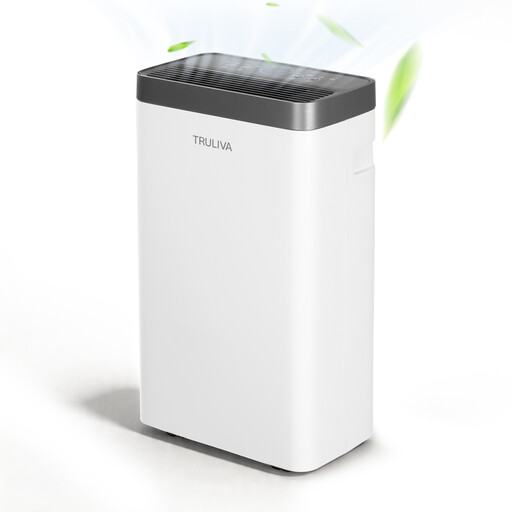 Image unavailable
TRULIVA AP10-2012EE, for around 32 m²
Automatic humidity control and the option for continuous drainage may suit a room where moisture keeps returning.
The product information lists a capacity of up to 16 l per day and automatic defrosting. Place the appliance on a flat, stable surface, leave at least 10 inch of clear space around it and don’t put it somewhere it could be splashed with water.
View at Joybuy
 Image unavailable
ELECCI 12L/D dehumidifier, 3,8 l tank
The listed humidity control and continuous drainage are worth considering if you don’t want to keep emptying the collected water by hand.
The product information lists a capacity of up to 12 l per day under specified conditions, a timer and several settings. Keep the appliance upright. After moving or tilting it, leave it to stand for 2 hours before use, and leave at least 10 inch of clear space around it.
View at Joybuy
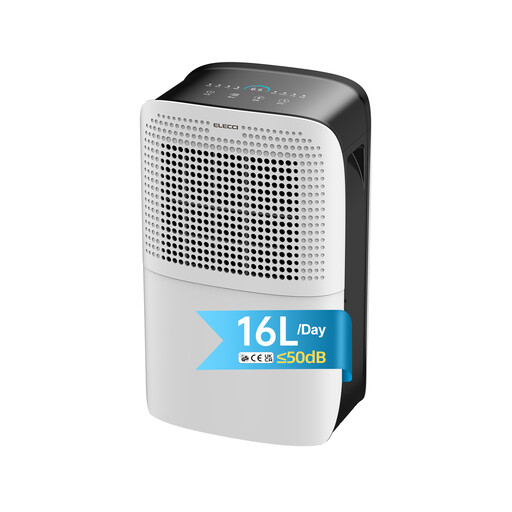 Image unavailable
ELECCI 16L/D dehumidifier, 3,1 l tank
The product information lists adjustable humidity control and a hose for continuous drainage, which may be useful if you want to empty the tank less often.
The stated capacity is up to 16 l per day under specified conditions. Leave at least 25 cm of clear space around it, keep the appliance upright on the floor and make sure it can’t be splashed with water.
View at Joybuy
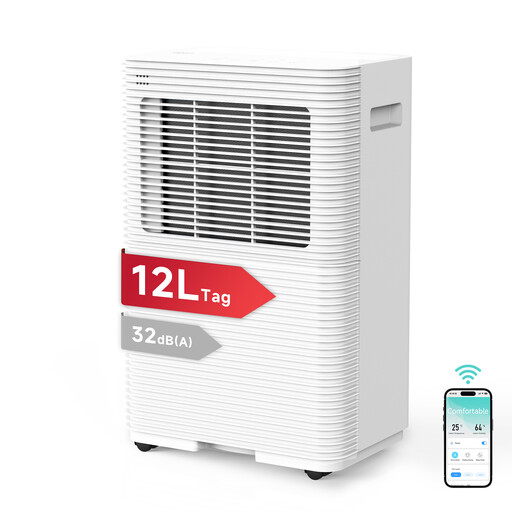 Image unavailable
VINO 12L Smart dehumidifier, Wi-Fi control
Automatic humidity control and a timer may be useful if you want the appliance to adjust its operation at a set time.
The product information lists a 1,8 l tank, a sleep mode and use in rooms up to 24 m². Continuous drainage requires a hose, which isn’t included. Leave at least 20 cm of clear space around it.
View at Joybuy
Frequently asked questions
When should you wait before buying a dehumidifier after showering?
If an open window or extractor fan can remove shower moisture and the room dries out afterwards, start by using that ventilation. Consumentenbond lists a dehumidifier as a possible extra measure if humidity remains above 65% for a prolonged period after you have addressed the causes. A brief spike immediately after showering is not the same thing.
How do you maintain and use a dehumidifier?
Empty the tank or drain the water according to the model’s instructions, and maintain the filters as directed. For its dehumidifiers, Qlima recommends leaving the appliance upright for at least 2 hours after moving it before plugging it in. If it has been transported on its side or upside down, the brand recommends waiting at least 24 hours. This is the manufacturer’s advice, not a universal legal requirement.
What should you know about electricity costs, the cooling-off period and the guarantee?
Electricity costs depend on actual energy use, the setting and how long you use the appliance. Work them out using those figures and your electricity tariff. According to ACM ConsuWijzer, a standard online consumer purchase usually comes with a 14-day cooling-off period after delivery, subject to legal exceptions. The seller is also responsible for the statutory guarantee if a product doesn’t do what you could reasonably expect under normal use.
What product rules apply to electrical appliances sold in the Netherlands?
According to information from the Dutch government, sellers must ensure that electrical appliances meet the relevant European rules. Where required, this includes CE marking and an EU declaration of conformity. On its own, this doesn’t prove that a specific model can be placed anywhere in a bathroom.


