Which buying considerations matter?
First, investigate the source of the damp and check your ventilation. Then compare the technology and practical features that suit your room and how you’ll use the appliance.
| What to consider |
What to look for when buying |
Who is this important for? |
| Recurring condensation |
Look into damp patches and ventilation, and monitor humidity over a longer period before comparing capacity. |
I want to find out whether condensation is caused by poor ventilation or another source of damp before choosing an appliance. Around 36% of consumers say recurring condensation is their main reason for buying. |
| Drying washing indoors |
Check for a laundry or continuous mode, and whether the tank or drainage option suits how long you’ll use the appliance for. |
If I dry washing indoors, I want to reduce damp around the clothes airer without having to empty the tank all the time. Around 29% of consumers say drying washing indoors is their main reason for buying. |
| Noise and positioning |
Compare the dimensions, clearance around the air vents, noise levels on each setting and how easy the tank is to remove. |
In a small flat, the appliance needs a spot where air can circulate freely and the noise is acceptable. Around 21% of consumers mainly consider quiet operation and positioning. |
| Cold room |
Measure the temperature of the problem room, then compare the stated operating range and electricity use of the different technologies. |
I mainly want to tackle a cold, damp room, so I need to know which technology is suitable for that temperature. Around 14% of consumers say a cold room is their main reason for buying. |
Joybuy products for damp indoor spaces
These Joybuy products are dehumidifiers for indoor spaces. Compare their stated capacity, tank and any drainage option with the temperature, available space and usage time in your flat. Also check the product information for the specific model: according to Business.gov.nl, manufacturers must apply a CE marking and draw up an EU declaration of conformity for electrical appliances that meet the requirements.
 No image available
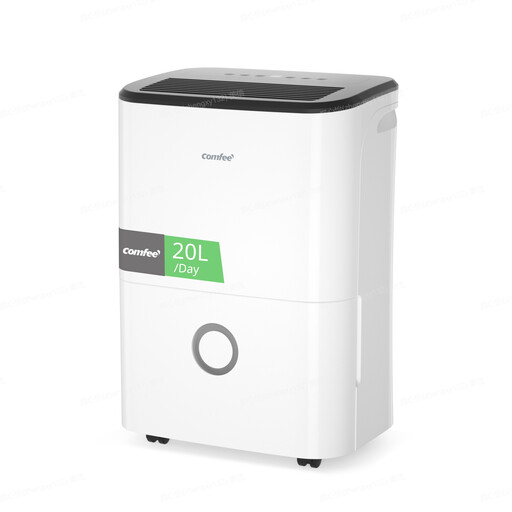
Comfee' MDDF-20DEN7 dehumidifier — 20 L/day, 3 L tank
Compare the stated capacity with the conditions in your room; the daily capacity isn’t a fixed output for every flat.
The product name lists 20 L/day, a removable 3 L tank, continuous drainage, a 24-hour timer and a laundry drying mode. The drain hose isn’t included, according to the product information.
View at Joybuy
 No image available
CONOPU 16L dehumidifier — 2.5 L tank
This is an option to compare if you’re looking for a dehumidifier to use while drying washing indoors. Make sure the tank and any drainage option suit how long the appliance needs to run.
The product name lists a capacity of 16 L per day, a 2.5 L tank, continuous drainage, a 24-hour timer and a laundry drying mode.
View at Joybuy
 No image available
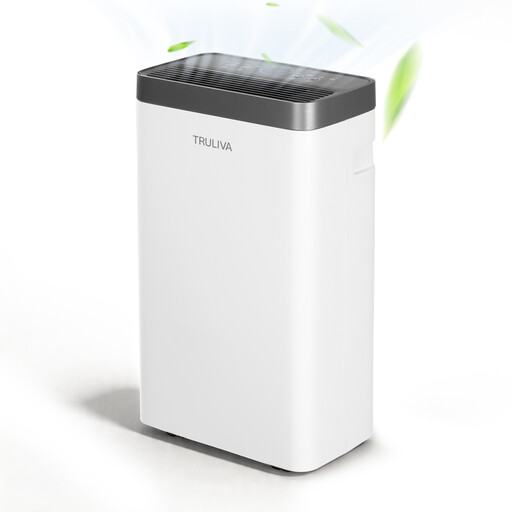
TRULIVA AP10-2012EE dehumidifier — around 32 m², 1.35 L tank
The product name lists flats and apartments as suitable uses. Compare the stated room size with the space you want to dehumidify.
The product name lists a 1.35 L tank, a 24-hour timer, automatic defrosting, a laundry drying mode and continuous drainage. Without drainage, you’ll need to empty the tank when it’s full.
View at Joybuy
 No image available
ELECCI 12L/D dehumidifier — 3.8 L tank
Compare the stated room size and water tank with the room and usage time that matter to you.
The product name lists a capacity of 12 L per day, a 3.8 L tank, automatic defrosting, a 24-hour timer, continuous drainage and a laundry drying mode.
View at Joybuy
 No image available
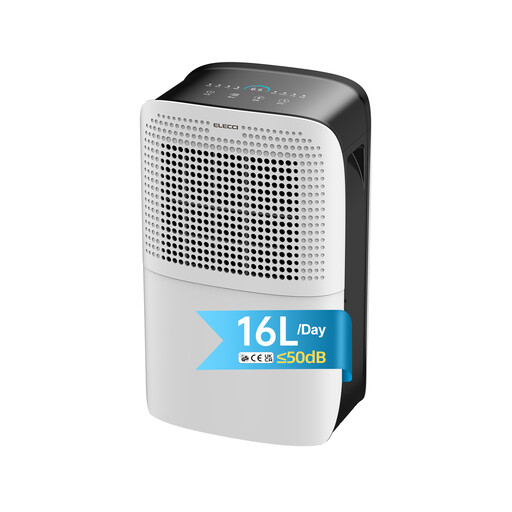
ELECCI 16L/D dehumidifier — 3.1 L tank, 4 settings
Compare the stated capacity and room size with the conditions in your room; these details alone don’t determine the actual output.
The product name lists a 3.1 L tank, four settings, continuous drainage, automatic defrosting and a 24-hour timer.
View at Joybuy
Frequently asked questions
When is a dehumidifier more useful than ventilation alone?
A dehumidifier may help if humidity consistently stays above 65% after you’ve addressed the causes, according to the Dutch Consumers' Association. Keep ventilating: a dehumidifier doesn’t remove polluted indoor air.
How can I use the appliance without blocking the airflow?
Don’t put it in a corner or behind furniture, and follow the clearance guidance in the model’s manual. The Dutch Consumers' Association recommends cleaning the dust filter regularly. Close the windows and doors in the room while you’re specifically dehumidifying it, but don’t turn off the home’s essential ventilation.
Do I need a dedicated laundry drying mode?
No, a dedicated mode isn’t always necessary: according to the Dutch Consumers' Association, an appliance can still help without one if it’s set up properly. Check whether a continuous mode suits your needs, and whether you need a timer or drainage.
What running and maintenance costs should I consider?
Allow for electricity use while the appliance is running, any filter replacements, and emptying or draining the water. Duux recommends replacing the Bora’s carbon filter after 1 to 1.5 years. In the Netherlands, the retailer is responsible for the statutory guarantee if a product is faulty; a manufacturer’s guarantee period doesn’t automatically limit that right, according to the Netherlands Authority for Consumers and Markets' ConsuWijzer.
What rules apply when buying and dealing with damp in a rented flat?
Electrical appliances sold in the Netherlands must meet the applicable product safety requirements. Business.gov.nl refers to the CE marking and an EU declaration of conformity from the manufacturer. When you buy online from a business, you’ll generally have 14 days to change your mind, according to the Dutch Government. Report a leak, mould or other suspected poor maintenance in a rented home to your landlord first.


