What should you look for?
First, check what’s causing the condensation and review the ventilation. If you still need an appliance, the temperature in your home office will help you decide which type to compare.
Refrigerant or compressor dehumidifier
Choose this type if: your home office is usually heated and humidity remains high after you’ve checked for the cause.
Trade-off: according to the Consumentenbond, this type works best above 15 °C; the stated litres per day do not guarantee the same output in a cooler room.
Desiccant dehumidifier
Choose this type if: your home office is often cold or unheated and you still need to dehumidify after addressing the cause.
Trade-off: the Consumentenbond says this type is suitable for cold rooms, but also notes that it uses more electricity than refrigerant dehumidifiers.
Peltier dehumidifier
Choose this type if: you want to treat a very small, enclosed space such as a cupboard.
Trade-off: the Consumentenbond describes its capacity as limited, so it may not be suitable for a whole home office.
| What to consider |
What to look for when buying |
Who is this most relevant to? |
| Cause of condensation |
Check for sources of moisture, review ventilation and inspect the windows. Measure humidity over several days. The Consumentenbond says a persistently high reading above 65% after addressing the causes is a situation in which a dehumidifier may help; this is not a general threshold for buying one. |
I want to find out what’s causing the condensation and whether the humidity persists before buying, so I can address the cause first; this is the main priority for around 33% of consumers. |
| Noise while working |
Check the stated noise level and the setting at which it was measured. Where possible, compare independent test results and consider the noise during calls. |
I don’t want a distracting appliance next to my desk during calls; for around 27% of consumers, a quiet working environment is a priority. |
| Home office temperature |
Measure the room’s usual temperature and check the technology and stated operating temperature range of the exact model. |
If my home office is often cold, I want a type that works at that temperature; this is the deciding factor for around 20% of consumers. |
| Electricity, emptying and maintenance |
Compare power consumption and capacity under the same test conditions, tank capacity and the option of continuous drainage. Check the maintenance instructions too. |
If I use the appliance regularly, I want to know how often I’ll need to empty the tank and how much electricity it uses; this practical consideration is a priority for around 20% of consumers. |
Dehumidifiers for your home office
These Joybuy dehumidifiers are for anyone considering an appliance for their home office after checking for sources of moisture and reviewing ventilation. Compare the stated capacity and humidity controls with noise levels, drainage options and the room temperature.
 No image available
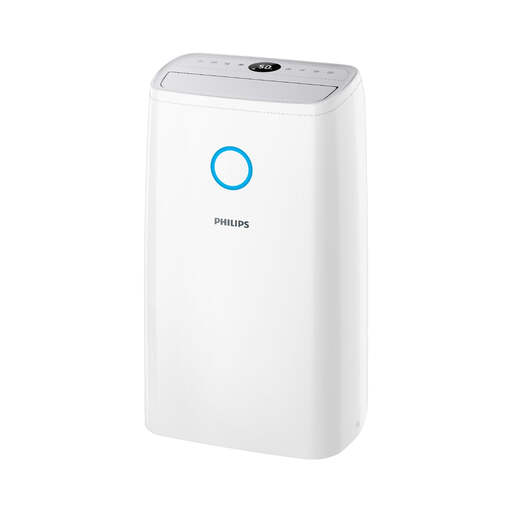
PHILIPS 3000 Series DE3306/11 dehumidifier
Could be a good option if you want to monitor and control humidity in your home office.
The product description lists a 4 l tank, three fan speeds and optional continuous drainage. It also mentions automatic humidity control and a humidity display.
The stated capacity is 34.3 l per day; this isn’t guaranteed output in your room.
Joybuy
 No image available
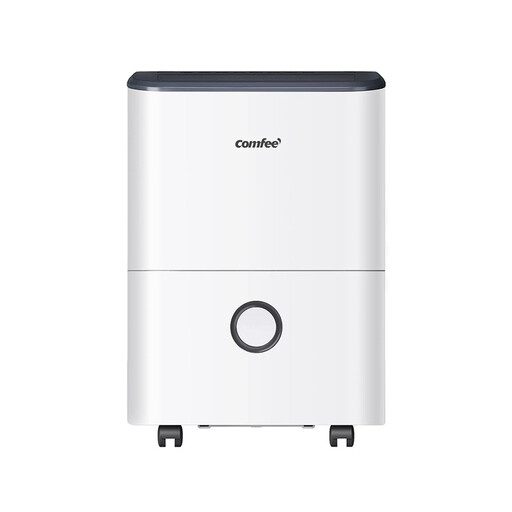
Comfee MDDF-20DEN7 dehumidifier, 290 W, 20 l/24 hours
Could be a good option if you’re looking for a dehumidifier with adjustable humidity settings.
The product title states 290 W and a capacity of 20 l/24 hours. The product description mentions adjustable humidity settings.
Capacity alone doesn’t tell you how much moisture the appliance will remove in the conditions in your home office.
Joybuy
 No image available
CONOPU 16L dehumidifier
Could be a good option if you want humidity control and the option of continuous drainage.
The product description states a capacity of up to 16 l per day, automatic humidity control, adjustable humidity levels from 40–70%, a 2.5 l tank and continuous drainage. A timer and washable filter are also mentioned.
Check that you can position the drain hose where you plan to use the appliance.
Joybuy
 No image available
TRULIVA AP10-2012EE dehumidifier
Could be a good option if you’re considering a dehumidifier with automatic controls and continuous drainage.
The product description states a capacity of up to 16 l per day, a 1.35 l tank, automatic control based on the set humidity level and drainage via a hose.
According to the product description, frost may form at an ambient temperature below 15 °C, and the compressor stops while the appliance defrosts.
Joybuy
 No image available
ELECCI 12L/D dehumidifier
Could be a good option if you’re looking for a timer, automatic humidity control and the option of continuous drainage.
The product description states a capacity of up to 16 l per day, continuous drainage via a hose, a timer and automatic defrosting.
If your home office is often cold, check the stated temperature requirements for the exact model.
Joybuy
Frequently asked questions
When shouldn’t you buy a dehumidifier straight away if your windows are misted up?
First, investigate ventilation and sources of moisture if you haven’t already addressed them, or if you suspect a leak or an insulation problem. The Consumentenbond says a persistently high humidity level above 65% after addressing the causes is a situation in which a dehumidifier may help; it isn’t a general requirement to buy one.
Can you close trickle vents while the dehumidifier is running?
No. Don’t treat dehumidifying as a replacement for ventilation. GGD Living Environment recommends continuous ventilation; advice to close the windows and doors of the room being treated for more efficient appliance use doesn’t remove the need for fresh air.
Where should you put a dehumidifier, and what maintenance does it need?
Don’t put the appliance in a corner or behind furniture, and leave enough room for airflow. The Consumentenbond recommends cleaning the dust filter about once every two months, or more often with intensive use. You should also follow the instructions for your chosen model.
How do you calculate the electricity costs of a dehumidifier?
Multiply the actual electricity used in kWh by your own rate per kWh. The stated wattage or maximum capacity in litres per day isn’t enough on its own: running time and conditions determine the final consumption.
What warranty and cooling-off period apply to an online purchase in the Netherlands?
If a product is faulty, the seller is your point of contact for your statutory consumer rights; according to the Dutch Government, the Netherlands has no fixed statutory two-year warranty period. For a standard online purchase of a product, you’ll generally have a statutory 14-day cooling-off period after delivery, subject to applicable exceptions. ACM ConsuWijzer explains the cooling-off period, which is separate from your rights if a product is faulty.


