
Vandaag of morgen in huis

Kwaliteit gegarandeerd

Welkomstaanbiedingen ontgrendelen: GRATIS bezorging | Tot 80% korting | Gratis 30 dagen JoyPlus-proefperiode
Download de app
A knocked-over glass of drink, muddy paw prints or stains on the sofa: a standard vacuum cleaner removes visible dirt, but not always the moisture and grime that have penetrated deeper into textiles. A carpet cleaner sprays water or cleaning solution into the fibres and then sucks it back up. This allows you to target carpets, upholstery, mattresses, car seats and fabric furniture.
However, not every spot cleaner is suitable for every household. Before you place your order, pay particular attention to three common pitfalls.
High wattage may sound appealing, but it does not necessarily indicate the actual cleaning performance. The design of the suction nozzle, airflow, hose and water drainage also affects the result. What is more, a stated figure such as 13 kPa, 15,000 Pa or 18,000 Pa is not always directly comparable between brands.
Use suction power as just one selection criterion. Also check whether the machine has a suitable brush, a separate dirty-water tank and clear maintenance instructions.
A steam cleaner for carpets uses hot steam to loosen dirt from surfaces. A carpet and upholstery cleaner with a spray-and-suction function instead removes water and loosened dirt. Some appliances combine both functions, but that does not automatically make them suitable for every fabric.
Always check the textile’s care label. Do not use steam on materials that the manufacturer says cannot withstand heat or moisture, such as silk, velvet or fabrics labelled “dry clean only”.
A small reservoir can be convenient for a portable carpet cleaner, but it will need refilling and emptying more often. A carpet cleaner with a dual water tank keeps clean and dirty water separate. This is practical when cleaning larger areas and makes it easier to dispose of dirty water straight away.
Using too much water is another common mistake. Soaked carpets or wet upholstery take a long time to dry and may become damaged. Use controlled amounts of water and make extra suction passes without spraying again.
For stains on a sofa or car seat, effective water drainage is more important than a high power rating alone. Look at:
A sofa cleaner with a narrow brush is designed for targeted cleaning of small areas. For a rug or carpeted stairs, a wider suction nozzle is more efficient.
Hot water can help loosen dirt, while steam is mainly suitable for surfaces that can withstand the heat. Products with several settings offer more choice, such as cold water, hot water and steam. According to the brands’ own product information, these settings can be used for different types of dirt; however, the result depends on the fabric, stain, cleaning solution and treatment time.
Also check the heating time, water temperature and safety features. A hot steam head can cause burns. Keep children and pets away during use and follow the instructions.
For occasional stains, a tank of around one litre is often sufficient. For larger cleaning jobs, a capacity of approximately 1.4 to 1.7 litres is more practical. Check whether both tanks can be removed easily.
Noise levels are usually stated in decibels. In practice, a 75 dB appliance may sound different from an 82 dB model, depending on the room and the flooring. After use, you should empty the dirty-water tank, flush the hoses and allow the brushes to dry. This maintenance prevents unpleasant smells and helps keep the machine in good working order.
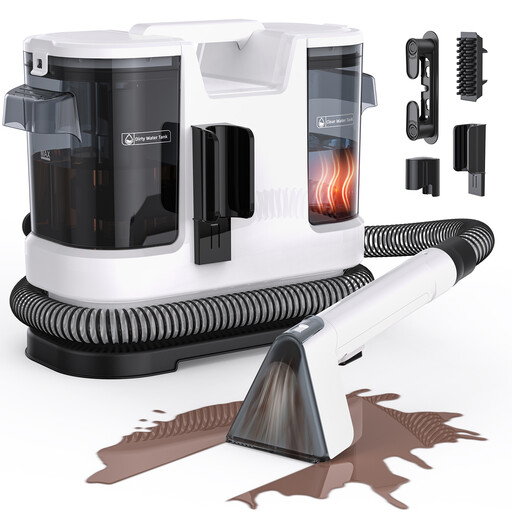
Why it suits this profile: This model is designed for anyone looking for one appliance for carpets, sofas and car interiors. Its stated 15,000 Pa suction power and 1400 W output provide clear points of comparison for regular spot cleaning.
The product information mentions a large tank and a long mains cable. Before buying, however, check the exact tank capacity and accessories in the current product specifications.
1400 W output, stated 15,000 Pa suction power and suitability for several textile surfaces.
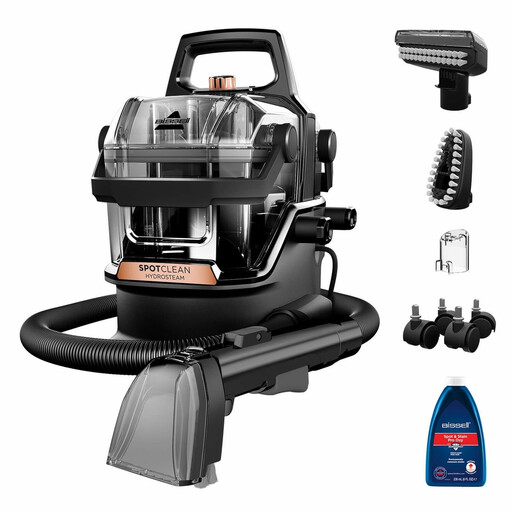
Why it suits this profile: The combination of SteamWash, Wash and Steam Only lets you choose between spray extraction and steam. Wheels and a HydroRinse accessory are practical for anyone who regularly cleans sofas, carpets or car interiors.
The three modes make it clear that steam is not the only cleaning method. Use the correct setting and avoid over-wetting carpets or upholstery.
1.8-litre reservoir, three cleaning modes, wheels and a 4.5-metre cable.
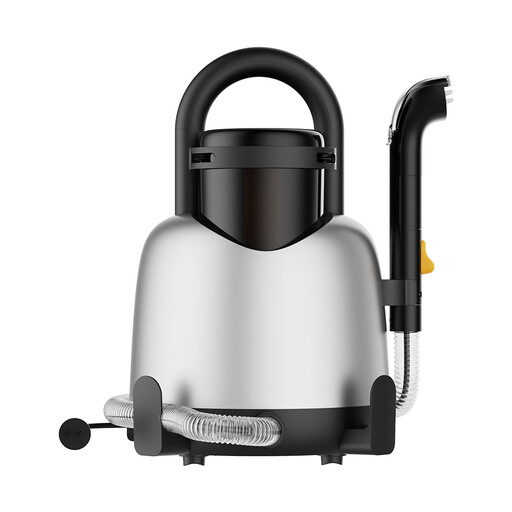
Why it suits this profile: According to the product specifications, this model has three water settings, dual tanks and five brush accessories. This makes it suitable for households looking to treat different types of upholstery, carpets and car interiors.
Separate clean- and dirty-water tanks help prevent the water streams from mixing. However, the selected setting must suit the material and the manufacturer’s instructions.
Tank capacity of 1.7 litres for clean water and 1.4 litres for dirty water, plus five brush attachments.
We have put together a complete, up-to-date list of products that fully meet these strict selection criteria and the applicable European safety regulations.
An appliance with steam requires extra care around heat. Do not touch the steam head during or immediately after use, and unplug the appliance before filling, emptying or carrying out maintenance.
Hot water can help loosen grease and dried-on dirt, but it is not suitable for every fabric. Check the care label and the instructions. For delicate upholstery, a cold-water setting may be the safer choice.
This depends on usage, household size and pets. Remove fresh stains as soon as possible and plan a thorough clean when the carpet becomes visibly dirty or experiences heavy foot traffic. Cleaning with water too often can put strain on the fibres and underlay.
In addition to the purchase price, cleaning solution, water and electricity are the main costs. A larger reservoir can save time during a major cleaning session, while a compact portable carpet cleaner is often more practical for isolated stains. So do not compare only the price of the appliance; also consider tank capacity, included accessories and maintenance.
