
Vandaag of morgen in huis

Kwaliteit gegarandeerd

Welkomstaanbiedingen ontgrendelen: GRATIS bezorging | Tot 80% korting | Gratis 30 dagen JoyPlus-proefperiode
Download de app
A carpet cleaner can be useful for tackling stains on carpets, sofas, stairs and car seats. However, not every model is right for every job. Some machines are designed for small spills, while others need plenty of water, cleaning solution and storage space.
Look out for these three common pitfalls:
Spot cleaners often show a figure in Pa, such as 13,000, 15,000 or 18,000 Pa. This gives you an indication of the pressure at which air is moved, but it doesn’t tell you exactly how well the machine will clean. For example, a narrow nozzle may fit a stain more closely, while a wide brush can tackle larger areas more quickly.
If you have pets, a suitable brush and good reach around seams are important. Removing pet hair and stains often means vacuuming up loose dirt first, then wet cleaning. A carpet cleaner isn’t a substitute for a regular vacuum cleaner if there’s a lot of loose hair or crumbs.
Separate clean and dirty water tanks stop used water from being put back onto the surface. Check the capacity of both tanks, not just the largest capacity listed.
Compact models often have a clean water tank of around 1 to 1.6 litres. This is handy for a sofa, a few chairs or spot cleaning. For several rooms, a larger floor cleaner with a bigger collection tank may be more convenient. Empty and rinse the dirty water tank after each use, and let all the parts dry completely to help prevent odours.
According to the product description, a heated cleaning function may be designed for tackling stubborn stains. That doesn’t mean every fabric is suitable for heat. A steam cleaner for carpets may also work differently from a spray-extraction cleaner: steam loosens dirt, while a carpet cleaner generally sucks the water and dirt back up.
Only use the recommended amount of cleaning solution. Too much foam can affect suction. Check the noise level too. A model rated at 72 to 80 dB may be clearly audible at home, even if the manufacturer describes it as quiet.
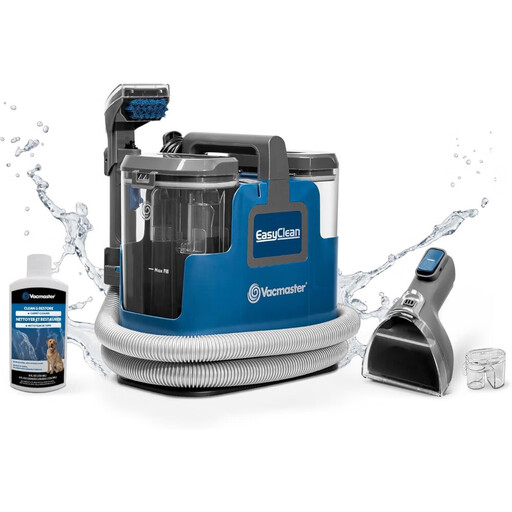
Why it suits this type of user: This compact model is designed for spot cleaning carpets, sofas, stairs and car seats. Its integrated 1.8-metre hose is handy for smaller household cleaning jobs.
The dual tank keeps clean and dirty water separate. Its compact size also makes it easier to store.
500 W motor, 1.8-metre hose and a Spot & Pet cleaning solution included, according to the product description.
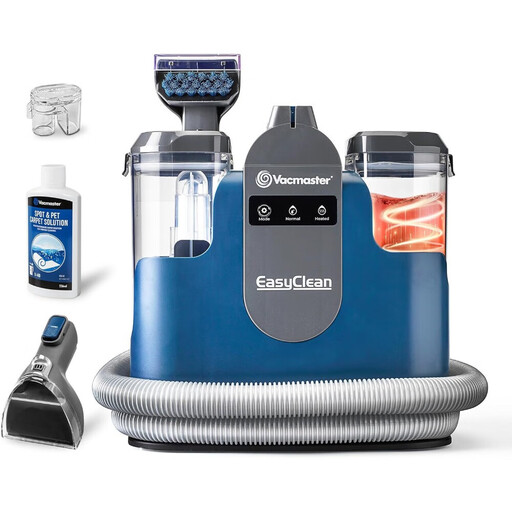
Why it suits this type of user: Ideal for households that regularly clean sofas, carpets, stairs and car seats, and want to choose between standard and heated cleaning.
The two cleaning modes mean you don’t have to use heat every time. The tanks can be removed for filling and emptying.
500 W power, a 1.6-litre clean water tank, a 0.95-litre dirty water tank and a 1.8-metre self-cleaning hose.
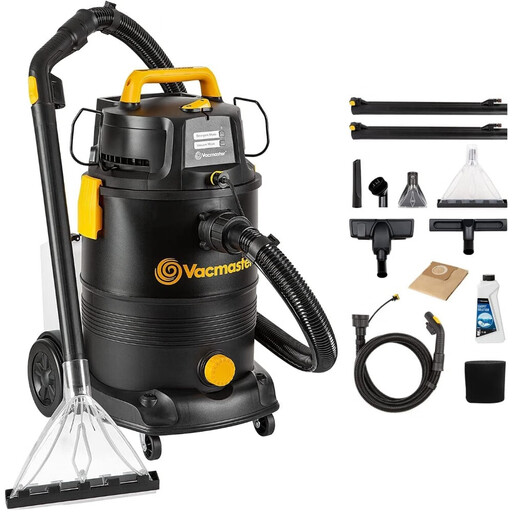
Why it suits this type of user: This larger floor cleaner is for anyone who wants to tackle carpets, hard floors, furniture and car interiors regularly.
The generous tank capacity means fewer interruptions during bigger cleaning jobs. Bear in mind, though, that it weighs 10.8 kg.
3-in-1 cleaning for wet, dry and carpet cleaning, with a 6-litre clean water tank, a 30-litre collection tank and multi-layer filtration, according to the product specifications.
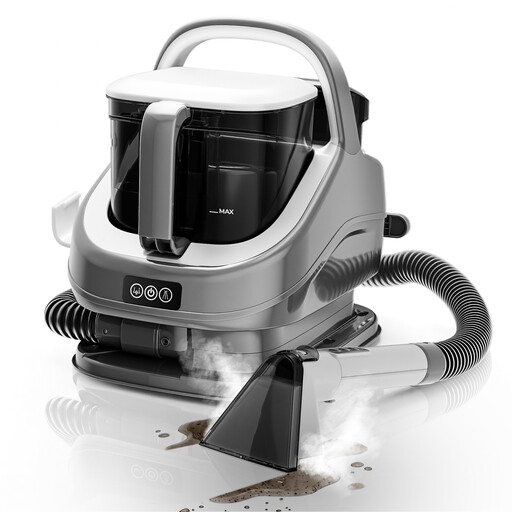
Why it suits this type of user: For anyone who wants to switch between cold water, warm water and steam for different types of dirt, such as on furniture or in the car.
The three modes let you control the heat setting. Before you start, check that the material is water- and heat-resistant.
1300 W power, 13 kPa suction power, two tanks with capacities of 1,400 and 1,200 ml, and a 1.1-metre hose.
We’ve put together a complete, up-to-date list of products that meet these strict selection criteria and current European safety regulations.
Only use an upholstery cleaner on materials that the care label says can be wet-cleaned. A floor cleaner for hard floors and a standard handheld vacuum have different uses from a spray-extraction cleaner.
Yes, if the upholstery is water-resistant and the care label allows wet cleaning. Use a small amount of liquid, test a hidden area first and let the sofa dry completely. A sofa cleaner with a narrow nozzle is handy for seams and armrests.
Empty and rinse the dirty water tank after every cleaning session. Also check the hose, brush and filters for hair and dirt. Let removable parts dry before putting the machine away. This helps prevent odours and reduced suction caused by blockages.
Running costs mainly come from electricity, water and cleaning solution. A 500 W machine uses less electricity per hour than a 1300 W model, but the total cost depends on how long you clean for. Check the recommended dosage too, and whether a suitable cleaning solution is included.
