
Vandaag of morgen in huis

Kwaliteit gegarandeerd

Welkomstaanbiedingen ontgrendelen: GRATIS bezorging | Tot 80% korting | Gratis 30 dagen JoyPlus-proefperiode
Download de app
A spilled drink, muddy shoes or a pet accident: an ordinary vacuum cleaner will pick up loose crumbs and hairs, but it won’t always remove dirt that has worked its way into fabric. A carpet cleaner sprays water mixed with cleaning solution into the fabric, then sucks the moisture back up. This type of appliance can also be used to clean upholstery, sofas and car interiors.
However, not every spot cleaner is right for every household. Watch out for these common pitfalls when buying.
A higher wattage doesn’t automatically mean an appliance is better suited to your needs. It’s more important to look at the combination of suction power, spray function, nozzle and tank capacity. A carpet cleaner with strong suction can remove moisture from upholstery more quickly, but a nozzle that’s too small can make cleaning a large rug a time-consuming job.
Check whether the manufacturer gives the suction power in kPa or Pa, and whether it’s clear that the figure refers to the suction function. Product claims such as deep-cleaning performance come from the brand’s product information; don’t treat them as a guaranteed result on every type of fabric.
With cheaper or poorly described appliances, details about the tanks are sometimes missing. A system with separate clean- and dirty-water tanks prevents used water from being put back onto the fabric. Check whether both tanks can be removed, too. This makes them easier to fill, empty and rinse.
Leaving too much water behind can increase drying time and cause a musty smell. Work in overlapping passes, then make extra suction passes without spraying more water. Empty the dirty-water tank after each use, rinse the hoses and nozzles, and leave all the parts to dry completely.
For a small mark on a sofa, a portable spot cleaner is often enough. If you regularly clean carpets, stairs, mattresses and car seats, look for models with a stated suction power of around 13 to 18 kPa. This is a technical indication, not a guarantee of a particular cleaning result.
Motor output varies considerably. A higher wattage can mean greater power consumption and more noise. So also check the noise level, power cord length and hose length.
A clean-water tank of around 1 to 1.7 litres is suitable for several small cleaning jobs. A larger tank means fewer interruptions, but it also makes the appliance heavier. For a car interior or a single sofa, a compact model is usually more convenient.
A spray-extraction cleaner should be able to dispense clean water and collect dirty water separately. Also check whether the appliance is suitable for water-resistant fabrics. Always test cleaning solution on an inconspicuous area first and follow the manufacturer’s instructions.
A narrow nozzle is handy for stains and car seats; a wider brush works faster on a rug or sofa. Look for a hose around 1 to 2 metres long and a power cord that’s long enough for the room. A cordless model gives you more freedom of movement, but its run time and charging time will determine whether it’s practical for cleaning several rooms.
A wet and dry vacuum cleaner may be more versatile, but it isn’t always specifically designed to spray and extract dirt from fabric. So check which accessories and cleaning functions are actually included.
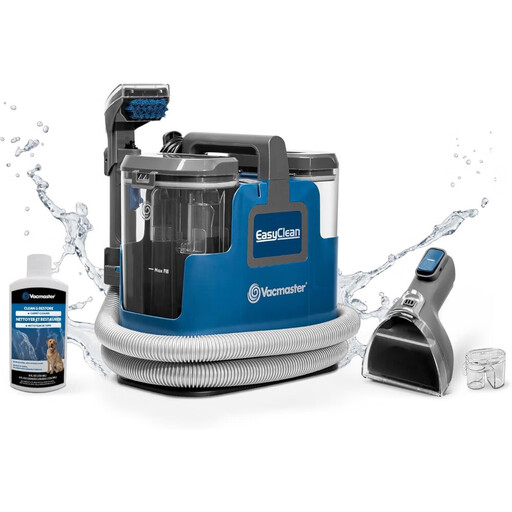
Why it suits this user: This compact model is designed for stains on carpets, sofas, stairs and car seats. The included cleaning solution and hose make it easy to get started with spray extraction.
The product information lists a 1.6-litre clean-water tank and a 0.95-litre dirty-water tank. This keeps dirty water separate from the clean-water reservoir.
500 W motor, 1.8-metre hose and removable water tanks, according to the product specifications.
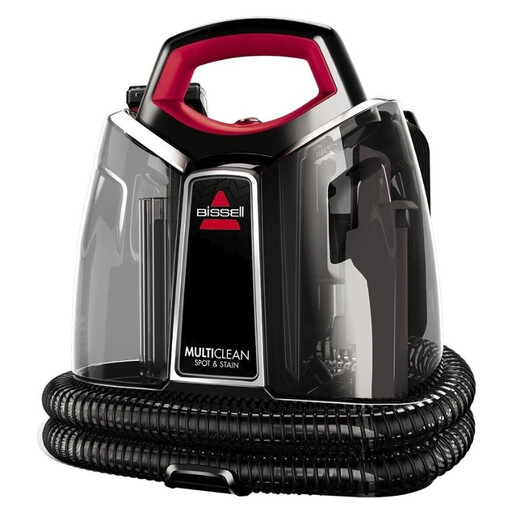
Why it suits this user: A good choice for households that clean different types of upholstery and value having a range of nozzles for small stains, larger surfaces and crevices.
The description lists a system that separates clean and dirty water, along with four cleaning accessories. That means you don’t need a separate appliance for every surface.
330 W power, 2.2-metre hose, stated noise level of 74 dB and four accessories, according to the product information.
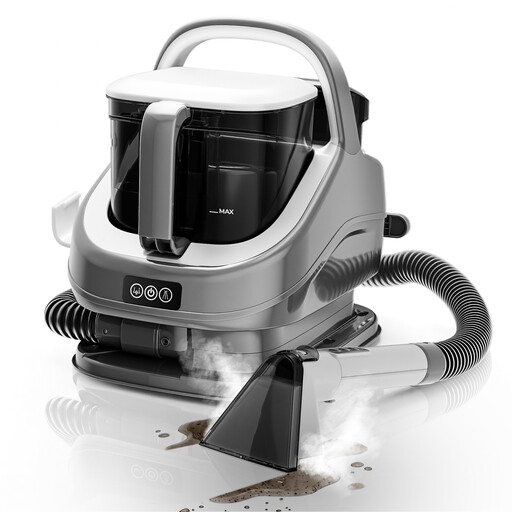
Why it suits this user: This model is designed for users who want to switch between cold water, hot water and steam when cleaning carpets, sofas, stairs, pet messes and car interiors.
The product information lists two tanks with capacities of 1,400 and 1,200 ml. It also advises cleaning water-resistant fabrics only and not filling the tanks above the marked line.
1,300 W, stated suction power of 13 kPa, three cleaning modes and a 3-metre power cord, according to the product specifications.
We’ve put together a complete, up-to-date list of products that meet these strict selection criteria and the applicable European safety regulations.
It depends on how much water you use, the material, ventilation and room temperature. Extra passes without spraying help extract more moisture. Wait until the carpet feels completely dry before walking on it again.
Often, yes, as long as the product information lists that use and the upholstery is water-resistant. For a car interior, a narrow nozzle is usually best. With delicate fabrics, always check the care label first and test on an inconspicuous area.
As well as the purchase price, you’ll need to pay for water, cleaning solution and electricity. Consumption per cleaning session depends on the tank capacity, cleaning time and amount of solution used. An appliance with removable tanks and reusable accessories can make maintenance easier.
