
Vandaag of morgen in huis

Kwaliteit gegarandeerd

Welkomstaanbiedingen ontgrendelen: GRATIS bezorging | Tot 80% korting | Gratis 30 dagen JoyPlus-proefperiode
Download de app
A spilt drink, muddy paw prints or a stain on the sofa: a standard vacuum cleaner removes dry dirt, but it is not designed to draw liquids and ingrained dirt out of fabrics. A carpet cleaner sprays water, optionally mixed with cleaning solution, into the fabric and then vacuums the moisture back up. This makes this type of appliance suitable for carpets, sofas, stairs, mattresses and car interiors.
However, not every spot cleaner is the same. Below, you can read what to look out for and which models suit different households.
Manufacturers often state a high suction power in pascals, abbreviated as Pa or kPa. This figure says something about the stated vacuum pressure, but it does not automatically indicate how quickly a surface will dry. The brush, airflow, hose, nozzle and the way you move the machine also have an impact.
So do not compare 15,000 Pa with 17,000 Pa alone. Also check the motor power, brush width and whether there is a separate clean-water and dirty-water tank.
An appliance with a hot-water function is not automatically a carpet steamer. Steam cleaning uses hot vapour and requires extra care with the material and drying time. A spray-extraction cleaner generally uses liquid water and vacuums it back up.
Always check whether the manufacturer states that the appliance is suitable for your fabric. Non-water-resistant materials, delicate coatings and certain mattresses can be damaged by moisture or heat.
After every cleaning session, you should empty the dirty-water tank and allow the components to dry. Otherwise, odours may develop. So look at:
A compact appliance can be convenient for individual stains, but less practical for a large rug. Conversely, a larger carpet cleaning machine takes up more cupboard space.
A spot cleaner should remove as much dirty water as possible from the fibres. Product details may state 10, 12, 13, 15, 17 or 18 kPa, for example. Use these figures as a technical indication when comparing the same type of appliance, rather than as a complete prediction of the results.
Wattage refers to the power drawn by the motor or heating system. Higher wattage does not automatically mean better cleaning. Also pay attention to the nozzle and spray system. Moving slowly across the surface will generally help absorb more moisture than moving quickly back and forth.
A dual-tank system keeps clean and dirty water separate. This is practical when you want to clean several areas one after another. A larger clean-water tank reduces the number of interruptions, but it often makes the appliance heavier.
For example, the Omeser W07 is listed with a 1.5-litre clean-water tank and a 0.8-litre dirty-water tank. According to the product information, the Vacmaster SCC1201H has a 1.6-litre clean-water tank and a 0.95-litre dirty-water tank. Check the maximum fill line for each model and only use solutions that the instructions say are suitable.
For stairs, a sofa or car seats, a compact upholstery cleaner with a hose is often more convenient than a large floor appliance. For cleaning an entire room, a wider brush and longer cable are more important.
Also check the permitted surfaces. A sofa cleaner, car cleaner or upholstery cleaner may be suitable for synthetic upholstery, while wool, silk or glued-down carpets require a different approach. Test the cleaning solution and water on an inconspicuous area first.
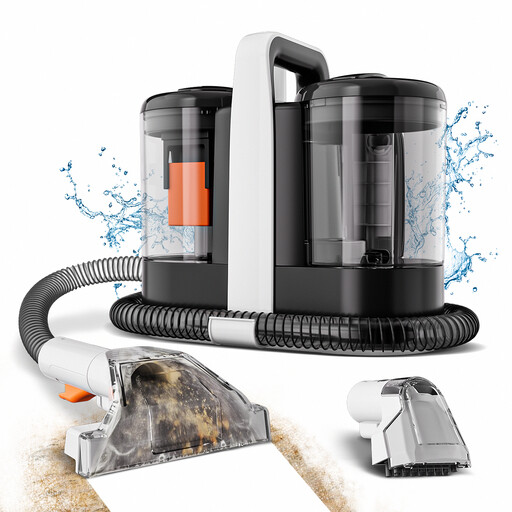
Why it suits this profile: This portable design is intended for sofas, small rugs, mattresses and car interiors. The stated hose length is 1.3 metres and the power cable is 3 metres long.
The dual-tank system prevents clean and dirty water from ending up in the same reservoir. The manufacturer also states a maximum fill line that you should observe.
According to the product information: 600 W, stated suction power of 15 kPa, two brushes and a compact design.
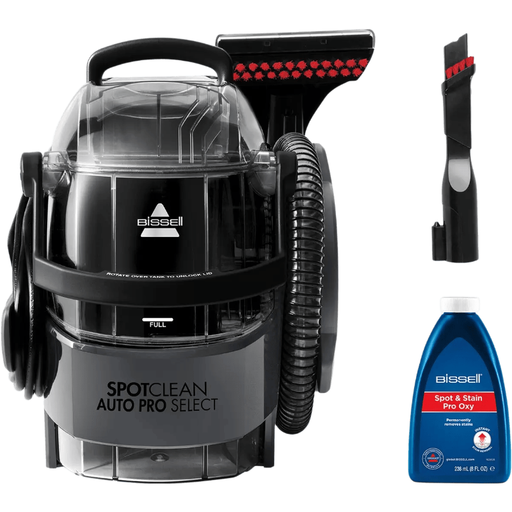
Why it suits this profile: This corded model is designed for regular use on carpets, stairs, upholstery and car interiors. The product details state a weight of 5.8 kg and a power rating of 750 W.
The two separate XL water tanks allow you to work for longer without mixing clean and dirty water. The supplied brushes are designed for different stain sizes.
Stated specifications: 750 W, two water tanks, a 15 cm brush and an 8 cm brush. The stated warranty is two years.
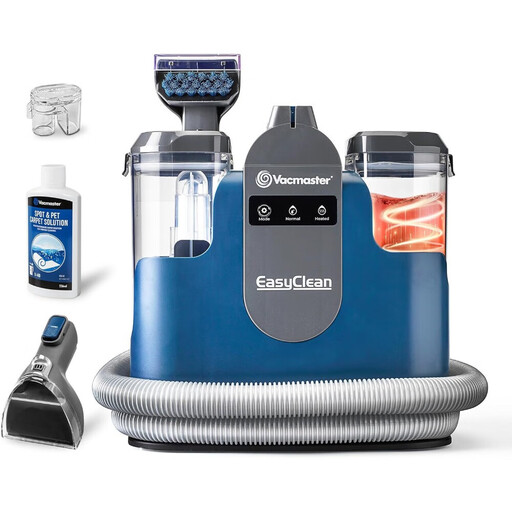
Why it suits this profile: Ideal for families with children or pets who regularly tackle stains on sofas, stairs, carpets and car seats. This model has a heated cleaning function.
The product information distinguishes between a normal and heated mode. This means you do not have to treat every surface with heat; always follow the instructions and material guidelines.
According to the product specifications: 500 W, a 1.6-litre clean-water tank, a 0.95-litre dirty-water tank and a 1.8-metre hose with a self-cleaning connection.
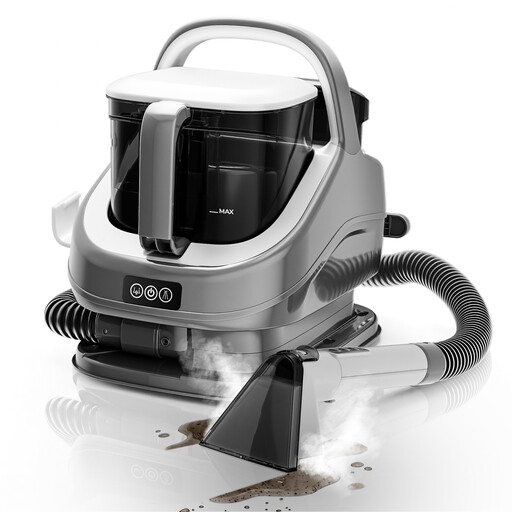
Why it suits this profile: The three cleaning modes are designed for different applications around the home and in the car. According to the product information, the appliance is suitable for carpets, sofas, stairs, upholstery and car seats.
The choice between cold water, hot water and steam means you do not need a different appliance for every stain. Only use the modes on materials that are suitable for them.
Stated features: 1,300 W, 13 kPa, a 1,400 ml clean-water tank and a 1,200 ml dirty-water tank.
We have put together a complete, up-to-date list of products that fully meet these strict selection criteria and the applicable European safety regulations.
When removing pet stains, acting quickly is helpful, but a carpet cleaner is no substitute for testing the material or treating the underlying surface correctly. Old odours may require several treatments.
You can if the manufacturer states that the appliance is suitable for upholstery and car interiors. Use the correct small nozzle, limit the amount of water and check beforehand whether the fabric is water-resistant.
Empty and rinse the dirty-water tank after every use. Allow the tanks, filters, brushes and hose to dry completely. With intensive use, it is sensible to check the components more frequently for blockages and build-up.
Consumption depends on the power drawn and how long the appliance is used. A 500 W appliance running for one hour theoretically uses around 0.5 kWh; heating functions may increase consumption. A corded model operates continuously while cleaning, without needing to recharge a battery.
