
Vandaag of morgen in huis

Kwaliteit gegarandeerd

Welkomstaanbiedingen ontgrendelen: GRATIS bezorging | Tot 80% korting | Gratis 30 dagen JoyPlus-proefperiode
Download de app
A spilt cup of coffee, mud from children’s shoes or a pet accident can leave a visible mark on fabric. A standard vacuum cleaner picks up loose dirt, but it isn’t designed to extract water and dissolved dirt from carpets or upholstery. A carpet cleaner that sprays, brushes and vacuums can be a more practical solution.
However, not every spot cleaner is right for every household. Watch out for these three common pitfalls:
A good carpet and upholstery cleaner performs three tasks: it sprays cleaning solution onto the surface, loosens dirt with a brush and then vacuums up the moisture. Check that the product description specifically mentions all three functions.
A wet vacuum cleaner isn’t always the same as a spot cleaner. Some models are mainly designed for hard floors and liquid pick-up, while a portable carpet cleaner has a narrow nozzle designed specifically for fabric. This type of nozzle is usually more practical for sofas, stairs, mattresses and car seats.
Manufacturers may list suction power in Pa or kPa. This is a measurable technical specification, but only compare models if the measurement method is similar. The shape of the nozzle, hose and filter also affects performance.
The range includes models rated at 10 kPa, 13 kPa, 15 kPa, 17 kPa and 18 kPa. A higher figure may be useful for deeper dirt, but it doesn’t automatically make a machine suitable for delicate fabrics. Always test a new cleaning solution on an inconspicuous area first, and follow the manufacturer’s care and usage instructions.
Two separate tanks for clean and dirty water are useful. This means you won’t be cleaning with dirty water, and you can empty each tank separately. Look out for:
Take extra care with models that have a steam function. Check that the fabric, bonded seams and colour can withstand heat. Also, never use electrical appliances in a way that goes against the instructions, and keep them away from children and open water.
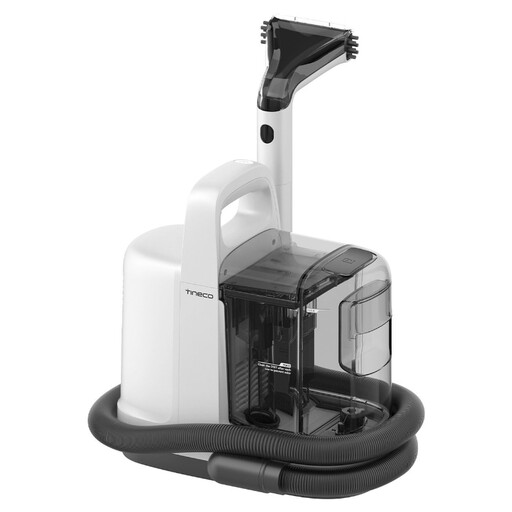
Why it suits this type of user: This compact, corded model is designed for small stains on carpets, furniture, mattresses and car interiors. Its two tanks keep clean and dirty water separate.
The product information specifically mentions spraying, a rotating brush and separate water tanks, rather than simply describing it as a general-purpose vacuum cleaner.
400 W power, portable design, removable tank and included upholstery attachment.
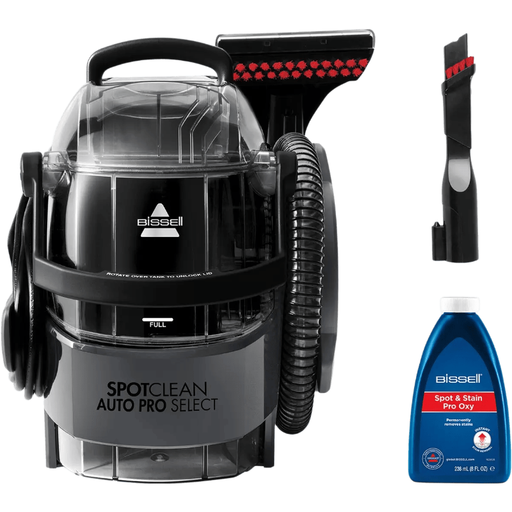
Why it suits this type of user: A good fit for households that regularly clean sofas, stairs, carpets and car interiors, and value a wider range of accessories.
The specifications list a spray, brush and vacuum system, two large tanks, and separate brushes for stains and upholstery.
750 W power, stated capacity of 2.8 litres, appliance weight of 5.8 kg and a 2-year warranty, according to the product information.
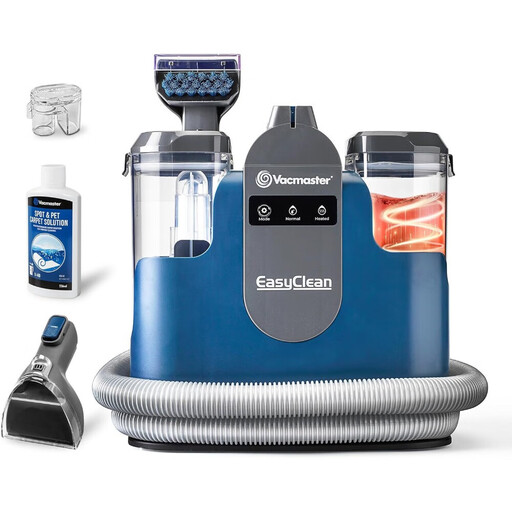
Why it suits this type of user: A practical choice if you want to tackle stubborn stains on sofas, carpets, stairs and car seats, and are considering a heated cleaning mode.
According to the product specifications, it has two cleaning modes, separate clean- and dirty-water tanks, and a self-cleaning hose attachment.
500 W power, 1.6- and 0.95-litre tanks, and an integrated 1.8-metre hose.
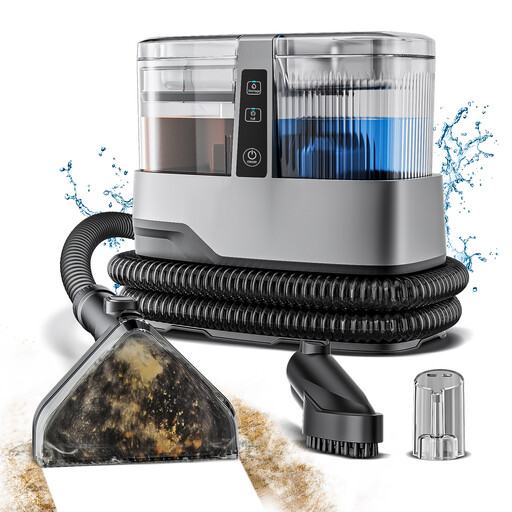
Why it suits this type of user: Its handheld design is ideal for quick cleans on sofas, car seats and carpets, as well as areas where pets might make a mess.
The stated specifications include a dual-tank design, a 5-metre cord and a transparent suction nozzle so you can see the dirty water being collected.
600 W power, stated suction power of 17,000 Pa, and separate clean- and dirty-water tanks.
We’ve put together a complete, up-to-date list of products that meet these strict selection criteria and the applicable European safety regulations.
Often, yes, if the product description mentions upholstery, sofas or car interiors and includes a suitable narrow nozzle. Always check the fabric care label. Leather, delicate fibres and bonded upholstery need extra care.
Empty and rinse the dirty-water tank after every use. Clean the brush, filter and hose according to the instructions. Let the parts dry before putting the machine away. This helps reduce leftover moisture and dirt.
As well as the purchase price, you’ll pay for water, cleaning solution and electricity. Consumption depends on the tank capacity, power and how long you spray and vacuum. A machine with two tanks and a simple maintenance system can save time if you use it regularly, but larger models generally take up more storage space.
