
Livraison le jour même et le lendemain

Qualité garantie

Débloquez vos offres de bienvenue: Livraison GRATUITE | Jusqu'à -80 % | 30 jours d'essai gratuits à JoyPlus
Téléchargez l'application
Buying Asian noodles seems straightforward – until you’re faced with a shelf full of rice noodles, rice vermicelli, Thai noodles and instant noodles. The differences aren’t just about brand or packaging. Thickness, ingredients, cooking method and allergens all determine whether a product is suitable for pad thai, pho, a stir-fry or a quick meal.
As a Joybuy Product Recommendation Officer, I assess product information against practical criteria. That way, you won’t end up choosing based on an attractive packet or a flavour claim alone.
A thin noodle can turn soft quickly during cooking, while a thicker one holds its bite better. Rice noodles of 1 mm, for example, work well in light soups, salads and fresh spring rolls. For stir-fries or pad thai noodles, a thickness of 3 to 5 mm is often more practical.
So pay attention to the millimetre measurement, not just terms like “rice noodles” or “vermicelli”. These terms aren’t always used consistently.
Instant noodles are designed for speed and usually come with seasoning, oil or sauce. That means you don’t need to add much, but do check the ingredients and nutritional information. In the product details for Wai Wai Instant Noodle Oriental Style, for example, there is 3.21 g of salt per 100 g. Some other instant products have an even higher salt content.
If you prefer to build your own flavour, it’s better to choose loose rice noodles or rice vermicelli. Then add your own stock, vegetables, tofu, egg, chicken or prawns.
Rice doesn’t automatically mean the whole product is gluten-free. A loose rice noodle may contain just rice and water, while an instant version may contain wheat, soya, fish, milk or shellfish in the seasoning mix.
Always read the current label before you buy. According to product disclaimers, the online product information may differ from the packaging. This is especially important for instant noodles and ready-to-use sauces.
First, look at the ingredients list. Here are a few examples from the range:
A claim like “gluten-free noodles” must therefore always be linked to the specific product and the current packaging, not just the type of noodle.
Use this practical guide as a starting point:
The cooking method varies by brand. Some noodles need to be soaked; others need to be boiled briefly. Always follow the instructions on the packet.
A 400 g pack is practical for multiple meals or meal prepping. A bag of 55 to 70 g is aimed at one quick portion. For catering, hospitality or a large household, boxes of 30 portions are more appealing, such as VIFON Inst Rice Vermicelli Beef Hue Style 30x65g or MAMA Oriental Style Instant Rice Vermicelli Clear Soup 55g*30.
With larger packs, consider storage space, shelf life and allergens per variant. A box of individual portions is handy for stock management, but less flexible if you prefer to weigh out your own portions.
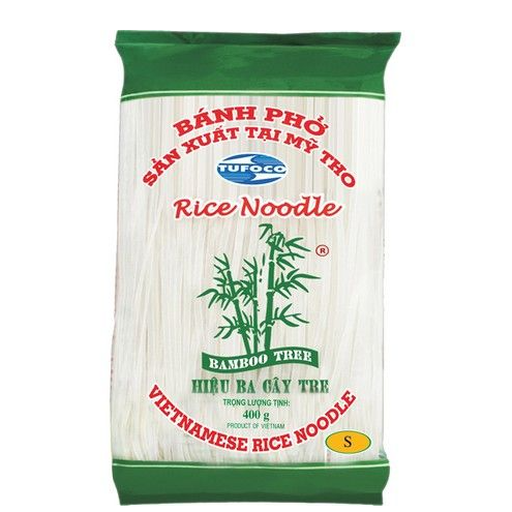
Why this fits the profile: A straightforward 400 g bag for anyone wanting to try different Vietnamese dishes without committing to a bulk pack straight away.
The 1 mm thickness is clearly stated. According to the product information, the noodle is made from rice, tapioca and water.
400 g pack, 1 mm thickness and, according to the product information, none of the 14 major EU allergens.
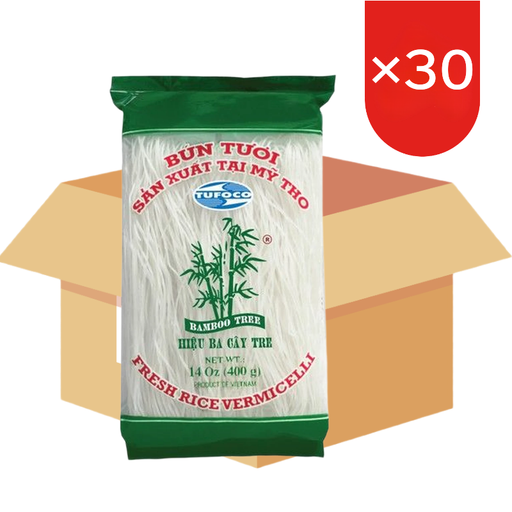
Why this fits the profile: Aimed at those who regularly make Vietnamese noodle dishes, bun bowls or spring rolls and want to stock up.
The product information explicitly states “gluten-free” and gives a pack size of 30 packs of 400 g.
According to the product data, it is gluten-free, contains none of the 14 major EU allergens and is suitable for stock management.
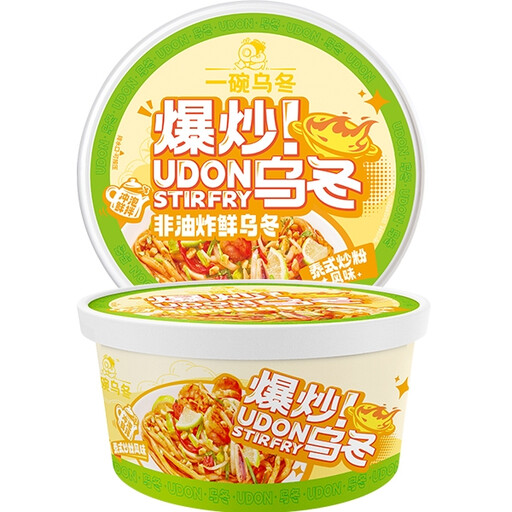
Why this fits the profile: For anyone who wants minimal preparation and a ready-made udon meal for home, the office or a quick service.
The product information gives a specific microwave cooking time of 2 to 3 minutes and lists the allergens present.
270 g per pack, udon noodles, sauce and seasoning sachets, and a stated cooking time of 2 to 3 minutes.
We’ve put together a full, up-to-date list of products that fully meet these strict selection criteria and current European safety regulations.
Rice noodles of around 3 mm are a practical choice. They absorb sauce and, when prepared correctly, retain enough structure. Soak or cook them according to the instructions and add them to the wok at the right moment.
Rice vermicelli is usually thinner than standard rice noodles. That makes it a good fit for bun bowls, soups and spring rolls. Rice noodles of 3 or 5 mm are more often used in stir-fries and hearty noodle meals.
Yes, as long as you pay attention to shelf life, storage and portion size. Store unopened packs in a cool, dry place away from direct sunlight. Always check the packaging before use, especially for allergens, cooking instructions and the best-before date.
