
Vandaag of morgen in huis

Kwaliteit gegarandeerd

Welkomstaanbiedingen ontgrendelen: GRATIS bezorging | Tot 80% korting | Gratis 30 dagen JoyPlus-proefperiode
Download de app
Want to buy an energy drink online, but mostly seeing eye-catching packaging, large multipacks and claims about extra energy? Comparing brands alone is not enough. The key differences are often the caffeine content, sugar, volume per can, flavour and total price including deposit.
An attractive offer may also be less cost-effective if you buy a large format that you cannot finish in time. With this practical guide, you can focus on the information that can be checked on the label.
A sugar-free energy drink will generally still contain caffeine. Sucralose, acesulfame-K and other sweeteners replace sugar, but do not automatically change the caffeine content. Therefore, check both values separately.
For example, Red Bull variants in this range contain 32 mg of caffeine per 100 ml. A 250 ml can therefore contains approximately 80 mg of caffeine. Celsius and Monster also contain caffeine, even though some variants contain no sugar.
An energy drink multipack is handy for home, the office or an event, but the total price can be misleading. Pay attention to:
A tray of 24 x 250 ml and a box of 12 x 500 ml do not contain the same total volume of drink. So, when looking at an energy drink offer, calculate the price per litre.
An energy drink with a fruit flavour may sound appealing, but flavours such as mango, watermelon, peach, kiwi-guava and forest fruits can differ considerably in sweetness and freshness. The size also affects when and how you use it.
A 250 ml energy drink is practical for travelling or a short work or study session. A 500 ml energy drink contains twice as much drink, but often also more total caffeine per pack. So do not look only at the number of mg per 100 ml; also check the amount per can.
The label usually shows the caffeine content per 100 ml. Multiply this by the volume of the can. At 32 mg per 100 ml, a 250 ml can contains approximately 80 mg of caffeine.
Also take coffee, tea, cola and other sources consumed on the same day into account. According to the product information, energy drinks with a high caffeine content are not recommended for children, pregnant women or breastfeeding women. People who are sensitive to caffeine should carefully follow the label and warnings. Energy drinks are not a substitute for sleep or normal fluid intake.
If you are looking for an energy drink without sugar, check the nutritional information table. “Zero” or “sugar-free” usually means that sweeteners are used. Also check the ingredients list if you prefer to avoid certain sweeteners.
For comparison, Blue Bastard Energy Drink lists 11 g of sugar per 100 ml. Red Bull Sugar-Free lists 0 g of sugar per 100 ml and approximately 3 kcal per 100 ml. Celsius Sparkling variants in the range also list 0 g of sugar and approximately 3 kcal per 100 ml.
A smaller can is often easier to portion. A 500 ml can may be more suitable when you deliberately want to take the full volume with you, for example during a long day. For bottles or cans, check whether a deposit is listed. Blue Bastard, for example, has a product price of €11,39 plus €3,60 deposit for 24 cans.
Also pay attention to storage: keep unopened cans in a cool, dry place away from direct sunlight. Once opened, they should be refrigerated and consumed within the period stated on the packaging.
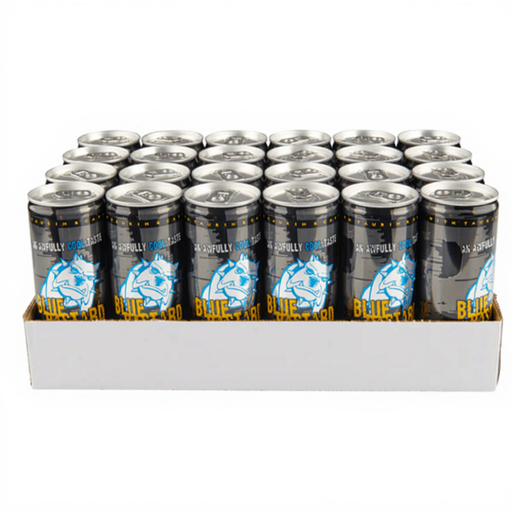
Why it suits this profile: The 24-pack of 250 ml cans is easy to divide up and is suitable if you want to try a regular sugary energy drink first.
The volume per can and the pack size are clearly stated. However, bear in mind that it contains 11 g of sugar per 100 ml and has a €3,60 deposit according to the product information.
24 x 250 ml, with caffeine, taurine and B vitamins according to the label.
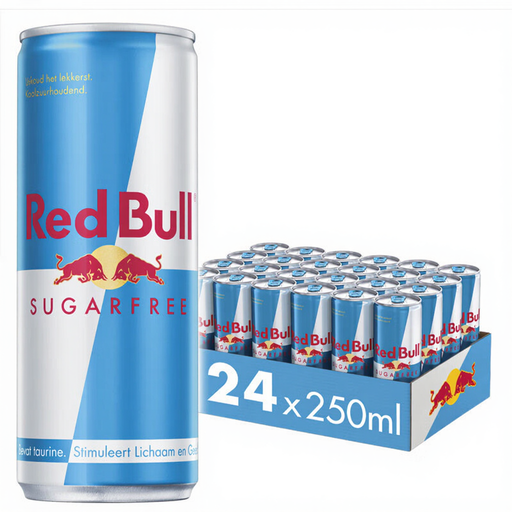
Why it suits this profile: A familiar flavour and compact size suit shoppers who regularly take a sugar-free option to work, school or while travelling.
The packaging states 0 g of sugar per 100 ml. The caffeine content remains 32 mg per 100 ml, so sugar-free does not mean caffeine-free.
24 x 250 ml; 0 g of sugar and approximately 3 kcal per 100 ml according to the product details.
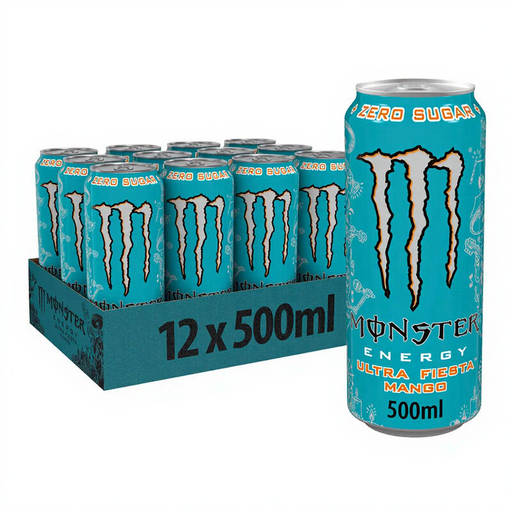
Why it suits this profile: The 500 ml format and larger pack suit long days and anyone who wants to calculate their caffeine intake per can in advance.
The product contains 0 g of sugar and 30 mg of caffeine per 100 ml. With a volume of 500 ml, one can contains approximately 150 mg of caffeine based on this value.
12 x 500 ml, sugar-free according to the product description, with taurine, caffeine and B vitamins.
We have compiled a complete, up-to-date list of products that fully meet these strict selection criteria and the applicable European safety regulations.
Check the nutritional values per 100 ml and choose an option with 0 g of sugar if that is your goal. Red Bull Sugar-Free, Monster Ultra Fiesta and Celsius Sparkling variants list no sugar in the supplied product details. They do contain caffeine and sweeteners, however. Always check the latest label.
That depends on the price per litre and the deposit. A 250 ml can is easier to portion, while a 500 ml pack provides more drink per item. Calculate the price per litre before buying a multipack and compare products in the same flavour and sugar category.
Store unopened cans in a cool, dry place away from direct sunlight. The exact date is shown on the packaging. Once opened, the can should be refrigerated and consumed within the stated period. When buying online, also check the best-before information as soon as your order arrives.
