
Vandaag of morgen in huis

Kwaliteit gegarandeerd

Welkomstaanbiedingen ontgrendelen: GRATIS bezorging | Tot 80% korting | Gratis 30 dagen JoyPlus-proefperiode
Download de app
An air purifier can help filter airborne particles, pollen, dust and certain odours from indoor air. However, it is not advisable to rely solely on terms such as “best air purifier” or “removes 99.99%”. Such claims often apply under specific test conditions and do not automatically mean that a device is suitable for your living room or bedroom.
The most important question is therefore not which model quotes the highest percentage, but how much air the device moves, which filter it uses, and how much noise and maintenance you are prepared to accept.
Manufacturers often state a maximum number of square metres. This figure may be based on one air change per hour. For a noticeable effect in a bedroom or living room, you should usually look at the CADR rating and the number of air changes suited to your space.
An air purifier for large rooms therefore needs more than a high stated coverage area; it also needs to move enough air. A compact model suitable for 20 m² is not automatically suitable for an open-plan living room of 60 m².
An air purifier with a HEPA filter can capture very small particles, but the result also depends on the amount of air passing through the filter. A high filtration percentage at a low airflow does not mean the same as a lower percentage at a high CADR.
Also pay attention to the filter construction:
Claims such as “removes allergens” or “purifies viruses” should be treated as the brand’s product information. Results may have been established under specific conditions through the brand’s own research or measurements. They are not a medical guarantee.
A quiet air purifier for the bedroom sounds appealing, but check whether the noise level is stated for the lowest setting. The device may be considerably noisier at the highest setting. Also check how often the filters need replacing and the price of genuine replacements. A cheap device with expensive filters may prove less cost-effective in the long run.
CADR, or Clean Air Delivery Rate, indicates how much filtered air a device delivers per hour. A higher CADR is generally better suited to larger rooms or situations where you want to filter the air more quickly.
For a small bedroom or home office, models delivering around 117 to 250 m³/h are often practical. For larger living spaces, you could look at devices offering around 260 to 450 m³/h or more. Always check that the stated coverage matches the layout of your room.
If you are looking for an air purifier for pollen and dust, it is worth choosing one with a pre-filter and HEPA filter. Pet owners may also benefit from a pre-filter that is easy to access, as hair can quickly clog it.
An air purifier with an activated carbon filter is particularly worth considering when odours or cooking smells are a key reason for buying one. The carbon filter becomes saturated over time and usually needs replacing. A washable pre-filter does not mean that the HEPA or carbon filter itself is washable.
For use at night, a sleep mode and low noise level are important. Product specifications range from around 19 to 52 dB, depending on the fan speed.
An air purifier with a PM2.5 sensor displays the measured quantity of fine particles and can adjust the fan speed automatically. Smart models go further, offering app control, scheduling and sometimes Google Assistant or Amazon Alexa compatibility. Do check whether you need Wi-Fi and an account.
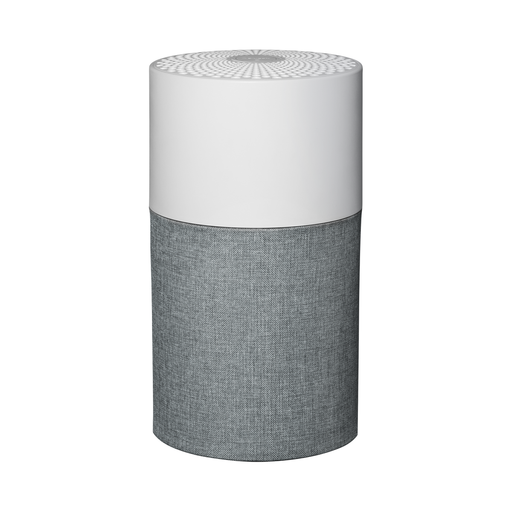
Why it suits this profile: This compact model is designed for bedrooms, nurseries and home offices. It is simple to operate and, according to the product information, weighs 1.69 kg.
The model is clearly aimed at small spaces, so you are not paying for a large stated coverage area that you do not need. The manufacturer states 24 dB on the low setting and 49 dB on the high setting.
HEPASilent filtration according to the product description, compact dimensions of 20 × 20 × 34 cm, and a replacement filter with a recommended interval of 6 to 9 months.

Why it suits this profile: Suitable for anyone looking for a compact air purifier for allergies, pollen and dust, with automatic control and a sleep mode.
The product specifications state a CADR of 250 m³/h, a PM2.5 sensor and a maximum coverage area of 65 m². This makes it easier to compare the capacity with the size of your own room.
Sleep mode from 20.5 dB(A), maximum power consumption of 21 W and automatic control via an AeraSense sensor, according to the product information.
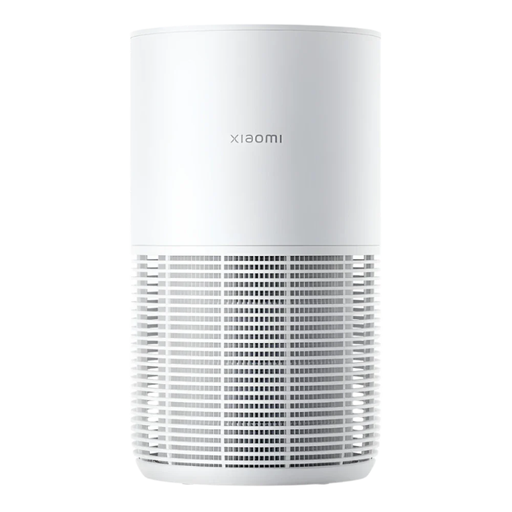
Why it suits this profile: A natural choice for pet-owning households that want to combine app control, a PM2.5 sensor and a compact design.
The filter construction is clearly described as a pre-filter, HEPA filter and activated carbon layer. This makes it clear which components are intended for hair, fine particles and odours.
CADR of 230 m³/h, coverage of 16–27 m², control via Xiaomi Home and a stated power consumption of 27 W.
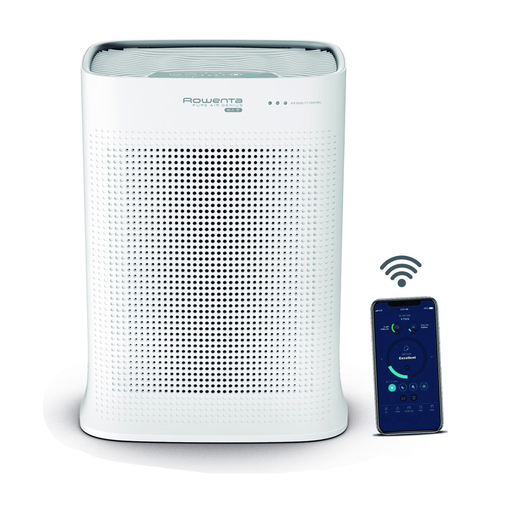
Why it suits this profile: According to the product information, this model is designed for spaces of up to 140 m², making it suitable for a large living room or open-plan living area.
Alongside the room coverage, the specifications state a 360° air intake, five fan speeds and a filter replacement indicator.
Four-layer filtration with a pre-filter, activated carbon, HEPA and formaldehyde filter according to the product description; stated power consumption of 50 W.
We have put together a complete, up-to-date list of products that fully meet these strict selection criteria and the applicable European safety regulations.
Place the air purifier on a flat surface with at least 30 cm of clear space around the air intake and outlet. Do not position the device behind a curtain, directly next to a heat source or in a damp bathroom. Close windows and doors when you want to filter a room specifically, but continue to ventilate normally according to the conditions in your home.
Check the pre-filter regularly for dust and hair. Replace disposable filters according to the indicator or instruction manual; many models recommend around 6 to 12 months, depending on use and air quality. Switch off the device and unplug it before cleaning or replacing a filter.
A model with a pre-filter and HEPA filter is designed, according to the product description, to filter airborne dust particles and pollen. The device does not remove dust that has already settled on furniture or the floor. Regular cleaning is therefore still necessary.
This depends on the power consumption, how long you use it and your electricity tariff. A 20 W device running for 24 hours theoretically uses 0.48 kWh per day. Models with an automatic mode can reduce their power consumption when the sensor detects fewer particles. Remember to factor in the cost of replacement filters as well.
It can be, particularly if you choose a sleep mode and check the noise level at your preferred speed. Do not place the device directly next to your bed, and make sure the airflow can circulate freely. A quiet air purifier for the bedroom should above all be suited to the size of the room and your personal noise preferences.
