
Vandaag of morgen in huis

Kwaliteit gegarandeerd

Welkomstaanbiedingen ontgrendelen: GRATIS bezorging | Tot 80% korting | Gratis 30 dagen JoyPlus-proefperiode
Download de app
An air purifier can help reduce airborne particles, pollen, dust and certain odours in your home. However, it is not advisable to rely solely on terms such as “powerful purification” or a large number of square metres on the packaging. Actual suitability depends on the room, the filter, the airflow and how often you use the appliance.
For households in the Netherlands, three purchasing pitfalls are particularly important:
The CADR rating indicates how much purified air an appliance can deliver per hour, expressed in m³/h. A higher CADR is generally useful in larger rooms or when you want faster results. Also check the recommended room size and the number of air changes per hour.
A model designed for 20 m² may be suitable for a bedroom, but it is not automatically suitable for an open-plan living room with a kitchen. For an air purifier for large rooms, the air intake, fan speed and CADR are more important than simply the maximum area stated in the product title.
For pollen, household dust and fine particles, many consumers look for a HEPA air purifier. Check the following:
Claims such as “removes 99.97%” are product specifications measured under certain test conditions. They do not mean that every room will remain completely free of the stated particles at all times. According to the product descriptions of various brands, these percentages apply to specific particle sizes and test conditions.
An air purifier for pollen or an air purifier for allergies does not replace ventilation, cleaning or other measures in your home.
For a bedroom, the minimum noise level is relevant, but also check the figure at a higher setting. A quiet air purifier for the bedroom should ideally have a sleep mode, dimmable lighting and a timer.
A PM2.5 sensor can measure the amount of fine particles in the air, while an automatic mode can adjust the fan speed accordingly. Note the difference between a simple air-quality indicator and a model that actually displays the readings.
A smart air purifier or air purifier with an app can be useful for schedules, notifications and remote control. Check whether Wi-Fi is required, which app the appliance uses and whether voice assistants are supported.
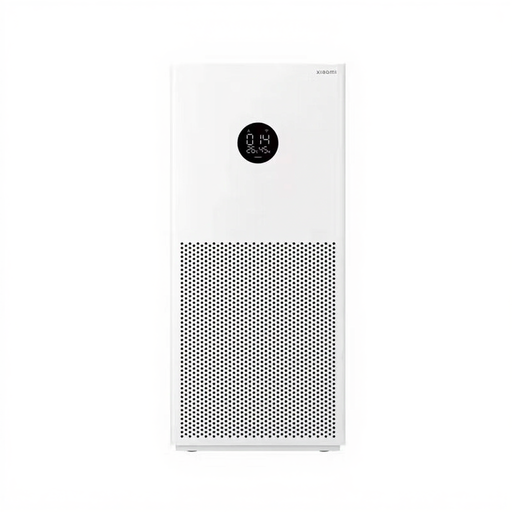
Why it suits this profile: This model is designed for smaller to medium-sized rooms of 25–43 m² and can be controlled via the Mi Home app.
The stated CADR of 360 m³/h and coverage area are clearly specified. The PM2.5, temperature and humidity sensors provide more context than a colour indicator alone.
App control, Google Assistant and Amazon Alexa support, and a stated minimum noise level of 33.4 dB.
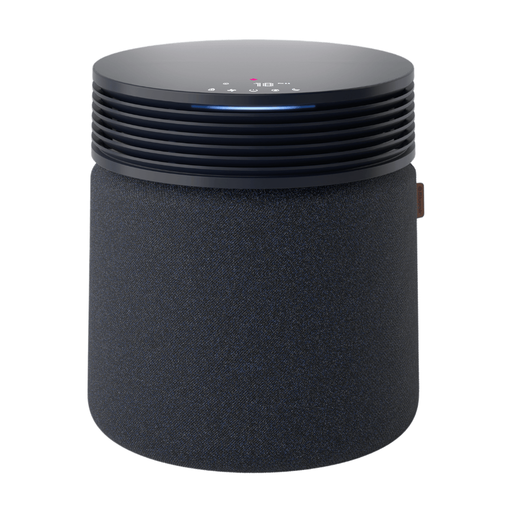
Why it suits this profile: The stated coverage of 154 m² and CADR of over 700 m³/h make it suitable for spacious living rooms and open-plan living areas.
The product description mentions multiple filtration stages, an OdorFence filter and a sensor-controlled automatic mode. Check the price and availability of replacement filters in advance.
App control, night mode, motion-activated display and a stated 7-stage filtration system.

Why it suits this profile: The combination of a pre-filter, HEPA filter and activated carbon layer is designed for households with pets and rooms measuring 16–27 m².
The filter structure distinguishes between coarser hair, fine particles and odours. The PM2.5 sensor and automatic adjustment help ensure that you do not have to rely solely on a manual setting.
App and voice control, child lock, 230 m³/h CADR and a stated power consumption of 27 W.
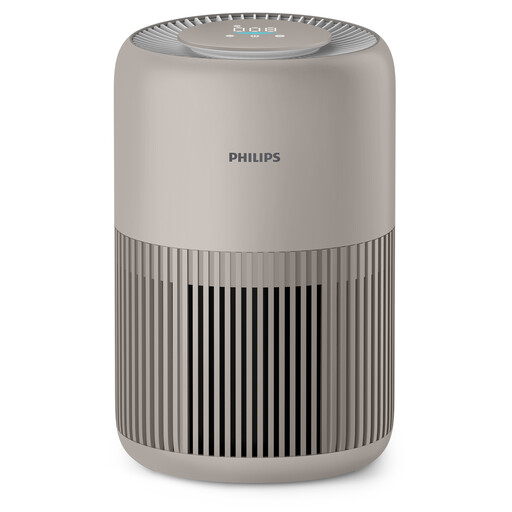
Why it suits this profile: This compact model has a CADR of 250 m³/h and, according to the product specifications, is suitable for rooms of up to 65 m².
The product information states both the CADR and the noise range. This makes it easier to match your bedroom choice to the room size and desired setting.
Sleep mode from 20.5 dB(A), automatic mode, PM2.5 sensor and a stated maximum power consumption of 21 W.
We have compiled a complete, up-to-date list of products that fully meet these strict selection criteria and the applicable European safety regulations.
Place an air purifier on a stable, level surface and leave enough clear space around the air intake and outlet. Do not place the appliance behind a curtain, directly against furniture or in a damp room such as the bathroom.
For an air purifier for dust and smoke, regular use is more important than an occasional short boost. Vacuum or clean the pre-filter as instructed in the manual. Replace disposable filters on time; the stated lifespan varies by model and depends on usage, pets and the amount of pollution in the home.
You can calculate energy consumption easily: power in watts ÷ 1,000 × hours of use × electricity price. An appliance rated at 25 W running for 8 hours a day uses approximately 0.2 kWh per day. Check your own energy tariff for the current cost.
According to the product information provided by many manufacturers, a model with a HEPA filter is designed to filter airborne particles such as pollen. Results depend on the CADR, the room, the positioning and keeping windows and doors properly closed during peak pollen periods. An air purifier does not replace medical advice or prescribed treatment.
This varies by model. Product specifications commonly state periods of around six to twelve months, while some models give a longer theoretical filter lifespan. Always check the filter indicator, the manual and the availability of original replacement filters.
Energy consumption can remain limited with a low wattage, but total running costs consist of both electricity and replacement filters. An automatic programme can run the appliance at a lower setting when the sensor detects few particles. So do not compare only the purchase price; also consider the power consumption, filter price and expected replacement frequency.
