
Vandaag of morgen in huis

Kwaliteit gegarandeerd

Welkomstaanbiedingen ontgrendelen: GRATIS bezorging | Tot 80% korting | Gratis 30 dagen JoyPlus-proefperiode
Download de app
An air purifier can help filter dust, pollen, smoke particles and pet odours from the air in your home. However, it’s unwise to choose based only on claims such as “powerful”, “smart” or “suitable for large rooms”. The key differences often come down to the filter setup, airflow and the cost of replacement filters.
For households in the Netherlands, three pitfalls are particularly worth bearing in mind:
CADR, or Clean Air Delivery Rate, indicates how much filtered air a device can deliver per hour. A higher figure is particularly relevant if you’re looking for an air purifier for a large room.
As well as checking the stated floor area, consider how you’ll use the device. Manufacturers may state room coverage based on one air change per hour, while you may want the air to circulate more often in a bedroom, living room or office. So, look at:
A model with a CADR of 150 m³/h may suit a smaller room, while a device with 450 m³/h may be a better fit for a larger living space. Don’t use the maximum marketing claim for room coverage as your only deciding factor.
A practical air purifier often has several layers:
Product information often associates an H13 HEPA filter with capturing very small particles. According to the product information provided by the brands concerned, some models claim to capture up to 99.97% under specific test conditions. Treat this as a manufacturer’s claim and always compare the full testing context.
For households with pets, a pre-filter can help catch hair and dander. If you mainly want to reduce cooking smells or smoke, an air purifier with an activated carbon filter can also be useful. A carbon layer doesn’t guarantee that every odour will disappear; the amount of carbon and the airflow also play a part.
A quiet air purifier for the bedroom should do more than simply offer a low noise level on its lowest setting. Check the noise level on higher settings too, as you may need them when there’s pollen, dust or smoke.
Useful extra features include:
Smart features are particularly useful if you want to control the device remotely or have it respond automatically. Check that the app is available for your smartphone and whether you need an account.
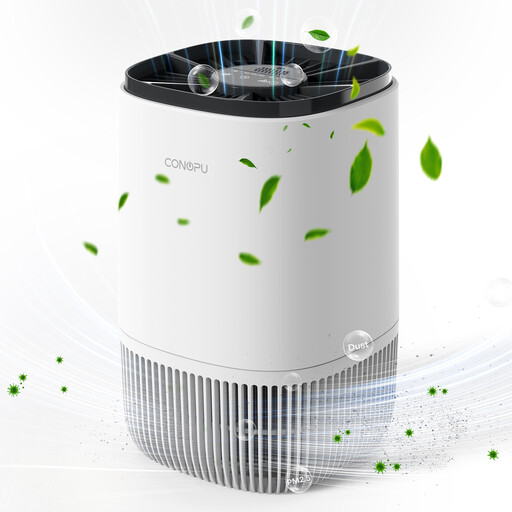
Why it suits this profile: This compact model is designed for everyday use in places such as a bedroom, office or living room. Its three-speed controls and timer keep things simple.
The product information lists a pre-filter, HEPA filter and activated carbon layer. Be sure to check that the stated coverage is right for your room.
H13 filter, three filter layers, portable size and a stated power rating of 5 W.
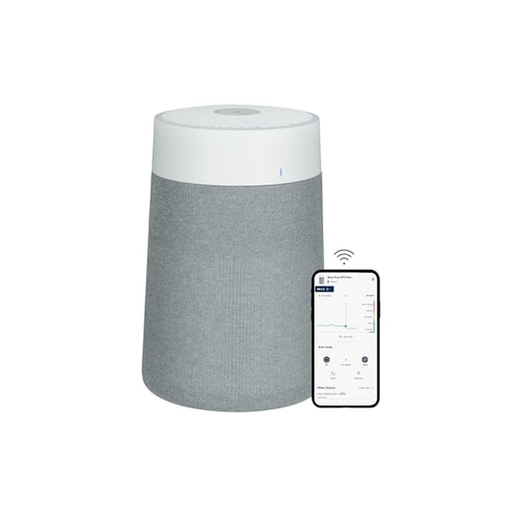
Why it suits this profile: This model combines a stated CADR of 212 m³/h with app control and a low noise level on its lowest setting. It’s a good fit for anyone who values convenience and comfort.
The product description gives the CADR as well as separate noise levels for low and high settings. This makes it easier to compare the specifications with those of other models.
212 m³/h CADR, app with air quality monitoring, 19 dB on the lowest setting and stated coverage of up to 43 m².
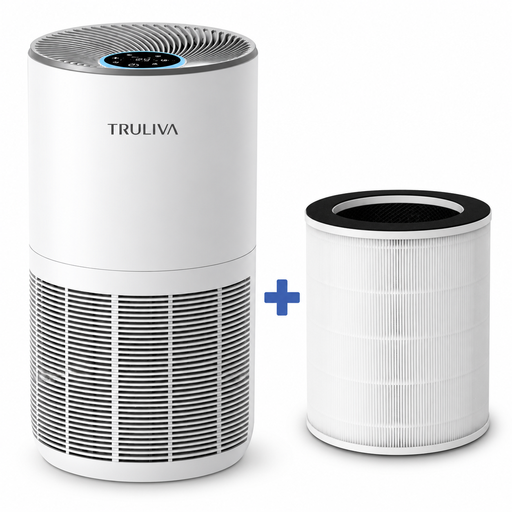
Why it suits this profile: With a stated CADR of 450 m³/h and an extra H13 replacement filter, this model is designed for larger living spaces, homes with pets and more intensive everyday use.
The product information lists the CADR, operating area, PM2.5 display and filter indicator. This makes it easier to keep track of maintenance and capacity.
450 m³/h CADR, 360° air intake, PM2.5 display, child lock and an extra H13 filter included.
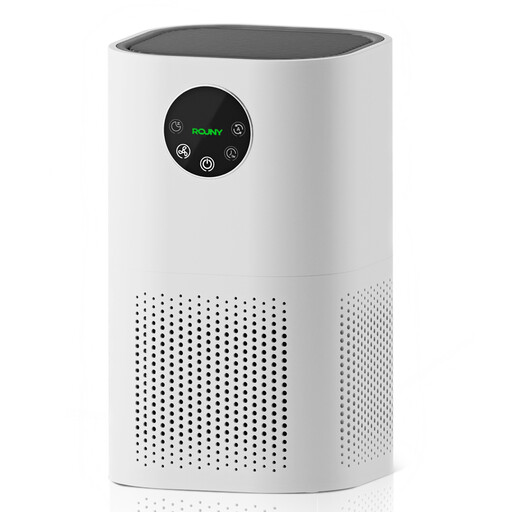
Why it suits this profile: Its stated sleep-mode noise level of up to 25 dB, four fan speeds and compact size make it a good fit for a bedroom, home office or home with pets.
The specifications give the noise level for both quiet and high settings. They also recommend replacing the filter after around 6 to 8 months, depending on use.
H13 HEPA filter, CADR of 150 m³/h, PM2.5 air quality display and timer settings of 2, 4 and 8 hours.
We’ve put together a complete, up-to-date list of products that meet these strict selection criteria and the applicable European safety regulations.
Place the device on a stable, dry surface with enough clearance around the air inlet and outlet. Don’t put it directly behind curtains, against furniture or right next to a heat source. In a bedroom, it’s often more practical to position it some distance from the bed rather than right beside your pillow.
It depends on the model, how long you use it and the air quality indoors. Some product descriptions recommend replacing the filter after around 6 to 8 months, while others state a longer interval. Check the filter indicator and the manual. You can carefully remove dust from the pre-filter on many models, but don’t wash a HEPA filter unless the manufacturer specifically says you can.
The costs include electricity and replacement filters. A 27 W device uses less energy when running continuously than a 54 W model, but the actual cost depends on the setting you choose and how long you use it. So, compare more than just the purchase price: check the wattage, filter life and the price of a compatible replacement filter.
