
Livraison le jour même et le lendemain

Qualité garantie

Débloquez vos offres de bienvenue: Livraison GRATUITE | Jusqu'à -80 % | 30 jours d'essai gratuits à JoyPlus
Téléchargez l'application
An air purifier can be a practical addition to a bedroom, living room, home office or room with pets. However, it is not wise to rely solely on terms such as “powerful filtration” or “for large rooms”. The right choice mainly depends on airflow, filter type, noise level and replacement costs.
As a Joybuy Product Recommendation Officer, I filter the most important product specifications and compare marketing claims with verifiable information. This helps you avoid paying for features you are unlikely to use in your home.
A manufacturer may quote a room size based on one air change per hour. For a bedroom or living room where you want dust and pollen to circulate more quickly, the CADR rating is often more useful. CADR stands for Clean Air Delivery Rate and indicates how much filtered air a device can move per hour.
A model with a large stated coverage area but a low CADR may be less practical than expected in a Dutch living room. Always check both figures.
An air purifier with a HEPA filter can filter fine particles from the air it draws in. However, the result also depends on how much air the device actually pushes through the filter. You should also check whether it has a pre-filter. This catches larger particles such as dust and hair and can help reduce the load on the main filter.
For an air purifier for pets, a pre-filter is especially useful when there is a lot of hair in the room. Check whether it can be removed or cleaned, and whether replacement filters are available.
A quiet air purifier rated at, for example, 20 to 25 dB can be comfortable to use at night, but the noise level is usually higher at the highest setting. Look at the full range rather than just the figure for sleep mode.
An automatic mode may also temporarily become noisier when the sensor detects a higher level of fine particles. This is not necessarily a problem, but it is worth considering when using the device in a bedroom or nursery.
The following components are common in devices for everyday use:
A filter will not make a room completely free from allergens or smoke. Ventilation, cleaning and tackling the source remain important. Treat terms such as air purifier for allergies as a search or usage purpose, not as a medical promise.
Use the stated CADR as your first point of comparison. Here are some examples from the range:
An open-plan living room with an adjoining kitchen often requires more capacity than an enclosed bedroom with the same floor area.
As well as the maximum noise level, check:
A 30 W device that runs for several hours each day will generally use less electricity than a 60 W model used for the same length of time. The exact cost depends on your electricity tariff and the fan speed selected. A simple calculation is: power in kW × hours of use × electricity price.
The selection below is based on stated specifications such as CADR, filter construction, noise level, controls and recommended room size. Claims about filter performance come from the product information or, where applicable, from the relevant brand’s own research.
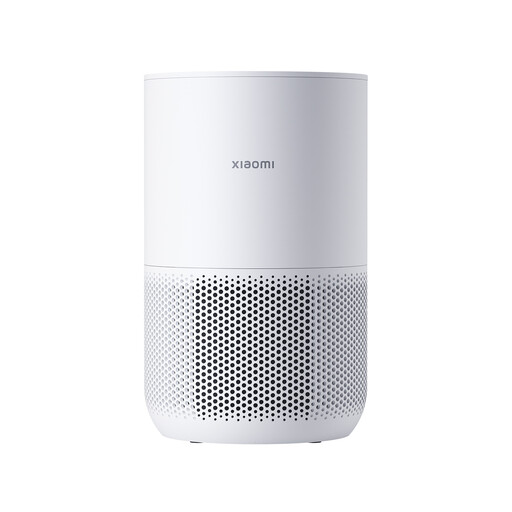
Why it suits this profile: A compact model for anyone looking for their first air purifier for a bedroom, study or other smaller room. The 230 m³/h particle CADR and 27 W rated power provide clear reference points.
The product information states both CADR and noise levels, so you do not have to rely solely on a vague coverage claim.
Compact size, 2.4 GHz Wi-Fi and a filter lifespan of approximately 6 to 12 months according to the product specifications.

Why it suits this profile: Ideal for users looking for a quiet air purifier with automatic control for a bedroom or home office.
The stated noise range is 20.5 to 49 dB(A), so sleep mode is not presented as the device’s maximum performance level.
250 m³/h CADR, PM2.5 sensor, automatic mode and a stated power rating of 21 W.
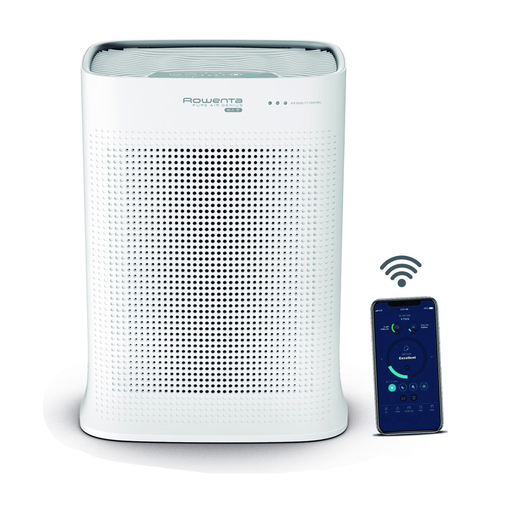
Why it suits this profile: Designed for larger living spaces where greater air capacity and multiple filter layers are preferred.
The product information lists a four-stage filter, 360° air intake, five speeds and an automatic mode alongside the room-size indication.
Pre-filter, activated carbon filter, HEPA filter and formaldehyde filter; stated power rating of 50 W and noise level from 52 dB.
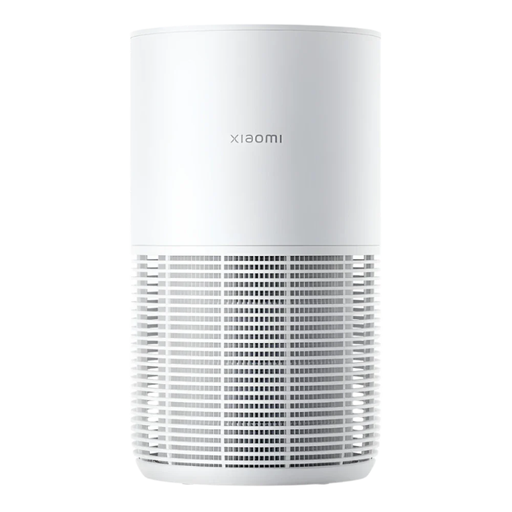
Why it suits this profile: An option for households looking to tackle hair, odours and airborne particles, while also valuing app or voice-assistant control.
The filter construction separately lists a pre-filter, HEPA filter and activated carbon layer. This makes it clearer which layer is intended for each type of pollutant.
230 m³/h CADR, PM2.5 sensor, app and voice control, child lock and a stated power rating of 27 W.
We have put together a complete, up-to-date list of products that fully meet these strict selection criteria and the applicable European safety regulations.
Place the air purifier on a stable, level surface with approximately 30 cm of clearance around the air inlet and outlet, unless the manual states otherwise. Do not place the device behind a curtain, directly next to a radiator or in a damp room such as the bathroom.
Always remove the plastic packaging around the filter before using the device for the first time. Clean a reusable pre-filter according to the instructions, but do not wash a HEPA or composite filter unless the manufacturer expressly says that you can. Replace the filter when the indicator displays an alert. Stated replacement intervals vary between models, but are generally around six to twelve months.
It can be, particularly if you choose a model with a clearly defined sleep mode, a suitable CADR and dimmable lighting. Do not place the device directly next to your head, and check the noise level on the setting you actually intend to use.
This varies depending on the model, usage time and the amount of dust, smoke or hair in the room. Manufacturers often give an estimated lifespan of six to twelve months. A filter indicator is useful, but you should also inspect the filter visually when the airflow noticeably decreases.
Electricity costs are determined by the power rating, the number of hours the device runs and your electricity tariff. You also need to factor in replacement filters. A lower wattage does not automatically mean lower running costs if the device has to operate for much longer at a high setting, so compare power, CADR and filter costs together.
