
Vandaag of morgen in huis

Kwaliteit gegarandeerd

Welkomstaanbiedingen ontgrendelen: GRATIS bezorging | Tot 80% korting | Gratis 30 dagen JoyPlus-proefperiode
Download de app
A TV bracket may seem straightforward: you attach the television to the wall, place it on a piece of furniture or mount it on a mobile stand. Yet many problems arise because buyers only look at the screen size or price. A bracket advertised as suitable for 55 inches will not automatically fit every 55-inch television.
Pay particular attention to these three common pitfalls:
Below, you can read which specifications matter and which solutions suit different situations.
The VESA size is the distance between the mounting holes on the back of your television or monitor. It is shown in millimetres, for example 100 x 100, 200 x 200 or 400 x 400 mm.
Measure the horizontal and vertical distance between the centres of the holes. Then compare these measurements with the range supported by the VESA TV bracket. A bracket with a range of 100 x 100 to 400 x 400 mm will therefore not automatically fit a screen with a 600 x 400 mm pattern.
This also applies to a monitor wall bracket. Smaller monitors often use 75 x 75 or 100 x 100 mm, while larger televisions have a wider mounting pattern.
Check the weight of the television without its original stand. The bracket’s maximum load capacity should be comfortably higher than this. A 22 kg screen should not be mounted on a TV wall bracket with a 20 kg limit.
With a TV trolley or mobile TV stand, you also need to consider the stability of the floor stand. A model may, for example, be suitable for 70 inches but still have a lower maximum weight capacity than your television.
Also look out for conflicting product information. If the screen size, load capacity or VESA specification is listed differently in different places, ask for confirmation before buying.
A tilting TV bracket is practical when you want to angle the screen slightly downwards, for example when it is positioned above eye level. A swivelling TV bracket or full-motion TV bracket is more suitable when you watch from several seating positions.
Always check:
A low-profile wall bracket takes up very little space but offers less flexibility. An arm that extends 30 cm or more can be useful in a corner, but requires a sturdy wall and careful installation.
A wall bracket is suitable when the television will have a permanent location. If you do not want to drill, a TV stand for placing on furniture is a practical choice. For meeting rooms, classrooms and presentation spaces, a TV trolley offers greater flexibility. A mobile stand can be moved between rooms, but must always be placed on a level surface and locked when stationary.
The recommendations below are based on verifiable specifications such as screen range, VESA compatibility, load capacity and adjustability.
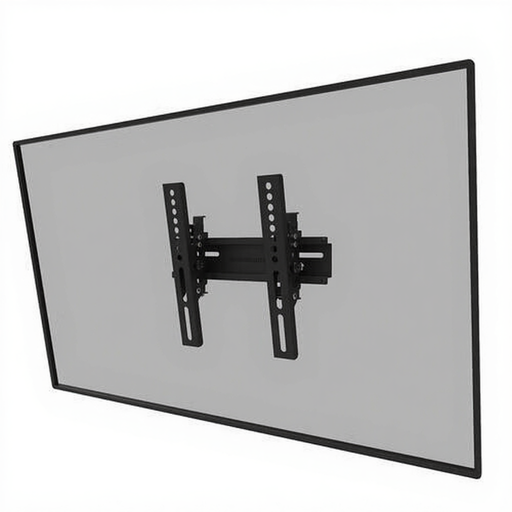
Why it suits this profile: This tilting TV bracket is suitable for screens from 24 to 55 inches and supports up to 25 kg. This makes it a straightforward choice for a first wall installation.
The VESA range runs from 50 x 50 to 200 x 200 mm. Do check this against your screen’s specifications; screen size alone is not enough.
12° tilt, 4.6 cm wall distance and lockable brackets; padlock not included.
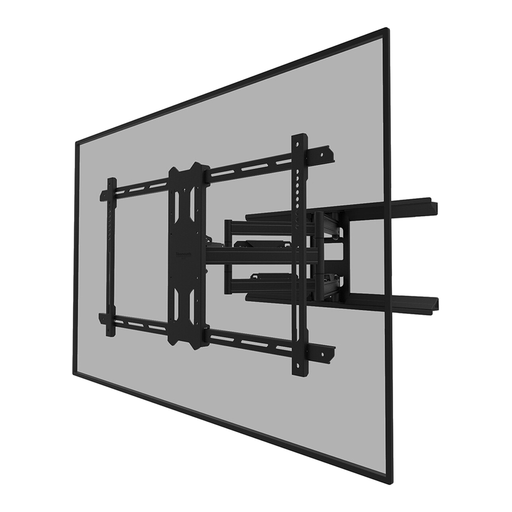
Why it suits this profile: For a larger living-room television, this full-motion TV bracket accommodates screens from 43 to 86 inches and supports loads of up to 60 kg.
The specifications state both the weight capacity and the VESA range of 200 x 100 to 800 x 400 mm. However, the arm requires a suitable load-bearing wall.
35° swivel, tilt adjustment and a wall distance of 5 to 61 cm; includes mounting template and cable management.
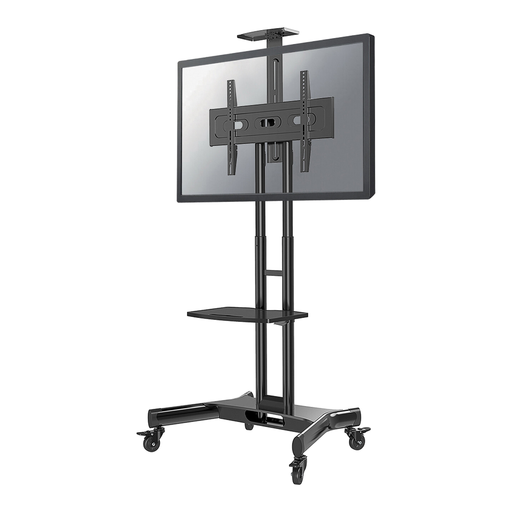
Why it suits this profile: This mobile TV stand is designed for classrooms, meeting rooms and homes where a screen is moved between different rooms.
The stand has four castors with brakes and a load capacity of 50 kg. Move it by holding the base and lock the wheels once it is in position.
Manual height adjustment from 104.2 to 154.2 cm, VESA from 200 x 200 to 600 x 400 mm and a multimedia/camera shelf.
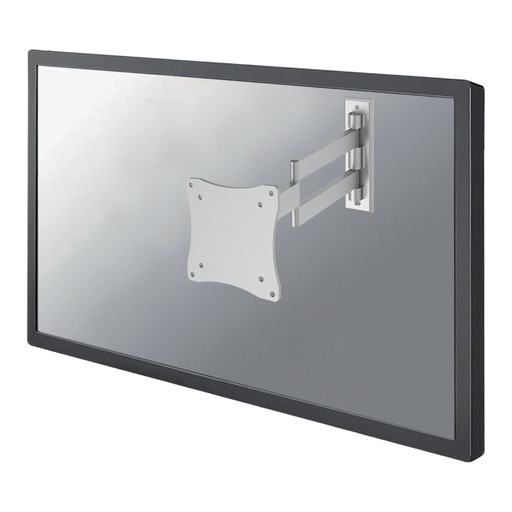
Why it suits this profile: This monitor wall bracket is designed for screens from 10 to 27 inches and supports up to 12 kg. It is suitable for a home office or a small television in a bedroom.
The product clearly states a VESA range of 75 x 75 to 100 x 100 mm and an adjustable depth of 4 to 36 cm.
20° tilt, 180° swivel and three pivot points for flexible positioning of a single screen.
We have compiled a complete, up-to-date list of products that fully meet these strict selection criteria and the applicable European safety regulations.
Only install a TV wall bracket on a suitable, load-bearing surface. Plasterboard requires the correct wall plugs or wooden studs; fixing into the board itself is not always sufficient. Before drilling, check that there are no pipes or electrical cables running through the wall.
Tighten all screws according to the instructions and check after installation that the screen cannot shift. With a swivelling TV bracket, support the arm before adjusting the screen. Check the fixings regularly, particularly if the screen is moved frequently.
Do not look at size alone. Check the weight, VESA pattern and desired function. For a 55-inch screen, a tilting TV bracket may be sufficient, while a full-motion TV bracket makes more sense if you watch from several angles.
Sometimes, but only with fixings that are suitable for the wall construction. Fixing to wooden studs or a reinforced back wall generally provides more support than mounting onto a single sheet of plasterboard. Always follow the installation instructions and check the combined weight.
Its lifespan depends on installation, load and use. A correctly installed bracket that is not overloaded can remain usable for many years. Periodically check the screws, hinges, cables and any wheel brakes. Replace components if you notice play, deformation or visible damage.
