
Vandaag of morgen in huis

Kwaliteit gegarandeerd

Welkomstaanbiedingen ontgrendelen: GRATIS bezorging | Tot 80% korting | Gratis 30 dagen JoyPlus-proefperiode
Download de app
A TV bracket can save space and keep cables neatly out of sight, but only if the mounting solution is suitable for your television, wall or ceiling. Choosing the wrong bracket can result in an uneven installation, restricted viewing angles or a mounting solution that is not suitable for the weight of the screen.
Pay particular attention to these three common pitfalls:
Looking only at the screen size
A 55-inch television will not automatically fit every 55-inch bracket. The VESA pattern, weight and available screws are just as important.
Confusing the maximum load capacity with a recommended safety margin
A bracket with a maximum load capacity of 50 kg should not be loaded with a screen and accessories that together come close to that limit. Add together the weight of the television, any soundbar bracket and accessories.
Underestimating the wall or ceiling
Concrete, brick, timber studs and plasterboard require different fixings. A TV wall bracket is not suitable for direct installation on plasterboard without special wall plugs or a load-bearing structure.
The VESA size is the distance between the mounting holes on the back of your screen, such as 100 × 100 mm, 400 × 400 mm or 600 × 400 mm. Measure horizontally and vertically between the centre points of the holes, or check the television manual.
A VESA TV bracket usually specifies a range. A model supporting 100 × 100 to 600 × 400 mm will therefore fit several screen sizes, as long as the pattern falls within that range. Also check the screw diameter and length. Screws that are too long can damage internal components.
A 32-90-inch TV bracket is not a single universal solution for every screen in that range. A large television will often have a different VESA pattern and a higher weight than a compact model.
Always check:
For a lightweight monitor, a monitor arm with a desk clamp may be more practical than a wall-mounted solution. For a large television, a suitable wall or ceiling structure is more important than an ultra-slim design.
A fixed TV bracket holds the screen close to the wall. This creates a clean look and is convenient when you watch from one fixed position. An adjustable TV bracket can tilt, swivel or rotate. This is useful in a living room with several seating areas, a meeting room or a bedroom.
An ultra-slim TV wall bracket may leave only a few centimetres of space. In that case, check in advance that there is enough room for the HDMI, power and aerial cables. Cables with right-angle plugs may be required.
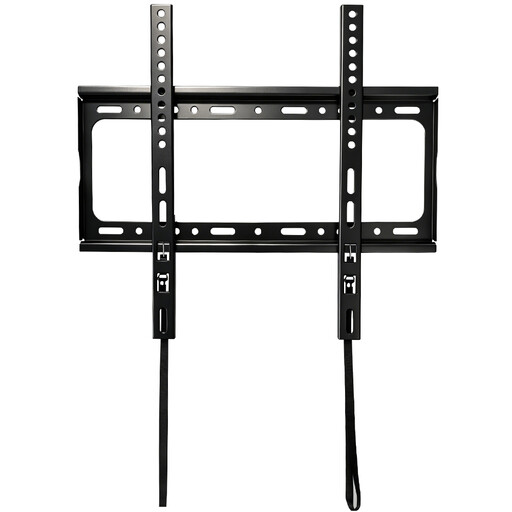
Why it suits this profile: This fixed TV bracket is designed for televisions from 32 to 55 inches and supports a VESA size of up to 400 × 400 mm. This makes it suitable for straightforward installation in a living room or bedroom.
The product information specifies the screen size, VESA limit and maximum load capacity of 45 kg. Check these three points against your TV model beforehand.
Fixed mounting, support for concrete, brick and timber studs, plus a space-saving design.
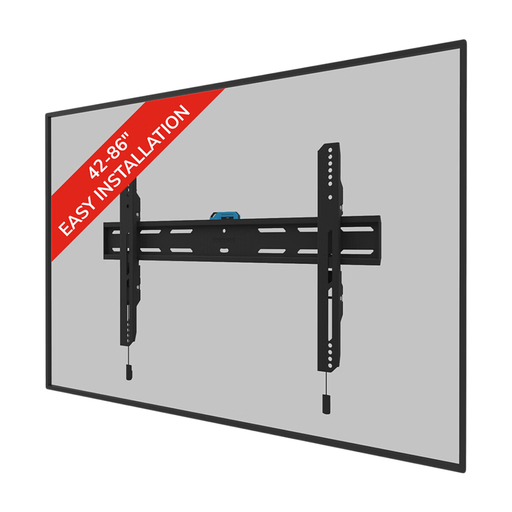
Why it suits this profile: This black wall model is designed for larger flat screens from 42 to 86 inches. The fixed mounting keeps the screen 3.3 cm from the wall, while the included spirit level and mounting template help you position it accurately.
The stated VESA range is from 100 × 100 to 600 × 400 mm. The locking system and anti-theft screw help ensure that the screen remains securely attached after installation.
Supports up to 60 kg, fixed wall distance of 3.3 cm, height and levelling adjustment, plus a locking facility.
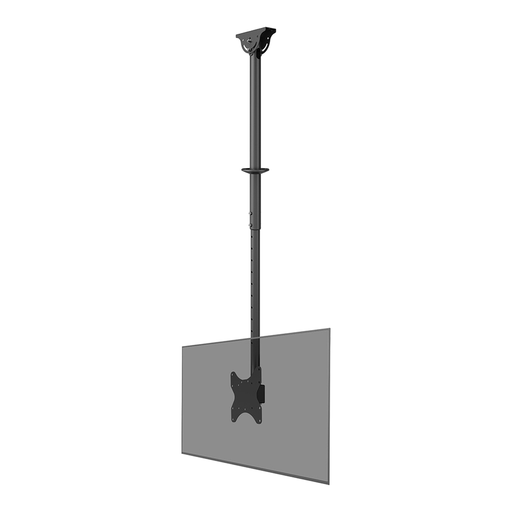
Why it suits this profile: This TV ceiling bracket is suitable for screens from 23 to 42 inches, for example in a shop, office, kitchen or room with limited wall space.
The bracket explicitly states a VESA range of 100 × 100 to 200 × 200 mm, a load capacity of 50 kg and an adjustable height of 106 to 156 cm.
Tilts up to 25°, rotates up to 360°, includes cable management and supports sloping ceilings.
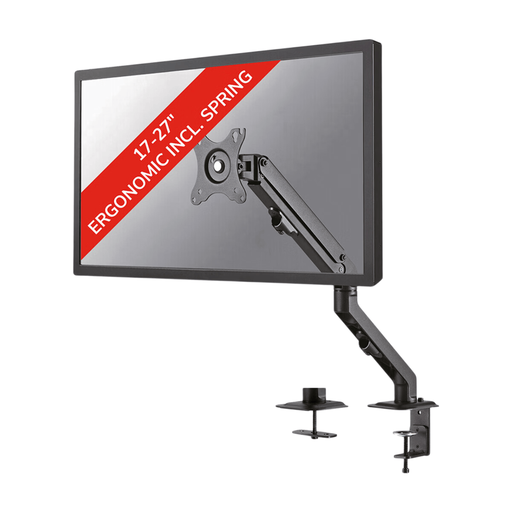
Why it suits this profile: For a monitor on a desk, this monitor arm is more practical than a TV wall bracket. The arm is suitable for screens from 17 to 27 inches and comes with a desk clamp and grommet mount.
The product information specifies VESA 75 × 75 and 100 × 100 mm and a maximum load of 7 kg. This allows you to check in advance whether your monitor is genuinely compatible.
Height adjustment from 11 to 42 cm, 360° rotation, 180° swivel, tilt and integrated cable management.
Use fixings that are suitable for the type of surface. On a timber wall, locate the studs, and when drilling into a brick wall, avoid drilling into a loose mortar joint wherever possible. Check in advance whether any pipes or electrical cables run behind the drilling points.
For a large television, installation by two people is advisable. First secure the VESA arms, check that the bracket is level and only release the screen once all locking mechanisms are closed. After installation, check that the cables are not under tension and that the television’s ventilation openings remain unobstructed.
A black finish, such as a black TV bracket, often complements dark screen bezels discreetly. However, the colour says nothing about the load capacity or the quality of the mounting solution. For that, refer to the technical specifications and the suitability of the surface.
We have put together a complete, up-to-date list of products that fully meet these strict selection criteria and the applicable European safety regulations.
Check the television’s size range, weight and VESA size. All three details must fall within the bracket’s specifications. Also check that the wall or ceiling is suitable for the installation.
No. A fixed TV bracket is practical when you watch from one position and want the screen close to the wall. An adjustable model is useful if you regularly need to change the viewing angle, for example in an open-plan living room or meeting room.
Its lifespan depends on the material, installation, load and how often the screen is moved. Regularly check the screws, arms and locking mechanism for play or wear. Never exceed the stated load capacity, and do not move a heavy television on your own.
