
Vandaag of morgen in huis

Kwaliteit gegarandeerd

Welkomstaanbiedingen ontgrendelen: GRATIS bezorging | Tot 80% korting | Gratis 30 dagen JoyPlus-proefperiode
Download de app
A TV stand might seem straightforward at first: put the television on it and you’re done. In practice, problems often arise because of an incorrect VESA size, insufficient weight capacity or a base that leaves too little room for cables. Tabletop stands and wall mounts are also often confused, even though their installation and stability can differ considerably.
Use this practical guide to compare a TV tabletop stand, TV base, universal TV stand and wall-mounting solution against clear criteria. That way, you can choose a model that suits your screen, furniture and intended use.
A description such as “TV stand 23 to 70 inches” doesn’t mean that every screen in that range will automatically fit. Also check:
For example, a 55-inch television might have an unusual VESA pattern or be heavier than another television of the same screen size.
VESA is the standard for the horizontal and vertical distance between mounting holes, measured in millimetres. Common patterns include VESA 100 x 100, 200 x 200, 400 x 400 and larger sizes.
A VESA TV stand must support the pattern used by your screen. So, “universal” doesn’t mean it will fit every TV. Check the specifications for both the TV and the stand before you order.
A swivel TV stand lets you adjust the viewing angle, but that doesn’t always mean you can adjust the height. Some models have fixed positions, while others offer continuous adjustment. Check the exact details, including:
An extra feature is only useful if your furniture and viewing position leave enough room to use it.
Choose a TV base or stand with a weight capacity higher than the weight of your television. Never exceed the stated limit. With a tabletop model, you’ll also need to check that the furniture itself is stable enough.
A glass base can be sturdy, but it must be placed on a flat, stable surface, as stated in the product specifications. Before installation, check for cracks or damage and tighten the mounting screws securely.
Measure the distance between the mounting holes on the back of your TV. Also check that the screws supplied are suitable for your model. If the pattern doesn’t match, you may need a VESA conversion plate.
An adjustable TV stand with several VESA options gives you more choice, but always check the maximum screen size, weight capacity and VESA range together. All three specifications must be suitable.
A tabletop stand is a good choice if you don’t want to drill into the wall or no longer have the original TV base. A TV wall mount frees up space on your furniture, but you’ll need a suitable wall and correct installation. For a heavy television, professional installation may be a sensible option.
A TV floor stand is a separate solution for rooms without suitable TV furniture. Pay particular attention to its footprint, height and stability, especially on slippery floors or in a business setting.
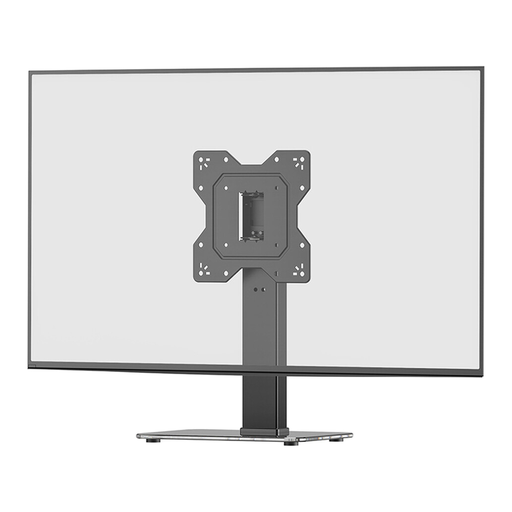
Why it suits this type of user: This tabletop model is designed for screens from 23 to 43 inches and doesn’t require wall drilling. The stand has three height positions and swivels by up to 70 degrees.
The product specifications clearly state the range of 23 to 43 inches, a weight capacity of 40 kg and VESA 100 x 100 to 200 x 200 mm. This lets you check the fit before you buy.
70-degree swivel range, 10 cm height adjustment, cable management and a tempered glass base.
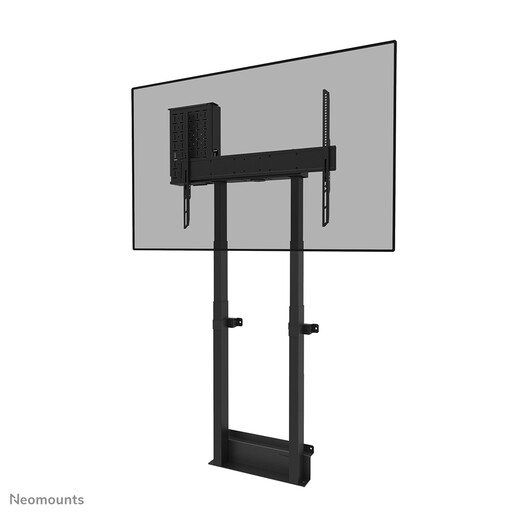
Why it suits this type of user: For large screens and business settings, this motorised wall-mounted solution offers an electric height range of 98 to 163 cm. The manufacturer states that it supports screens from 55 to 100 inches and weighs up to 110 kg.
The stated VESA range runs from 100 x 100 to 800 x 600 mm. Installation does require a suitable wall and must be carried out correctly in accordance with the safety information.
65 cm of height adjustment, remote control, cable management, anti-collision function and a lockable compartment.
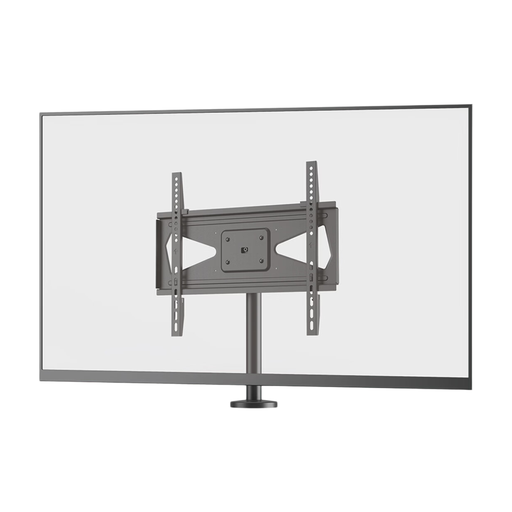
Why it suits this type of user: This bolt-down TV tabletop stand is suitable for screens from 32 to 55 inches and has a stated weight capacity of 50 kg. It’s a good fit for desks, counters and furniture where extra fixing is preferred.
The bolt-down mounting means you don’t have to rely on the weight of the base alone. Check in advance that you’re allowed to drill into the furniture and that VESA 100 x 100 to 400 x 400 mm matches your TV.
50 kg weight capacity, 60-degree swivel range and internal cable routing.
We’ve put together a complete, up-to-date list of products that meet these strict selection criteria and the applicable European safety regulations.
A freestanding TV stand isn’t the right choice for every situation. A TV wall mount is useful when floor or furniture space is limited. According to its product specifications, the One For All WM4452 supports screens from 32 to 65 inches, weighing up to 50 kg, and offers 180-degree swivel and 15-degree tilt. Take a look at the One For All TV Stand TV Bracket if wall mounting would work better in your space.
For smaller monitors or screens up to 27 inches, a VESA adaptor may be all you need. The Neomounts FPMA-LIFT100BLACK supports VESA 75 x 75 and 100 x 100 mm, has a stated weight capacity of 8 kg and offers up to 17,7 cm of height adjustment. It’s an add-on for an existing wall, desk or ceiling mount, not a complete TV stand for large televisions.
No. Always check the screen size, weight and VESA pattern. A universal TV stand often supports a wide range, but all three specifications need to match for the mounting to be suitable.
That depends on the surface and installation. A tabletop model avoids drilling, but must stand on flat, stable furniture. A wall mount needs a suitable wall, the correct wall plugs and secure fixing. Always follow the installation instructions and never exceed the stated weight capacity.
Its lifespan depends on the load, installation, material and how often it’s moved. Check regularly that the screws, VESA fittings and swivel joints are still secure. Don’t continue using a damaged glass base or bent metal component. Age alone isn’t a reliable guide; the current condition and maximum load are more important.
