
当日/次日达

品质保障

开启新人专享福利: 全场免邮 | 低至 2 折 | 免费试用 30 天 JoyPlus 会员
下载 Joybuy
Grease on kitchen tiles, limescale around the tap and stains on the sofa don’t always call for several different cleaning products. A steam cleaner uses hot water and can help loosen dirt, depending on the surface and the accessory you use. However, not every model is suitable for every job.
The right choice depends on your home, the type of flooring and how quickly you want to clean. Also look beyond headline product claims, which may tell you less in practice than details such as tank capacity or the accessories included.
High power sounds appealing, but it doesn’t tell you everything about how easy a cleaner is to use. Wattage mainly affects how quickly the water heats up and how much energy the appliance uses. Pressure, measured in bar or kPa, gives an indication of the steam’s force, but doesn’t tell you how long the machine can produce steam.
For example, a powerful steam cleaner with a small tank may need frequent refills. That might not be a problem in a flat, but it can become inconvenient if you have several floors to clean.
The term ‘multifunctional’ is only useful if the right tools are included. A steam cleaner for windows needs a window squeegee. Small brushes or a precision nozzle are more useful for grout, hobs and taps. A floor cloth alone doesn’t make an appliance suitable for the bathroom and kitchen.
So check how many accessories are included and what they’re designed for. Also look into the availability of replacement cloths and brushes.
Steam isn’t suitable for every material. Untreated wood, some laminates, delicate plastics, silk, velvet and surfaces with wax or lacquer finishes can be sensitive to heat and moisture. Cold glass may also be at risk of thermal stress.
Test the cleaner on an inconspicuous area first and follow the instructions. A steam cleaner isn’t a substitute for a vacuum cleaner either: remove loose sand and crumbs beforehand.
Three specifications are worth considering for everyday household use:
A model with a pressure of 2.5 to 4 bar may suit a range of household tasks, but results also depend on how far you hold it from the surface, the steam flow and the brush you use. Manufacturer claims about temperature or cleaning performance should be treated as information from the product description, not as a guarantee for every material or stain.
A handheld steam cleaner with a tank of around 250 to 400 ml is compact and ready to use for the sink, hob or car. For cleaning an entire home, a 1 to 1.6-litre tank is more practical. Check:
Don’t use vinegar, perfume, cleaning products or descaler unless the instructions explicitly allow it. Some models state that you should use clean water only.
A 6-metre cable is useful when sockets aren’t close together. A larger tank and hose often give you more reach, but can make the appliance heavier. A steam mop should be lightweight, as you’ll be moving it across floors for longer periods. With a compact handheld steam cleaner, ease of storage and quick use matter more.
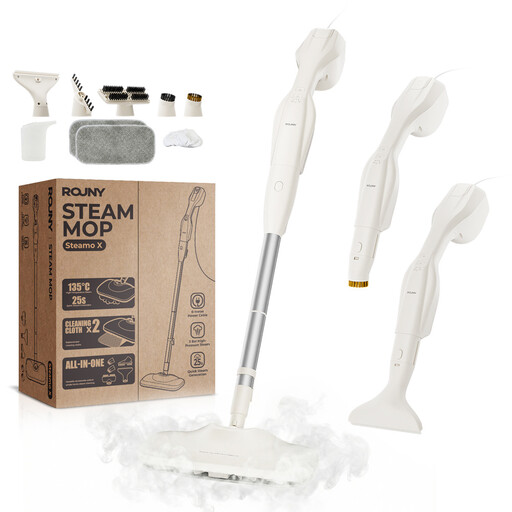
Why it suits this type of user: The combination of a handle and handheld mode is handy if you want one appliance for floors as well as kitchen edges, windows and corners.
According to the product description, this model has two steam settings and five accessories. So you don’t have to rely on a single universal floor cloth.
According to the product specifications: a heat-up time of around 25 seconds, a 6-metre cable, a 250 ml tank and steam pressure of 2.5–3 bar.
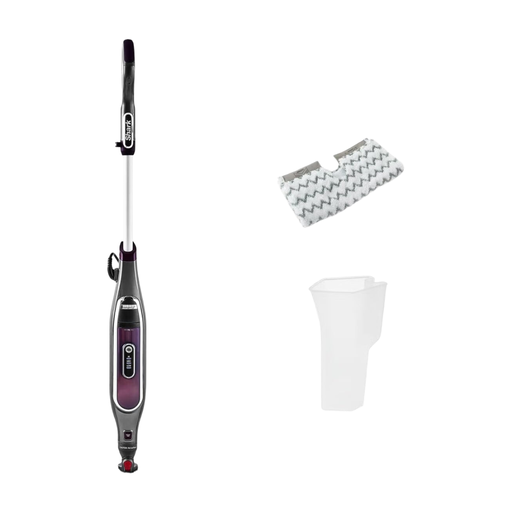
Why it suits this type of user: This model is primarily designed for sealed hard floors and regular maintenance. It has a long cable and washable cleaning pads.
The product information specifically recommends use on sealed hard floors and warns against using it on untreated wood. This makes its limitations clearer.
According to the product specifications: 1200 watts, a 6-metre cable, two washable Dirt Grip pads and a stated heat-up time of around 30 seconds.
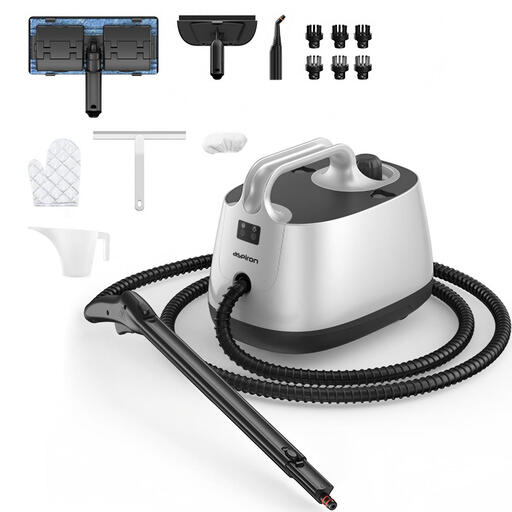
Why it suits this type of user: The large tank and range of accessories are designed for tackling several rooms, grout, windows, sofas and car interiors in one cleaning session.
According to the product description, 21 accessories are included. The 1.5-litre tank also means you’re less likely to need a quick refill.
According to the stated specifications: 1500 watts, up to 4 bar, a 1.5-litre tank, wheels and a child lock on the handle.
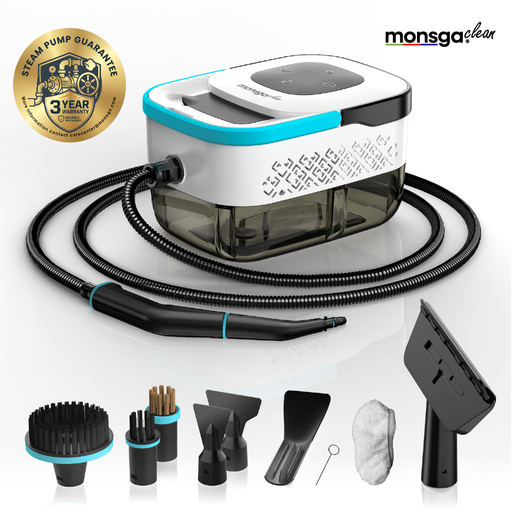
Why it suits this type of user: According to the product information, this model is designed for longer cleaning sessions at home and for car interiors, with several adjustable steam settings.
The description lists six steam levels and a 1.6-litre tank. This lets you adjust the intensity to suit the task, rather than treating every surface the same way.
According to the product details: 1500 watts, 3.5 bar, a 1.6-litre tank and a stated heat-up time of 15 seconds.
We’ve put together a complete, up-to-date list of products that meet these strict selection criteria and current European safety regulations.
A chemical-free steam cleaner generally means that you use water only. This can reduce the cost of cleaning products, but steam won’t remove every kind of dirt. Wipe away loose dirt first, then use a cloth to pick up any grease that the steam has loosened.
Follow these basic rules:
Take extra care when using a steam cleaner for carpets and sofas: too much moisture can soak into the fabric. Use short bursts of steam, wipe up the loosened dirt and let the surface dry thoroughly. The same applies to your car. Avoid electronics, air vents and materials that can’t withstand heat or moisture.
It depends on the model. Some appliances specify drinking water or clean tap water, while other manufacturers recommend treated or distilled water to help limit limescale. Always check the instructions. Don’t add cleaning products unless this is explicitly allowed.
Its lifespan depends on how often you use it, how well you maintain it, the water quality and how you store it. Let the appliance cool down after use, remove any remaining water if instructed and keep the hoses, nozzles and cloths clean. Check the cable and plug regularly too.
Running costs may be lower if you need very little cleaning product. However, you’ll still need to factor in electricity, water, replacement cloths and any descaling. So compare more than just the purchase price: consider the tank capacity, maintenance and which parts you can replace later.
