
Livraison le jour même et le lendemain

Qualité garantie

Débloquez vos offres de bienvenue: Livraison GRATUITE | Jusqu'à -80 % | 30 jours d'essai gratuits à JoyPlus
Téléchargez l'application
A steam cleaner can loosen grease, baked-on dirt and stains without the need for standard cleaning products. However, not every model is suitable for every task. A compact handheld steamer for grout works differently from a steam mop for floors or a floor cleaner that also vacuums up dirty water.
When comparing models, focus above all on how you will actually use the appliance. A high wattage rating does not automatically mean that a device is more pleasant to use, for example. Likewise, a long list of accessories may be of little value if the water tank is small or replacement parts are difficult to find.
Higher power can contribute to faster heating, but it does not tell you everything about steam distribution, operating time or controls. Also check the heating time, steam pressure, steam output and tank capacity. A high-powered model with a 250 ml tank may need refilling more often during a major cleaning session.
Steam is not suitable for every surface. Untreated wood, delicate types of plastic, wax coatings, some upholstery fabrics and bonded materials may be sensitive to heat and moisture. Only use a steam cleaner on floors when the manufacturer permits it, such as on sealed vinyl, tiles or treated wood.
Always test the cleaner on an inconspicuous area first. For windows, bear in mind that a significant temperature difference between cold glass and hot steam can cause damage.
Dutch sockets generally supply 230 volts. Always check the stated voltage before ordering. The LUBLUELU JJ-SC-053A, for example, states 100–120V~60Hz. This means that the model is not automatically suitable for direct use in the Netherlands. An adapter does not always resolve differences in frequency or power.
Product titles can also be confusing. According to the product information, the Tefal VC139810 is a food steamer with a 6-litre capacity, not a steam cleaner for the bathroom, kitchen or floor. Always read the full product description.
Steam pressure, measured in bar, indicates the force with which steam leaves the nozzle. A handheld steam cleaner producing around 2.5 to 3 bar is practical for grout, hobs, taps and small surfaces. For stubborn dirt across several rooms, a model with a larger tank and higher pressure may be more suitable.
According to product descriptions, a high temperature helps loosen dirt, but the result also depends on the distance from the surface, how quickly you move the cleaner and the type of dirt. Claims about removing bacteria should be treated as statements from the product information or the brand’s own research, not as a general guarantee for every cleaning situation.
For a small kitchen or a quick bathroom clean, a 250 to 400 ml tank may be sufficient. If you want to clean several rooms, car interiors or upholstery, a tank of around 1 to 1.6 litres is more practical. Check whether the tank can be refilled during use. With many appliances, you must first switch off the device, unplug it and allow it to cool down.
A steam cleaner with accessories is only versatile if the attachments suit your tasks. Look for:
A lock to prevent accidental steam release, clear water indicators and a long power cable are practical advantages. Also check whether replacement pads and brushes are available.
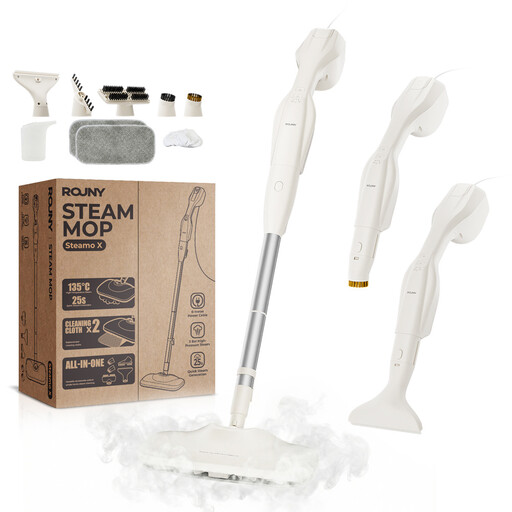
Why it suits this profile: This model combines a steam mop with a handheld steam cleaner. You can use it on sealed floors as well as kitchen edges, windows and corners.
The specifications state a heating time of around 25 seconds, two steam settings and a 6-metre cable. Suitability depends on the surface, however.
2-in-1 design, stated steam pressure of 2.5–3 bar, 250 ml tank and five listed cleaning accessories.
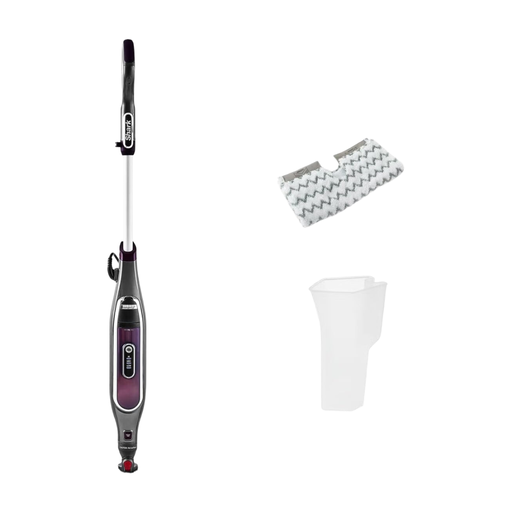
Why it suits this profile: Ideal for households that mainly clean hard floors and value ease of use, reach and reusable pads.
The product information mentions intelligent steam control, a steam boost and two machine-washable Dirt Grip pads. The appliance is intended for sealed hard floors, not untreated wood.
1200 W, 380 ml capacity, around 30 seconds’ heating time and a 6-metre cable.
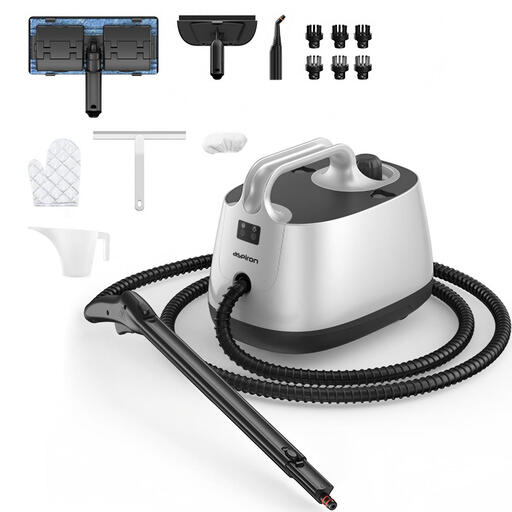
Why it suits this profile: A practical choice for anyone who wants to clean several rooms, grout, windows, upholstery or a car interior with one multifunctional steam cleaner.
The 1.5-litre tank reduces interruptions during longer cleaning sessions. The 21 included accessories let you adapt the cleaner to different surfaces.
1500 W, up to 4 bar according to the product information, a 1.5-litre tank and integrated wheels with a flexible hose.
Steam from the nozzle is extremely hot and can cause burns. Keep the appliance away from children and pets, and never direct the jet at people, animals, sockets or electrical appliances. Use water only unless the instructions explicitly permit another liquid. Vinegar, perfume, oil or cleaning products may damage the heating element or create unwanted fumes.
Allow the steam cleaner to cool down before emptying the tank, changing a brush or removing a pad. When cleaning textiles and wood, it is always sensible to test the cleaner on an inconspicuous area first.
We have compiled a complete, up-to-date list of products that fully meet these strict selection criteria and the applicable European safety regulations.
Yes, many models are designed for use with clean water. Always check the instructions first. Steam can help loosen dirt without cleaning products, but it will not automatically remove every type of stain or build-up.
No. A steam mop is generally intended for sealed hard floors, such as tiles, some vinyl floors and treated wood. Untreated wood, damaged varnish and sensitive laminate flooring can warp when exposed to moisture and heat. Follow the floor manufacturer’s care instructions.
Electricity consumption depends on the power rating and operating time. A 1500 W appliance that heats continuously for one hour theoretically uses 1.5 kWh. In practice, the heating element often switches on and off. Water and replacement microfibre pads are also ongoing costs. Check in advance which parts are available, so that a minor fault does not immediately mean replacing the entire appliance.
