
Vandaag of morgen in huis

Kwaliteit gegarandeerd

Welkomstaanbiedingen ontgrendelen: GRATIS bezorging | Tot 80% korting | Gratis 30 dagen JoyPlus-proefperiode
Download de app
A steam cleaner for floors can be useful for tiled floors, vinyl and other sealed hard surfaces. However, not every model is suitable for every home. A lightweight steam mop is convenient for everyday maintenance, while a multifunctional steam cleaner is better suited to grout, windows, kitchen surfaces and car interiors.
The biggest mistake is buying based on one eye-catching figure. A high wattage, for example, does not automatically mean that a device steams for longer or glides better over a floor. Instead, consider the combination of steam control, water tank, accessories and the surfaces the model is intended for according to the product information.
A short heat-up time sounds appealing. However, some compact models have a small water tank, meaning you need to refill it after just a few minutes. Always check:
A model with a 250 to 380 ml tank is suitable for short cleaning sessions. For several rooms, a larger tank of around 1.5 litres is more practical, although such a device may be heavier and less manoeuvrable.
A long list of accessories is only valuable if you will actually use the attachments. A floor brush, window squeegee and small nylon brush each have a different purpose. Also check whether the pads are washable and whether replacement parts are available.
A handheld steam cleaner with a hose or extension is useful for grout, taps and corners. A traditional steam mop is simpler for large, sealed hard floors. For carpets, furniture or the car, check whether the manufacturer lists these applications. Do not use steam on untreated wood, delicate fabrics or heat-sensitive plastic without checking first.
Claims such as ‘hygienic’, ‘powerful steam’ or ‘removes bacteria’ should be read carefully. A brand’s own research may have established a particular effect under specific conditions, but that is not a general guarantee for every floor or stain. Pay particular attention to verifiable details such as steam pressure, temperature, steam control, cable length and accessories.
With a chemical-free steam cleaner, use only water when instructed by the manual. Manufacturers often warn against adding cleaning products, perfume, alcohol or vinegar to the tank. Such additives may damage the device or create unwanted fumes.
Pressure is usually measured in bar. A rating of 2.5 to 4 bar is common among multifunctional models. More pressure is not automatically better for every floor: delicate surfaces require control and a lower setting.
Adjustable steam power makes a steam floor cleaner more versatile. A low setting may be suitable for light dirt, while a higher setting may be intended for grout or baked-on residue. Always test the cleaner on an inconspicuous area first.
Power, measured in watts, provides information about electricity consumption and heating capacity. It is not an independent measure of quality. A 1,200-watt device may be sufficient for a compact steam mop, while a larger boiler may use 1,500 watts.
As well as wattage, check the stated heat-up time. The models in this selection quote times of around 15 to 30 seconds, while a larger boiler takes approximately five minutes according to the product information.
Check that your floor is sealed. Steam may be unsuitable for untreated wood, loose floor finishes and some laminate flooring. Weight is also important. A device weighing 1.8 to 2.7 kg is easier to manoeuvre than a multifunctional cleaner weighing around 6 kg.
For a corded model, cable length and hose reach are important. A 6-metre cable reduces the need to change sockets in larger rooms. A large tank increases cleaning time, but often makes the device less lightweight.
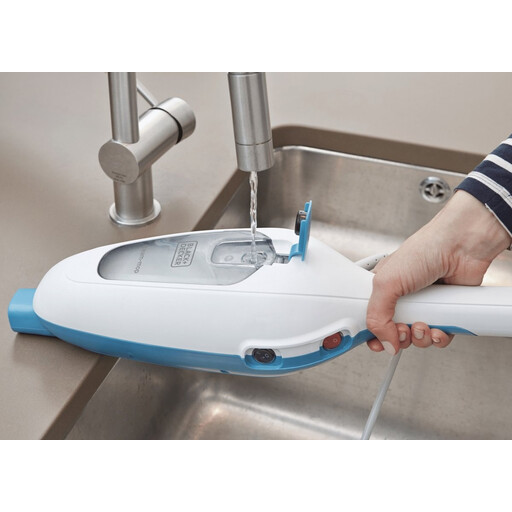
Why it suits this profile: Simple controls and a low weight make it suitable for short cleaning sessions on sealed hard floors.
The product information states that it has a 0.38-litre tank, a 30-second heat-up time and up to 11 minutes of steaming time. This makes its usage limits clear from the outset.
1,300 watts, a 4-metre cable, a weight of 1.8 kg and two washable Dirt Grip pads according to the product specifications.
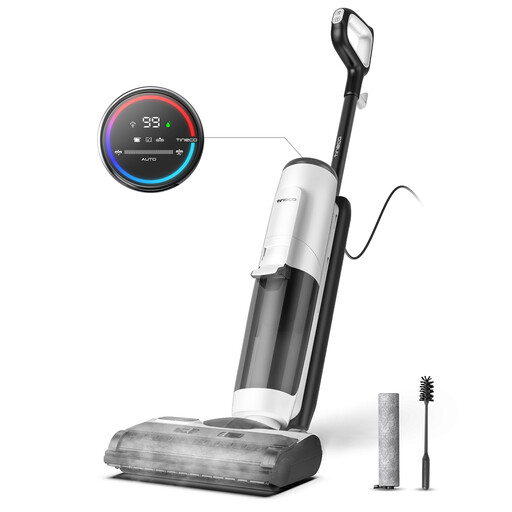
Why it suits this profile: According to the product information, this model is designed to combine floor cleaning and vacuuming, making it suitable for households that want to combine several tasks.
The stated application is limited to indoor hard floors such as vinyl, tiles and sealed wood. This helps prevent you from using the model on delicate surfaces without checking first.
Combines wet and dry cleaning, with a digital display, an additional brush roller and a stated weight of 6 kg.
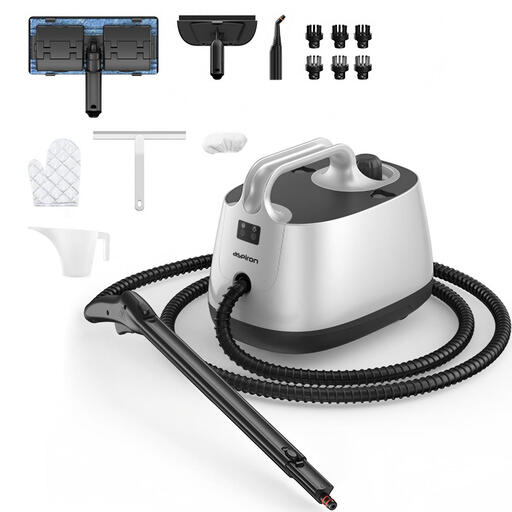
Why it suits this profile: The combination of a large tank, hose, wheels and accessories is suitable for larger homes and a range of tasks in the bathroom, kitchen, car and living areas.
The product description specifically lists 21 accessories and applications for areas including grout, windows and car interiors. This allows you to check in advance whether the set suits your tasks.
1,500 watts, up to 4 bar according to the product information, a 1.5-litre tank, wheels and child safety lock on the handle.
Use a steam cleaner for hard floors only when the floor finish is suitable for it. Keep the following points in mind:
If you are looking for a steam cleaner for carpets and cars, pay particular attention to the upholstery tool supplied and the materials it is approved for. A floor brush alone does not automatically make a device suitable for carpets.
We have put together a complete, up-to-date list of products that fully meet these strict selection criteria and the applicable European safety regulations.
It depends on the floor and the manufacturer’s instructions. Only use steam on laminate when the surface is properly sealed and the manufacturer permits it. Test a hidden area first and prevent moisture from getting into the joints.
Running costs can remain relatively low because many models use only water. However, you still pay for electricity, water and any replacement pads. The actual cost depends on power, usage time and maintenance. So do not compare only the purchase price; also consider tank capacity and the availability of replacement parts.
A fixed service life cannot be guaranteed in advance. Emptying the tank regularly, descaling it correctly and following the safety instructions can help keep the device in working order. Also check the statutory minimum two-year guarantee for consumers in the EU; additional rights may apply under the relevant national regulations.
