
Vandaag of morgen in huis

Kwaliteit gegarandeerd

Welkomstaanbiedingen ontgrendelen: GRATIS bezorging | Tot 80% korting | Gratis 30 dagen JoyPlus-proefperiode
Download de app
A steam cleaner can help tackle grease, dried-on dirt and stains on suitable surfaces. However, not every model is right for every job. A compact handheld steam cleaner works differently from a steam mop, while a carpet cleaner with a suction function is a different type of appliance altogether.
If you look only at wattage, “high pressure” or the number of accessories, you could end up with an unsuitable purchase. Below, we cover the key things to consider, followed by product suggestions for different needs.
A power rating of 1,500 or 1,800 watts may sound appealing, but on its own it says little about how well an appliance works in practice. Heat-up time, steam pressure, steam output, nozzle design and temperature control all affect how easy it is to use.
A powerful steam cleaner with a large tank may be suitable for several rooms, but could take longer to heat up. A smaller model is quicker to get ready for a spot stain, but needs refilling more often.
A set with lots of brushes and nozzles offers flexibility, but steam isn’t suitable for every surface. Take care with:
Always test on an inconspicuous area first. For a sofa or carpet, you should also check that the material can withstand moisture and heat. A steam cleaner for sofas and carpets isn’t the same as an appliance that sucks up water.
A 1.5- or 1.6-litre tank means fewer interruptions, but often makes the appliance larger and heavier. For a flat or a quick clean, a handheld steam cleaner or compact steam mop may be more practical.
Check the cord, hose, weight and storage space too. If an appliance is difficult to get out of the cupboard, you’re less likely to use it.
Steam pressure in bar indicates the pressure at which steam is released. A higher figure can help with grouting, baked-on dirt and grease, but it isn’t a reliable measure of quality on its own. Temperature affects how quickly dirt loosens. Steam output in millilitres per minute indicates how much steam the appliance produces.
A lower setting may be enough for everyday cleaning. For kitchen edges, tile grouting or stubborn dirt, adjustable steam is useful. A model with several settings gives you more control than one with a single fixed setting.
Bear in mind the difference between tank capacity and the stated running time. The actual duration depends on the steam setting you choose. A large tank is useful for floors and several rooms, while a smaller tank keeps a handheld model light.
A steam cleaner for floors should also glide easily across the floor. Check whether it comes with a floor mop, microfibre pads and a sufficiently long cord. For windows, kitchens and corners, dedicated attachments matter more than high pressure alone.
With a steam cleaner with accessories, how useful the set is matters more than the number of parts. A round brush, grout brush, window squeegee, floor cloth and narrow nozzle are often practical options.
Only use water as specified in the instructions. Several product descriptions warn against putting cleaning products, perfume, alcohol or other liquids in the tank. Let the appliance cool down before changing accessories, and follow the manufacturer’s descaling instructions.
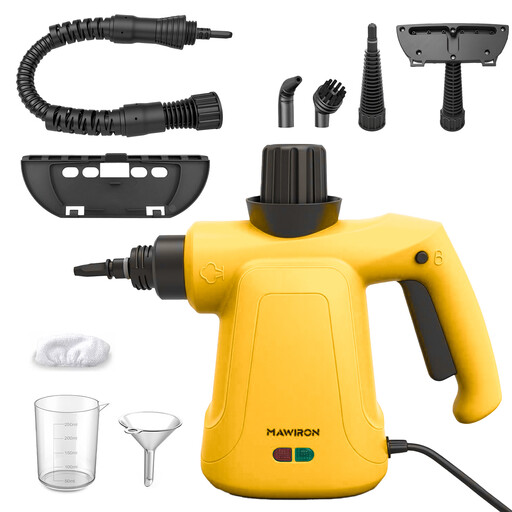
Why it suits this type of user: A compact model with a 400 ml tank may be suitable for small cleaning jobs, kitchen edges, car interiors and spot stains.
The stated tank capacity makes it clear that this model is better suited to short sessions than cleaning an entire home without refilling.
1000 watts of power according to the product name, plus 9 included attachments for different uses.
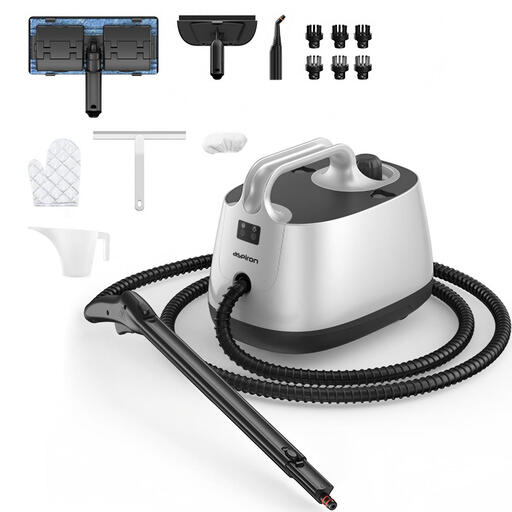
Why it suits this type of user: This model is designed for households that want to clean several rooms in one go and value a comprehensive set of accessories.
The specifications state a 1.5-litre tank capacity, making it easier to estimate the expected running time than with a small handheld model.
According to the product description: 1,500 watts, up to 4 bar, a 1.5-litre tank and 21 accessories.
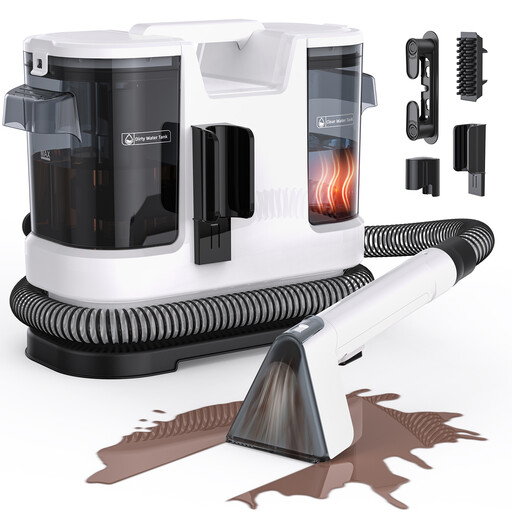
Why it suits this type of user: This is primarily a carpet and upholstery cleaner for households looking to tackle stains on carpets, sofas or car interiors.
The product name states 15,000 Pa of suction power and a hot water function, so don’t compare it directly with a steam mop alone.
1,400 watts according to the product name, a large tank and a long mains cable for carpets, sofas and car interiors.
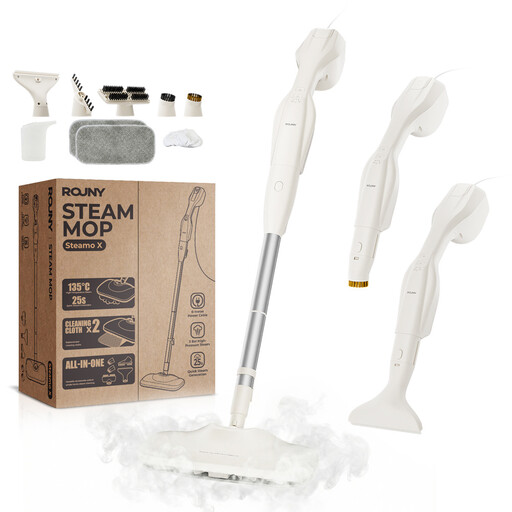
Why it suits this type of user: The combination of a steam mop and handheld cleaner is practical for hard floors, kitchen surfaces, windows and corners in an average-sized home.
The two steam settings let you adjust the intensity, although the 250 ml tank points to shorter cleaning sessions.
According to the product description: around 25 seconds’ heat-up time, a 6-metre cord, 2.5–3 bar and five listed accessories.
We’ve put together a full, up-to-date list of products that meet these strict selection criteria and comply with the applicable European safety regulations.
Before use, read the instructions and check that the appliance is suitable for your surface. Also bear the following points in mind:
It depends on the type of laminate, the joints and the manufacturer’s instructions. Moisture and heat can cause damage. Only use steam if the flooring manufacturer allows it, and test on an inconspicuous area first.
Electricity consumption depends on the wattage and how long you use the appliance. A 1,500-watt appliance theoretically uses 1.5 kWh if it heats and runs continuously at maximum power for one hour. In practice, consumption is often lower when the appliance isn’t running at full power continuously. Focus on heat-up time and how long you need to clean for.
Its lifespan depends on use, water quality, maintenance and storage. Limescale can put strain on components, especially in hard water areas. Empty the tank after use, let the appliance dry and follow the maintenance instructions. A model with replaceable cloths and readily available accessories will generally remain useful for longer.
