
Vandaag of morgen in huis

Kwaliteit gegarandeerd

Welkomstaanbiedingen ontgrendelen: GRATIS bezorging | Tot 80% korting | Gratis 30 dagen JoyPlus-proefperiode
Download de app
Soy milk, soy drinks and other plant-based milks have become a regular part of breakfast in many Dutch households. Yet the packaging often looks more alike than the contents. For example, a product may be described as “high in protein”, while its sugar content or serving size is less obvious.
For vegans, vegetarians, people avoiding lactose and fans of Asian drinks, three pitfalls are particularly important: confusing a sweet taste with a low sugar content, failing to check nutrition claims and overlooking allergens. Use the points below to compare soy milk based on verifiable information on the label.
A soy drink can be entirely plant-based and vegan, but still contain added sugar. So don’t just look at words such as “original”, “vanilla” or “smooth”; check carbohydrates of which sugars per 100 ml.
For comparison:
A vanilla or banana flavour may therefore be suitable if you’re choosing mainly for taste, but less suitable if you’re looking for unsweetened soy milk.
Always compare the same unit. “High in protein” on the front of a pack may refer to a serving of 200 or 250 ml. The nutrition table per 100 ml makes products easier to compare.
For example, Alpro Unsweetened Soy Drink lists 3.3 g protein per 100 ml. Alpro Original contains 3.0 g per 100 ml. Some Asian soy drinks contain less, such as Yeo’s Black Soy Drink, with 2.0 g per 100 ml according to the product information provided.
Soy milk is naturally a plant-based drink and many varieties are lactose-free. Soy is still an allergen and must be clearly listed on the label. Some varieties also contain grains such as barley or wheat. This applies, for example, to certain Asian soy drinks and products containing grain extract.
If you have an allergy, always check the current packaging. Online product information can change, and the packaging may contain more information than a web page.
If sugar, glucose syrup, maltodextrin or fructose syrup is high on the ingredients list, that ingredient makes up a relatively large proportion of the recipe. For a neutral drink with breakfast cereal, coffee or in cooking, unsweetened soy milk may be more practical.
For a dessert, smoothie or chilled drink, a vanilla, banana or fruit-flavoured variety may be a better fit. Bear in mind that flavoured varieties generally contain more sugar than an unsweetened soy drink.
If you use soy milk as an alternative to dairy, you can check:
According to the product information, Alpro Unsweetened Soy Drink contains 120 mg calcium and 3.3 g protein per 100 ml. These are product specifications from the brand, not personal nutritional advice.
A 1-litre carton is handy for everyday use, but once opened, the drink should be kept chilled and used within the period stated on the packaging. Small 190, 200 or 250 ml packs are suitable for on-the-go use, a lunchbox or a household that doesn’t drink soy milk every day.
UHT packs can be stored outside the fridge while unopened, provided you follow the instructions on the label. Shake soy drinks before use when the packaging says to do so; ingredients can separate during storage.
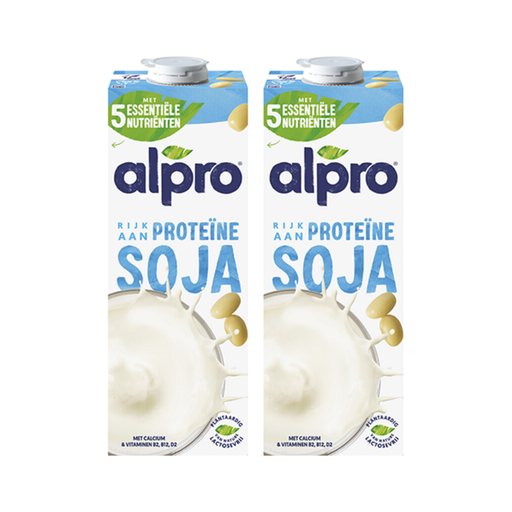
Why This Fits Their Persona: A set of two one-litre cartons is suitable for regular use with breakfast cereal, in smoothies or in coffee. According to the product information, this soy drink contains 3.0 g protein and 2.5 g sugar per 100 ml.
The nutritional values are listed per 100 ml, so you don’t have to assess sugar and protein based only on the front of the pack.
1-litre pack; source of calcium and vitamins according to the brand; suitable for vegan and vegetarian diets.
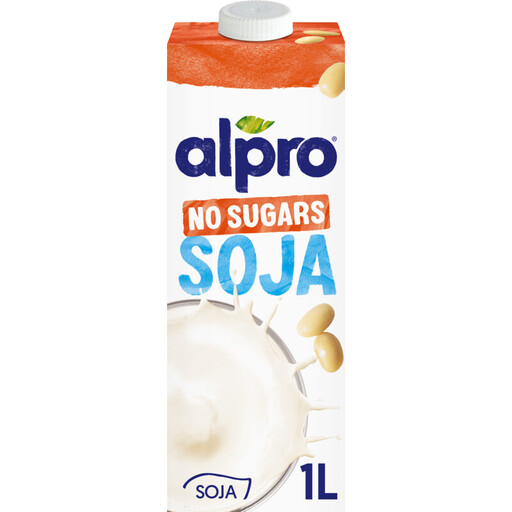
Why This Fits Their Persona: A neutral base for overnight oats, pancakes, sauces and smoothies when you want to avoid added sugar.
According to the product information provided, the label lists 0 g sugar and 0 g carbohydrates per 100 ml. Check the packaging when you buy it.
3.3 g protein and 120 mg calcium per 100 ml according to the label; suitable for vegan recipes.
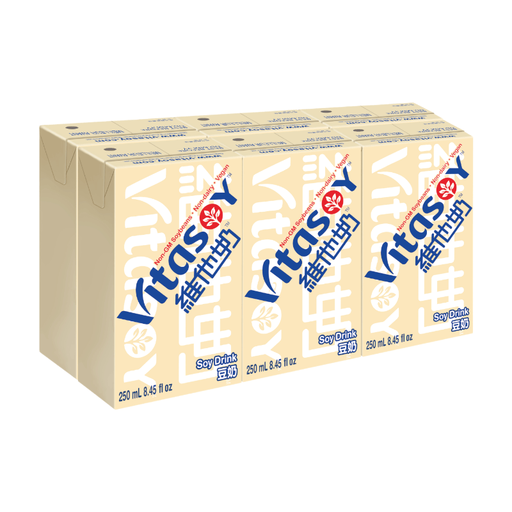
Why This Fits Their Persona: Six small packs are handy for drinking chilled, with an Asian breakfast or on the go.
The total quantity is clear: 6 x 250 ml. That way, you don’t buy a large carton when smaller portions better suit your needs.
Classic soy flavour; ready to drink; contains 2.0 g protein per 100 ml according to the product information.
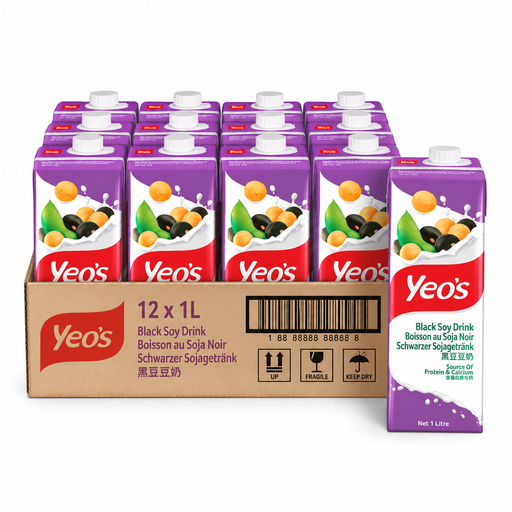
Why This Fits Their Persona: A bulk pack is practical when several family members drink soy drinks every day or when you want to stock up.
The quantity of 12 x 1 litre makes the total amount clear in advance. However, check the use-by date and storage space before buying in bulk.
1-litre cartons; black soy extracts according to the ingredients list; 67 mg calcium per 100 ml according to the product information.
We’ve put together a current selection of soy drinks so you can compare them by flavour, packaging, sugar content and occasion.
For soy milk for breakfast, a mild flavour and a 1-litre pack are often handy. Unsweetened varieties work well in porridge, coffee and smoothies without adding extra sweetness. Vanilla- or banana-flavoured soy milk can be drunk straight from a glass, but check the sugar content first.
Black soy milk, including varieties from Joyoung, SAHMYOOK or Yeo’s, often has a darker colour and a nutty flavour. Asian soy drinks are also often consumed chilled or at room temperature. For products containing grain or barley, pay particular attention to the allergen information.
Many soy drinks are naturally lactose-free because they don’t contain cow’s milk. However, check the packaging for additional ingredients and possible cross-contamination. “Lactose-free” does not automatically mean that the product is suitable for someone with a soy allergy.
Keep opened soy milk in the fridge and follow the time limit on the label. Some products state that they should be consumed within 24 hours, while others say within a few days. Close the carton securely and don’t use the drink if its smell, taste or texture is unusual.
The product information provided lists 0 g sugar per 100 ml for Alpro Unsweetened Soy Drink. Other options vary: Alpro Original lists 2.5 g, while vanilla and banana drinks contain more sugar per 100 ml. Always compare the current nutrition table before ordering.
