
Vandaag of morgen in huis

Kwaliteit gegarandeerd

Welkomstaanbiedingen ontgrendelen: GRATIS bezorging | Tot 80% korting | Gratis 30 dagen JoyPlus-proefperiode
Download de app
Samyang Buldak cheese ramen combine spicy Korean noodles with a creamy cheese flavour. That’s what makes them so popular as a quick lunch, a student staple or a late-night snack. However, the packaging and varieties differ quite a bit from one another. A 70 g cup, for example, is designed for convenience, whereas a box of 40 sachets is more appealing if you eat Korean instant noodles regularly.
When buying, don’t just rely on the picture or the word “cheese”. The three pitfalls below could lead you to choose a product that doesn’t quite suit how you’ll use it.
The creamy cheese taste makes the sauce rounder, but it doesn’t completely remove the heat from Buldak ramen. Most varieties contain chilli, red pepper or chilli extract. If you don’t usually eat spicy food, it’s better to start with a smaller portion or use less sauce.
A box of 40 portions might look attractive for bulk buying, but it’s only practical if you eat the noodles regularly. Also check the net weight per sachet, the best-before date and the storage space you have. Some products have a short remaining shelf life, such as the Samyang 4 Flavors Cheese Fire Chicken Noodle 110g according to the product information.
A cup is handy in the office, in a student room or on the go: you just add hot water and wait as per the instructions on the pack. Sachets of 140 g or 145 g usually need to be cooked in a pan and then drained. If you have limited kitchen equipment, a cup is more practical. If you prefer a thicker, better-mixed sauce, you often have more control with a sachet and a pan.
The most common sizes are:
A product like Samyang Buldak Hot Chicken Ramen Cheese at 140 g per sachet is therefore a different purchase from the Samyang Hot Chicken Ramen Cup Cheese at 70 g. Always compare the total weight, not just the price per pack.
Check whether the product needs to be boiled or is simply prepared with hot water. With many sachets, you boil the noodles for a few minutes, drain most of the water, then stir in the sauce and cheese powder. The product description for the quattro cheese variety, for example, mentions 500 to 600 ml of water, 4 to 5 minutes of boiling and leaving about 80 to 100 ml of cooking water.
The right amount of leftover water affects the texture. Too much water makes the sauce thinner; too little water can make mixing more difficult. So follow the instructions on the pack to begin with.
Samyang cheese ramen typically contain wheat and soya. Cheese and cream varieties may also contain milk. Some packs also mention sesame, celery or possible cross-contamination with other allergens. Always check the current label before buying, especially if you have a food allergy or intolerance.
As a guide, the product information for various 140 g varieties states approximately 390 to 430 kcal per 100 g, with around 13 to 16 g of fat and a relatively high salt or sodium content. These are product specifications from the relevant listings; check the pack for the exact values for your variety. A cheese powder or cream powder also says nothing about any medical effect or health benefit.
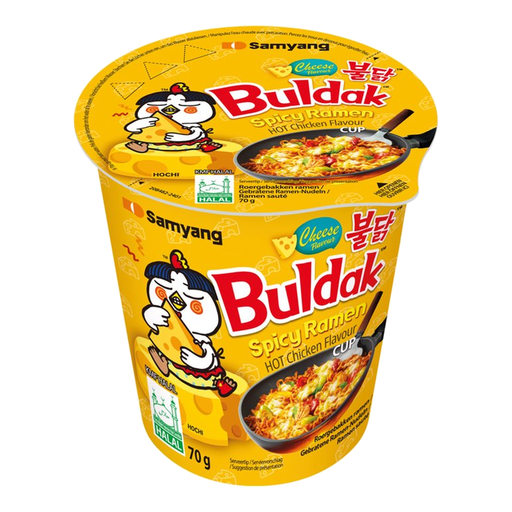
Why this fits the profile: The cup format is ideal for a first taste of Samyang Buldak cheese ramen. You don’t need a pan, and the portion is smaller than many sachets.
The pack clearly states 70 g, and the product description mentions hot water as the preparation method. This makes the portion size and usage easy to gauge.
Cup format, 70 g per portion, cheese powder and cream powder according to the product information.
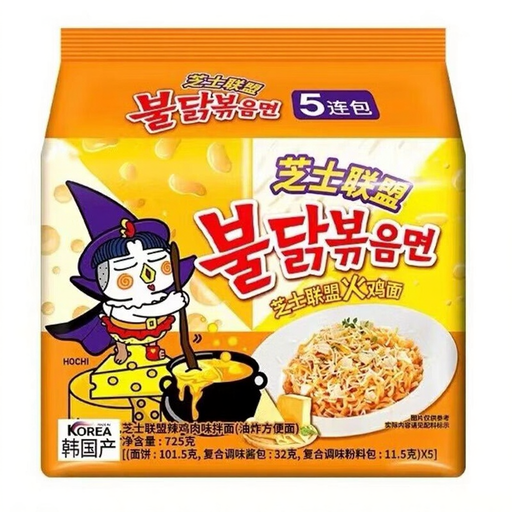
Why this fits the profile: This variety is aimed at fans of a pronounced cheese profile. The listing mentions mozzarella and a mixed cheese blend including cheddar, gouda and camembert.
The product information specifies the cheese components and the 145 g portion size, so you don’t have to rely solely on the name “cheese”.
Pack of 5, 145 g per sachet, mozzarella and mixed cheese powder according to the product label.
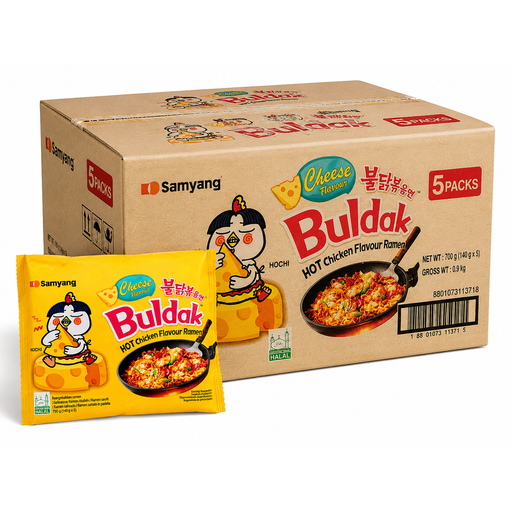
Why this fits the profile: The box of 40 individual sachets suits households, student houses and fans who often prepare spicy Korean ramen.
The quantity of 40 packs and the weight of 140 g per portion are clearly stated. This lets you assess in advance whether bulk buying makes sense.
40 individual portions, 140 g per sachet and storage instructions for a cool, dry place.
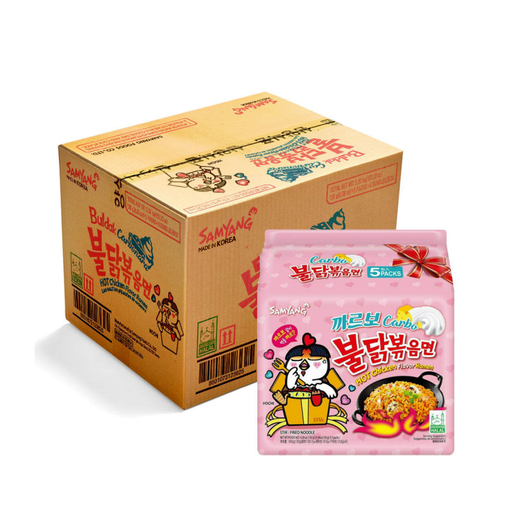
Why this fits the profile: The carbonara style combines, according to the product description, a spicy chicken flavour with a creamy sauce. That suits anyone looking for cheesy and mellow flavour notes.
The product listing mentions the preparation with around 120 ml of leftover water and briefly reducing the sauce. This makes the desired creamy texture easier to achieve.
130 g per portion, box of 40, carbonara style and a preparation method where the sauce is briefly reduced.
We’ve put together a full, up-to-date list of products that fully meet these strict selection criteria and comply with current European safety regulations.
With a sachet, you usually boil the noodles in around 500 to 600 ml of water. Then drain most of the water, add the sauce and cheese powder, and stir well. A cup is typically prepared with hot water. Always check the instructions on the pack you receive, as timings and quantities vary by variety.
The cheese or cream component can make the flavour feel milder, but the sauce still contains chilli ingredients. The perceived heat level differs from person to person. With a first portion, you might not use the whole sauce sachet straight away and add more later to taste.
The best-before date is on the pack. Store unopened ramen in a cool, dry place, away from direct sunlight and moisture. With a product that has a short remaining shelf life, it’s wise to check the date first before ordering a multipack or bulk pack.
