
Vandaag of morgen in huis

Kwaliteit gegarandeerd

Welkomstaanbiedingen ontgrendelen: GRATIS bezorging | Tot 80% korting | Gratis 30 dagen JoyPlus-proefperiode
Download de app
Fancy some Samyang Buldak Carbonara ramen, but can't decide between packets, cups and multipacks? The combination of spicy Korean ramen, creamy sauce and hearty noodles appeals to many fans of Korean cuisine. However, the different packs vary significantly in preparation, content and ease of use.
As a Joybuy Product Recommendation Officer, I filter product information based on verifiable points. This way, you won't rely solely on eye-catching packaging or a popular flavour name.
A cup is handy in the office, a student room or on the go: you usually just need to add hot water. A packet often requires boiling, draining and mixing with sauce and powder. If you only have a kettle, a ramen cup carbonara is far more practical than a multipack of individual packets.
The carbonara powder, containing milk and cheese ingredients, gives a softer, fuller flavour impression, but the spicy sauce remains a key part of this product line. According to the product descriptions, Samyang Carbonara noodles combine chilli, garlic, pepper and chicken seasoning with a creamy powder mix. The amount of sauce you add affects the strength of the flavour, but always check the instructions on the pack.
A pack of 80 g, 105 g or 130 g is not the same product. Nutritional values are also sometimes given per 100 g and sometimes per portion. For the Samyang Hot Chicken Ramen Carbonara 130 g, the product information states, for example, 423 kcal, 15.4 g fat and 2.6 g salt per 100 g. So, use the nutrition table on the label and pay attention to the total content per pack.
The product information for various Samyang Carbonara products lists gluten, wheat, soya and milk as allergens. Some variants may also mention other ingredients or possible traces. The ingredients list can vary by variant and production location. Therefore, always check the current label, especially if you have an allergy, intolerance or follow a special diet.
The name "Carbonara" can cover different versions. Some products contain a combination of chicken seasoning, chilli and milk powder; others have a modified recipe or packaging. The product information for Samyang Buldak Creamy Carbonara 5 × 140 g mentions, among other things, milk powder, mozzarella powder and buttermilk powder. With a bulk pack, it's also wise to check the best-before date on the packaging, as you're buying multiple portions at once.
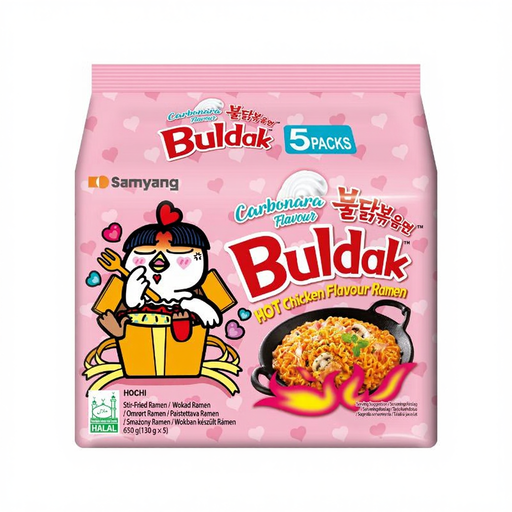
Why this fits the profile: A multipack of five packets is straightforward when you want to try the flavour first and then have multiple portions in stock. Preparation in a pan is ideal for home use.
The packaging clearly states five portions of 130 g. This makes the total quantity more transparent than with a single cup without a multipack.
Five individual packets, 130 g each, firm noodles and a separate sauce and powder mix. The product information lists gluten, soya, milk and celery as allergens.
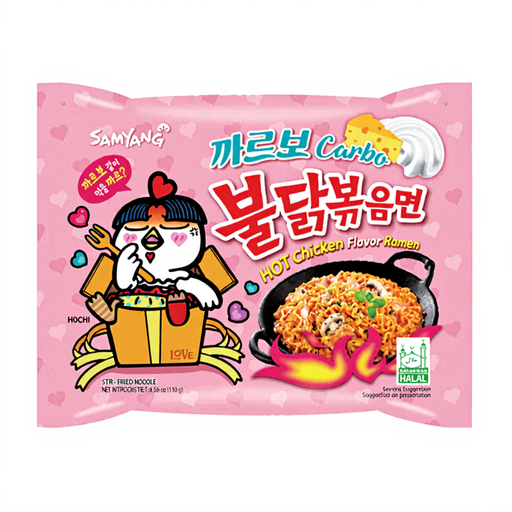
Why this fits the profile: This standard pack appeals to enthusiasts specifically looking for the combination of spicy chicken seasoning, carbonara powder and firm noodles.
The product page shows the net weight of 130 g and a separate ingredients list. This makes comparing content and allergens easier.
130 g per pack, combination of sauce and powder, South Korean origin according to the product information and 423 kcal per 100 g.
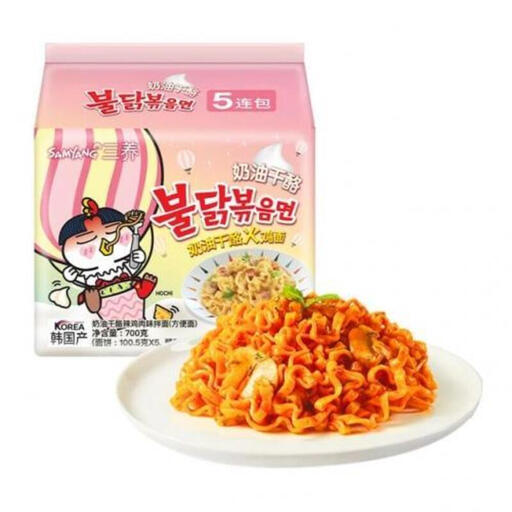
Why this fits the profile: The set contains five larger portions of 140 g and suits households or fans who regularly prepare creamy spicy ramen.
The portion size and number of packs are explicitly stated in the product name. This allows you to estimate in advance how many meals you're getting.
Five portions of 140 g, separate seasoning with milk and mozzarella powder, and preparation instructions for boiling and mixing. The product information lists gluten, soya and milk.
We've put together a full, up-to-date list of products that fully meet these strict selection criteria and comply with current European safety regulations.
Always follow the preparation instructions on the pack for each product. With traditional Buldak Carbonara packets, the noodles are typically boiled, drained and mixed with the sauce and powder. A cup is primarily designed for preparation with hot water. Don't automatically add the full sauce if you want to adjust the spiciness; first check the instructions and mix to taste.
Store unopened packs in a cool, dry place away from direct sunlight. The best-before information is on the packaging and can vary by batch. Do not use a product if the packaging is damaged. Once opened, it's best to prepare and consume the contents immediately.
The product descriptions describe the flavour as spicy, with chilli, red pepper, garlic and chicken seasoning. The carbonara powder provides a creamy, cheesy taste but doesn't automatically make the ramen mild. If you prefer less heat, you can add the sauce gradually and use extra noodles or other ingredients.
The basic flavour is similar, but the packaging and preparation differ. A 130 g packet is usually prepared in a pan and then mixed. An 80 g cup is more compact and designed for hot water. So, be sure to compare weight, preparation method and allergens, not just the product name.
Check the best-before date on the packaging. For dry instant noodles, the shelf life depends on the stated date and storage conditions. Keep them dry, away from heat and moisture, and check the packaging before use.
