
Vandaag of morgen in huis

Kwaliteit gegarandeerd

Welkomstaanbiedingen ontgrendelen: GRATIS bezorging | Tot 80% korting | Gratis 30 dagen JoyPlus-proefperiode
Download de app
Fancy some Samyang Buldak ramen, but can't decide between cheese, carbonara, original or a handy cup? The differences aren't just about flavour. Portion size, preparation method, allergens and shelf life all play a part in which pack works best for you.
Words like "cheese", "carbonara" and "double spicy" give you a good first impression, but they don't tell you everything about the product. A cheese variant, for example, might contain cheese powder, milk powder or just a cheese flavouring. Always check the ingredients list.
With Buldak Carbonara ramen, the flavour profile – according to the product information – includes a spicy sauce and a powder mix containing milk, mozzarella or butter powder. The exact composition can vary from pack to pack.
Samyang Buldak ramen is known for its distinctly fiery sauce. The intensity varies between variants. Original and Double Spicy are aimed at those who love a powerful chilli kick, while carbonara and cheese versions have a creamier flavour profile. That doesn't automatically make them mild.
You can adjust the amount of sauce, but always check the preparation instructions first. With many stir-fry variants, you boil the noodles, drain off almost all the water, and then stir the sauce through.
A Buldak ramen multipack is handy if you eat Korean instant noodles regularly. However, for a first try, a box containing dozens of portions can be impractical. Pay attention to the total number of packs, the weight per portion and the best-before information on the packaging.
A cup or a pack of five portions is often more sensible for students, small households, or when you want to try a flavour first.
Check whether you're looking at stir-fry noodles, soup noodles or a cup. With stir-fry ramen, the sauce is mixed through the noodles after cooking. A cup is simpler: you add hot water and follow the stated waiting time.
Also look out for terms like "double spicy", "hot chicken" and "carbonara". These are flavour and product descriptions, not a standard European scale for spiciness. So there's no fixed comparison across all brands.
Many individual packs contain around 130 to 140 grams. Cups are generally smaller, such as the Samyang Hot Chicken Ramen Cup Cheese 70 g or a carbonara cup of 80 grams. Check whether the nutritional values are given per 100 grams or per portion.
In the product information for various Samyang variants, the energy content is around 400 to 430 kcal per 100 grams. The salt content can also be significant. Use this data to compare products fairly, especially when buying multiple portions at once.
Many Korean noodles contain wheat/gluten and soya. Cheese and carbonara variants often also contain milk. Some products also mention sesame, celery or possible cross-contamination. If you have an allergy or intolerance, don't rely solely on the online product text: always check the label on the pack you receive.
Also pay attention to the origin, storage instructions and the best-before date. Store dry instant noodles in a cool, dry place away from direct sunlight. Do not use any packaging that is damaged.
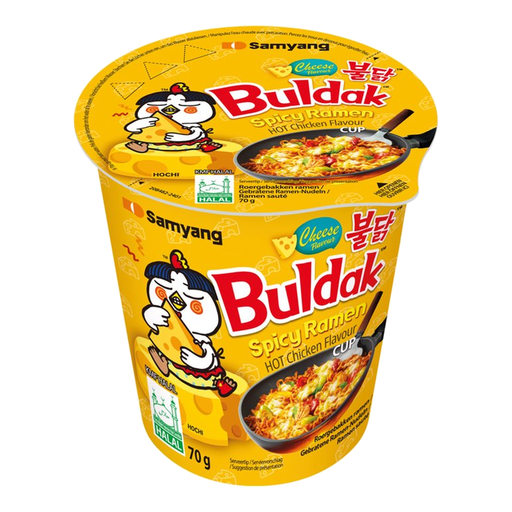
Why this fits the profile: The cup format requires minimal preparation and is ideal for a quick lunch, snack or meal in a student room.
The 70 g portion and cup format mean you don't need to buy a large stock when trying Samyang for the first time.
Cup for hot water; cheese powder and cream powder in the product description; allergens: wheat, milk and soya.
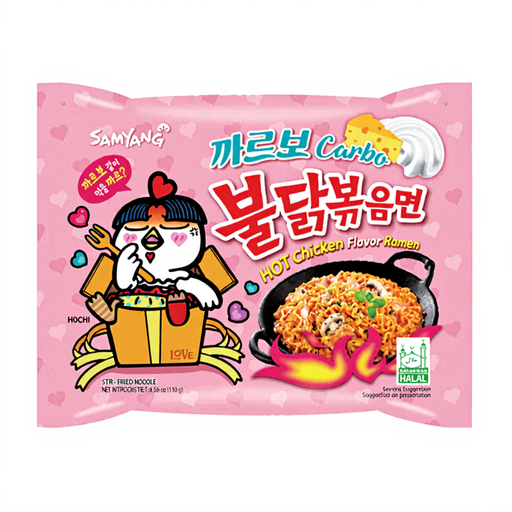
Why this fits the profile: This variant combines a creamy carbonara flavour with the signature spicy sauce and firm noodles.
The product information lists the separate sauce and powder mix, so you don't have to guess the creamy flavour from the marketing name alone.
130 g per pack; 423 kcal and 2.6 g salt per 100 g according to the stated nutritional information; contains milk, soya and gluten.
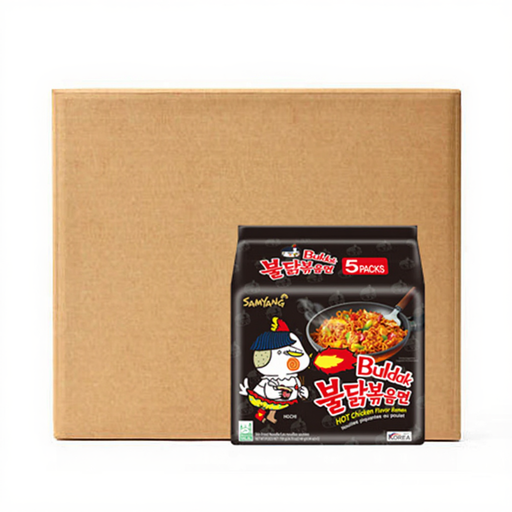
Why this fits the profile: The box of 40 individual portions suits frequent eaters, shared households and stocking up for gatherings.
The number of portions and weight per pack are clearly stated, so you can match your stock to your actual consumption.
40 individual packs of 140 g; prepare by boiling, draining and mixing; contains wheat, soya and sesame.
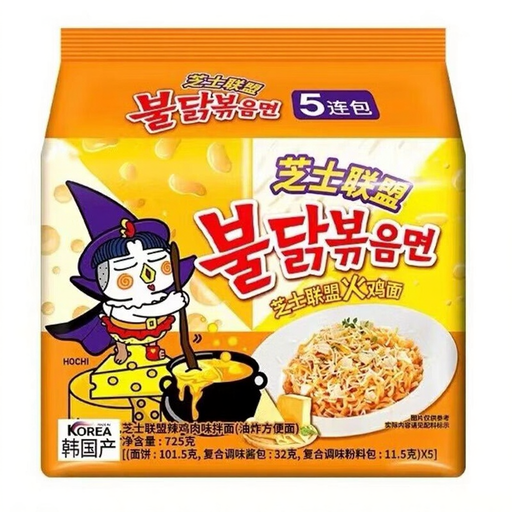
Why this fits the profile: A five-pack with four-cheese flavour is ideal when you want to stock up on cheese instant ramen without committing to a large carton.
The five-pack limits your stock commitment and makes it easier to assess the flavour and portion size in practice first.
Five portions of 145 g; four-cheese flavour according to the product name; contains gluten, soya, milk and celery.
We've put together a full, up-to-date list of products that fully meet these strict selection criteria and comply with current European safety regulations.
It varies by flavour. Original and Double Spicy have a pronounced chilli taste. Carbonara and cheese variants add a creamy or savoury element, but can still be noticeably spicy. Adjusting the sauce amount is a practical way to start gently.
Check this per pack. Product information may mention chicken flavouring or artificial chicken flavouring, without that automatically confirming a vegetarian status. Always look at the ingredients and any manufacturer information on the label.
The best-before date is on the packaging and can vary by batch or product variant. Store the noodles unopened in a cool, dry place away from direct sunlight. Check the packaging before use and follow the storage and preparation instructions stated on it.
