
Vandaag of morgen in huis

Kwaliteit gegarandeerd

Welkomstaanbiedingen ontgrendelen: GRATIS bezorging | Tot 80% korting | Gratis 30 dagen JoyPlus-proefperiode
Download de app
Fancy some Samyang Buldak ramen cheese, but can't decide between a cup, multipack or creamy carbonara flavour? The packaging may look similar, but portion size, preparation and allergens can differ quite a bit. This practical buying guide will help you know what to look for before you order Buldak cheese ramen, Korean instant noodles or spicy chicken ramen.
Cheese and cream powder can make the spicy sauce taste smoother, but the Buldak base is still very much present. Varieties labelled "hot chicken" or "fire chicken" are especially intended for fans of spicy noodles. If you're not used to heat, it's better to start with a smaller cup or use less sauce.
With a cup, you usually just add hot water and wait a few minutes. Sachets like Samyang cheese ramen are typically boiled and then mixed with sauce and powder. For some varieties, you need to reserve a small amount of the cooking water. Simply pouring hot water over a sachet won't always give you the intended texture.
A pack of five, ten or even forty portions can be handy for a household, student household or store cupboard. Even so, it's wise to check first whether the flavour suits you. Also pay attention to the best-before date, especially on offers with a short remaining shelf life.
A 70g or 80g cup is practical for lunch at the office, a late snack or a meal without needing a pan. Sachets of 130g to 145g are generally more suitable as a larger meal. Also check whether the pack contains one portion and how many pieces you actually receive.
For buying instant noodles regularly, multipacks are often practical. A five-pack gives you a supply without committing to a large box straight away. A box of 40 pieces is better suited to heavy use, a shared household or an event.
Not every creamy variety tastes the same:
The ingredients and nutritional values can vary from product to product. Always check the product page and the label on the pack you receive.
Many of these Korean noodles contain wheat, soya and sometimes milk, sesame or celery. Samyang Buldak Carbonara lists gluten, soya and milk as allergens. The cheese cup contains wheat, milk and soya according to the product description.
The salt content also deserves attention. In the product data, different varieties show values of around 2.6 to 3.4 grams of salt per 100 grams. This isn't health advice, but it is relevant information when comparing labels. If you have an allergy, always check the actual packaging, as recipes and labelling can change.
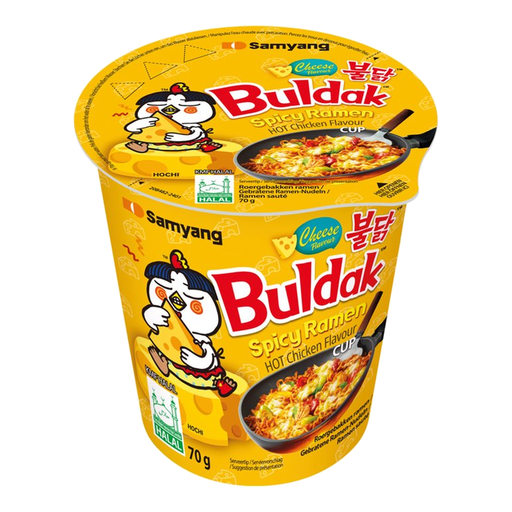
Why this suits the profile: The 70g cup requires little preparation and is a good way to try Samyang spicy ramen without buying a large multipack straight away.
The size means you don't need a large stock, and preparation is simpler than with sachets that require boiling and draining.
70g, cup format, just add hot water and, according to the product data, a cheesy, spicy chicken flavour.
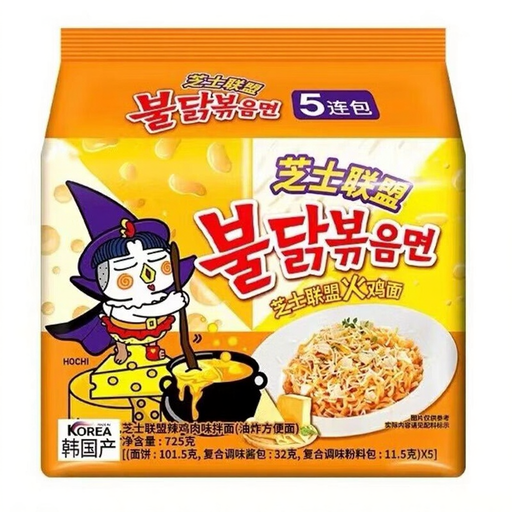
Why this suits the profile: These five 145g portions are intended for those looking for a larger meal and a pronounced cheese profile within the Buldak range.
The contents and portion size are clearly stated, so you won't confuse a five-pack with small cups or individual trial packs.
Five 145g sachets; the product information mentions cheese sauce, mozzarella cheese powder and a spicy chicken base.
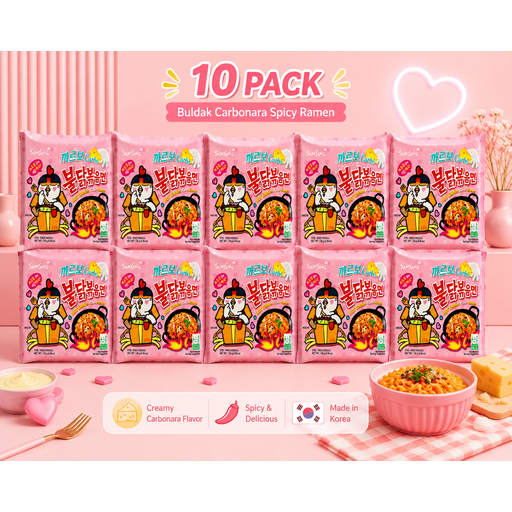
Why this suits the profile: A pack of ten portions suits frequent eaters, student households and households that like to keep Korean instant noodles in stock.
The quantity is clear upfront: ten 130g sachets. This makes it easier to work out the price per portion and how much stock you need.
Ten 130g portions, carbonara and cheese powder according to the ingredients list, with a stated nutritional value of 423 kcal per 100g serving unit.
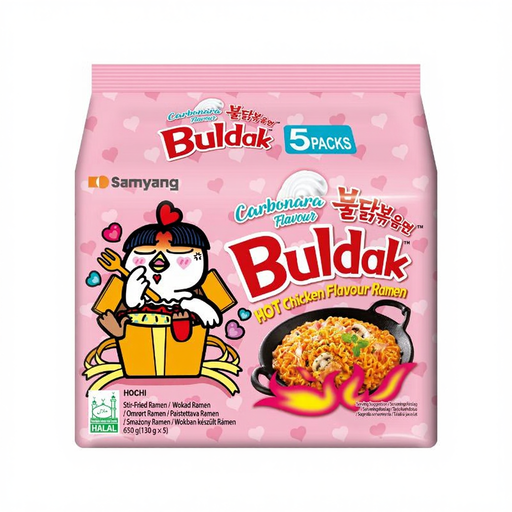
Why this suits the profile: The five sachets combine the spicy Buldak sauce with a carbonara-style powder mix for those who value cheese and creaminess over just heat.
The product information lists the carbonara and cheese components separately, making the flavour direction clearer than a general description like 'creamy'.
Five 130g sachets, firm noodles and a stated combination of mozzarella, milk powder and butter powder.
We've put together a full, up-to-date list of products that fully meet these strict selection criteria and current European safety regulations.
Always follow the instructions on the packet. For many sachets, this method works:
For a cup, add hot water up to the indicated line. Check whether the packaging is suitable for microwave use before heating it. Don't use damaged packaging and store unopened ramen in a cool, dry place.
The cheese or carbonara flavour can make the sauce taste creamier, but these products are still spicy chicken ramen. How hot they feel depends on the variety and how much sauce you use. You could start with part of the sauce sachet.
Check the best-before date on the packaging. The shelf life varies by product and batch. Store the noodles in a dry place, out of direct sunlight and away from heat. Don't use any product with damaged packaging.
Cheese ramen focuses on cheese powder and a savoury cheese flavour. Buldak carbonara ramen combines the spicy chicken base with a creamy carbonara-style powder mix. The exact ingredients, allergens and nutritional values vary by pack.
