
Vandaag of morgen in huis

Kwaliteit gegarandeerd

Welkomstaanbiedingen ontgrendelen: GRATIS bezorging | Tot 80% korting | Gratis 30 dagen JoyPlus-proefperiode
Download de app
A robot vacuum cleaner can remove dust, crumbs and hair every day, without you having to vacuum the house yourself. However, there are big differences between models. A high suction power figure on the packaging, for example, doesn’t tell you everything about cleaning performance, maintenance or navigation.
These issues will be familiar to many households: the robot gets stuck under furniture, the mop leaves carpets damp, or the automatic emptying station turns out to be difficult to keep clean. A few checks beforehand can help you avoid a purchase that proves less convenient than expected after just a few weeks.
A powerful robot vacuum cleaner rated at, say, 8,000 or 10,000 Pa sounds appealing. In practice, the brush, airflow, flooring and automatic power adjustment also matter. A model needs to lift hair from carpets as well as pick up fine dust from hard floors.
Use the stated Pa rating as a point of comparison, rather than your only deciding factor. Also check whether the robot detects carpets and adjusts its suction power automatically.
A robot vacuum cleaner with a mopping function will generally remove light dirt and dust residue from suitable hard floors. It isn’t designed to suck up large amounts of water or spilled liquids. Also check whether the mop lifts automatically when it reaches a carpet.
An automatic mop lift is useful in homes with rugs. Without this feature, the robot may run over carpets with a damp mop. Some models require you to set carpet zones manually in the app.
A robot vacuum cleaner with an automatic emptying station reduces daily effort, but doesn’t eliminate the need for maintenance. Filters, brushes, sensors, mop pads and dust containers need regular checks. With a self-cleaning robot vacuum cleaner, you should also check how dirty water is drained and how the mop is dried.
Pay attention to the size of the station, too. In a flat or narrow hallway, a large base station may take up more room than you expect.
A robot vacuum cleaner with LiDAR navigation uses laser scans to create a map of your home. This helps it follow systematic cleaning routes, clean multiple rooms and set up restricted areas. However, LiDAR won’t automatically stop the robot from running over every cable or small toy.
So check whether:
A camera or 3D system may recognise small objects, but performance depends on the lighting, floor and size of the objects. Always tidy away cables and loose clothing before the first cleaning run.
If you’re looking for a robot vacuum cleaner for pets, an anti-tangle brush and effective edge cleaning are useful. Hair often collects around the main brush and side brushes. Check whether you can remove these parts without tools.
For a mix of carpets and hard floors, these features are useful:
Manufacturer claims about hair removal, cleaning efficiency or long intervals between maintenance are based on the brand’s product information. Treat them as a guide, and always check the specific product details and warranty terms.
A larger battery is most relevant for bigger homes or multiple floors. As well as the stated run time, check whether the robot can recharge automatically and then resume cleaning. Even a robot with a relatively short battery life may be suitable if it picks up where it left off.
Also check:
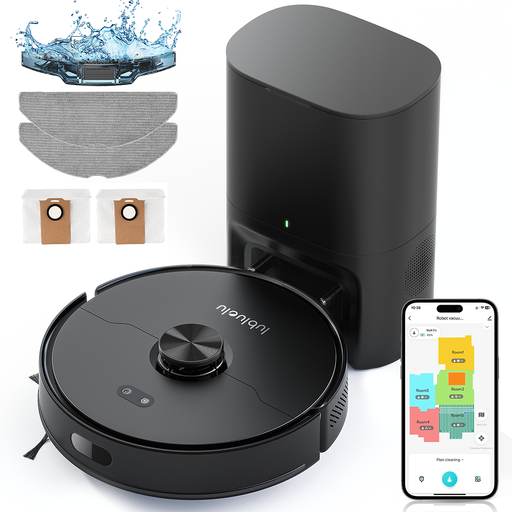
Why it suits this type of household: This model combines vacuuming, sweeping and mopping with laser navigation, app control and storage for up to five maps. It’s a good fit for a household looking for several functions without stepping up to an extensive premium station straight away.
Its stated 4,000 Pa suction power is paired with carpet detection, adjustable suction and systematic laser navigation. The mop can be removed when cleaning carpets.
Up to 180 minutes of run time, an app with no-go zones, and suitability for hard floors, carpets and pet hair according to the product specifications.

Why it suits this type of household: The OMNI station is designed for users who want to automate as many everyday tasks as possible, including emptying the dust container, washing the mop and drying it.
The product specifications list automatic dust emptying, hot-water mop washing, drying, self-cleaning and clean water refilling.
Stated suction power of 20,000 Pa, automatic carpet detection, TrueMapping 2.0 and a station with a 4-litre clean water tank.
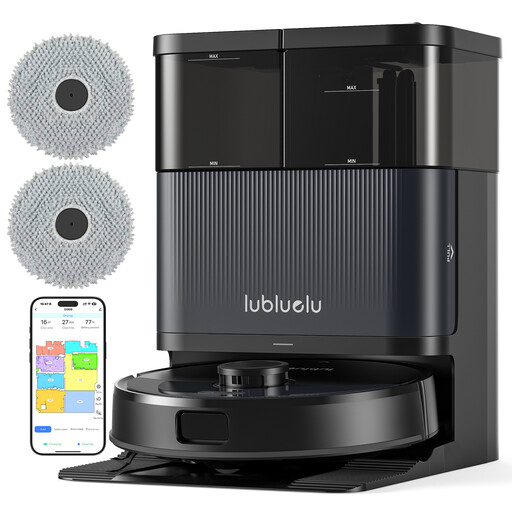
Why it suits this type of household: This model is aimed at households with pets, carpets and hard floors that value automatic emptying and app control.
According to the product information, its LiDAR mapping supports planned routes. The model detects carpets and can lift the mop automatically.
Up to 10,000 Pa according to the product specifications, an all-in-one station and a stated noise level of 55 dB.
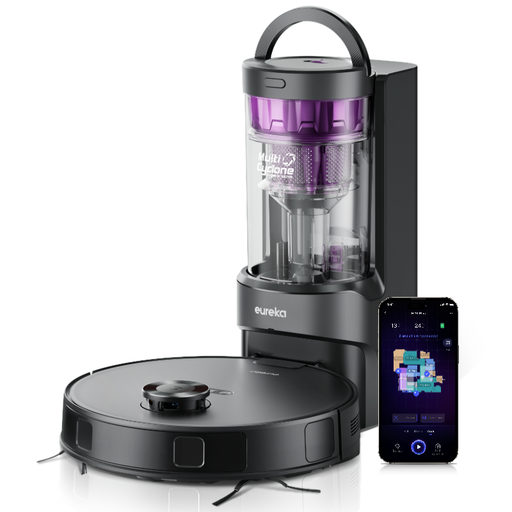
Why it suits this type of household: Its large dust container, long run time and anti-tangle function make it a good fit for homes where hair and crumbs end up on the floor every day.
The stated anti-tangle function is designed to reduce hair build-up. The 10 mm mop lift is intended to limit contact with carpets.
Stated suction power of 8,000 Pa, up to 180 minutes of run time, LiDAR and a bagless station with a 2-litre container.
We’ve put together a complete, up-to-date list of products that meet these strict selection criteria and the applicable European safety regulations.
Not every robot is designed for floors. A robotic lawn mower is made for automated lawn care, and you’ll need to consider its maximum gradient, mowing area, weather resistance and boundary settings. A humanoid robot or robotic dog belongs to a completely different product category, with moving parts, cameras, batteries and specific safety clearances.
If you’re comparing different types of automation, it’s best to start by deciding which task matters most: cleaning, mowing, inspection or interaction. The technical requirements and safety risks vary considerably depending on the application.
Place the charging station on a level surface, with enough space in front and to the sides. Fully charge the robot, install the companion app and let it create an initial map. Clear away cables, small toys and loose clothing before starting the first cleaning run.
Its lifespan depends on how often it’s used, how well it’s maintained, the condition of the battery and the availability of replacement parts. Clean the filters and brushes as directed in the manual, wipe the sensors carefully and keep liquids out of the casing. The battery is a wear-and-tear part, so check in advance whether replacements or servicing are available.
As well as electricity, you may need to pay for filters, brushes, mop pads and dust bags. A model with a bagless station can save you from buying dust bags regularly, while a station with disposable bags may reduce direct contact with dust. So compare not only the purchase price, but also the cost of maintenance supplies and the station’s capacity.
