
Vandaag of morgen in huis

Kwaliteit gegarandeerd

Welkomstaanbiedingen ontgrendelen: GRATIS bezorging | Tot 80% korting | Gratis 30 dagen JoyPlus-proefperiode
Download de app
A robot vacuum with a mopping function can significantly cut down on everyday cleaning, but not every model is right for every home. A family with pets has different needs from someone with mostly laminate flooring and a few low-pile rugs. High suction power or an automatic emptying station won’t tell you everything about how easy a model is to use.
Product information on packaging and online shops can also create different expectations. So, before you buy, pay particular attention to the following pitfalls.
A robot vacuum with 8000 Pa or an even higher figure might seem automatically more powerful. In practice, the brush, airflow, floor height and cleaning route are important too. On carpet, a suitable main brush can make more difference than a higher theoretical maximum.
Also check whether the stated suction power is a maximum factory figure. According to the manufacturer’s own product information, this figure is generally measured under specific conditions and doesn’t guarantee the same results on every floor.
A simple damp cloth isn’t the same as a system that detects carpets and lifts the mop. Without an automatic mop lift, a robot could travel over a rug with a wet mop during the same cleaning run. So, look for:
A robot vacuum for carpets and hard floors needs to handle both functions well. Check the maximum threshold height too. For example, the ECOVACS DEEBOT N20 Plus is listed as being able to handle thresholds up to 2 cm.
A robot vacuum with an automatic emptying station means you won’t need to empty the dust container every day, but the filters, brushes, sensors and mopping components will still need maintenance. A station that uses dust bags may involve recurring costs. A bagless station avoids the need for those bags, but you’ll still need to empty and clean the container.
Also check the dimensions of the station. Measure the available space in advance and allow room at the sides and in front so the robot can set off and return properly.
A robot vacuum with LiDAR navigation uses laser sensors to map your home and generally plans systematic routes. This is useful if you have multiple rooms, larger floor areas or furniture that tends to stay in the same place. Some models combine LiDAR with cameras or 3D sensors to detect cables, toys and other obstacles.
Check whether the app lets you:
Check the Wi-Fi requirement too. Some devices only work with 2.4GHz Wi-Fi. This is listed, for example, for certain Eureka and Vactidy models.
For a robot vacuum for pet owners, a rubber or anti-tangle brush, a good filter and an easy-to-clean brush housing are important. A robot vacuum with an anti-tangle brush can help reduce hair build-up, but always check how to remove hair by hand.
A four-stage filtration system, such as the one listed for the ECOVACS DEEBOT N20 Plus, can help keep dust particles inside the collection system. This is a product specification, not a medical or health claim.
Don’t just look at the maximum run time; consider the floor area, layout and suction setting too. A model with a stated run time of 180 to 300 minutes may suit larger homes, but the actual time will vary by mode and floor type.
A self-emptying robot vacuum is particularly useful if you’re often away or want to clean several times a week. Just check:
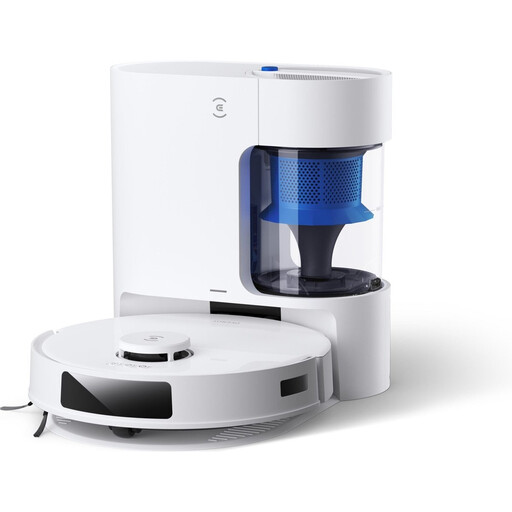
Why it suits this type of home: The combination of vacuuming, mopping, app control and a run time of up to 300 minutes makes this an accessible option for homes with hard floors and low-pile carpets.
The product information lists more than just 8000 Pa: it also specifies a 0.4 litre dust container, a 0.22 litre water tank, TrueMapping 2.0 and obstacle detection. This gives you several points to check when making your choice.
8000 Pa according to the product specifications, a stated run time of 300 minutes, app control and support for Google Assistant and Amazon Alexa.
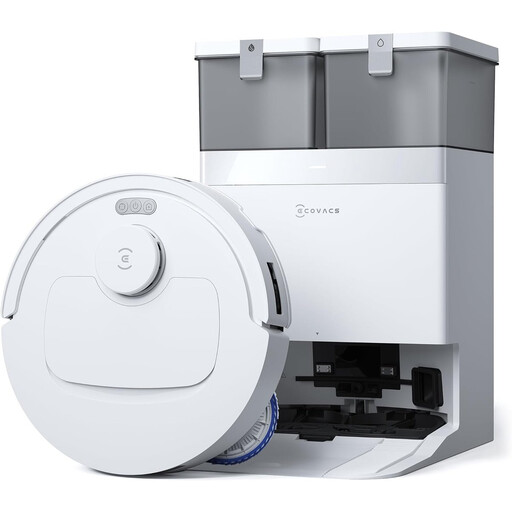
Why it suits this type of home: This model is designed for households that want to minimise hands-on maintenance and value a comprehensive station for emptying dust, washing the mop and drying it.
The product specifications list a 9 mm mop lift, ZeroTangle 2.0 and an OMNI station. This gives you more detail about carpet handling, hair and maintenance than a high Pa rating alone.
15,400 Pa according to ECOVACS product information, a stated battery life of 200 minutes, auto-emptying, 70°C mop washing and 45°C hot-air drying.
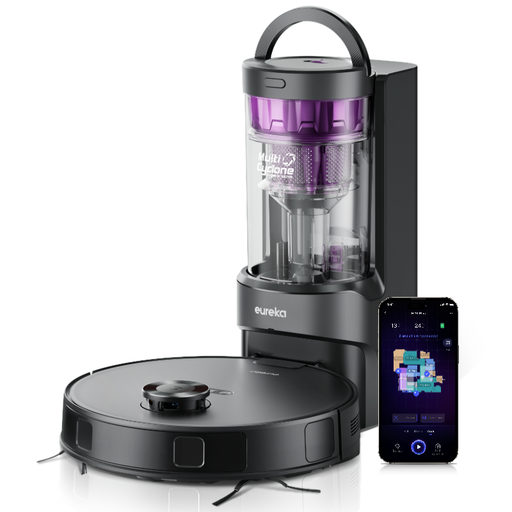
Why it suits this type of home: Its combination of carpet and hard-floor cleaning, pet-friendly features and automatic dust collection makes it a good fit for frequent use in a busy household.
According to the product information, this model combines LiDAR navigation, DuoDetect AI 3D obstacle avoidance and a 10 mm mop lift. This means its route planning and carpet handling are each backed up by specific features.
8000 Pa, a stated run time of up to 180 minutes, a bagless station with a 2 litre capacity, plus app and voice-assistant control.
We’ve put together a complete, up-to-date list of products that meet these strict selection criteria and the applicable European safety requirements.
That depends on the mop lift and the settings. If you have carpets, choose a model with automatic carpet detection, a mop lift of a few millimetres and adjustable no-go zones. Also check the stated maximum threshold height and the recommended floor types.
Dust is emptied automatically, but you’ll still need to check the brush, side brushes, filters, sensors and mopping components. With a bagless station, you empty the collection bin yourself. With a station that uses dust bags, you’ll need to buy replacements. The manual for your chosen model will give you the exact maintenance schedule.
As well as the purchase price, you may need to budget for replacement filters, brushes, mop pads, cleaning solution and dust bags. A bagless station can help reduce recurring costs for dust bags. So, compare not only the price of the appliance, but also the availability and cost of consumables.
