
Vandaag of morgen in huis

Kwaliteit gegarandeerd

Welkomstaanbiedingen ontgrendelen: GRATIS bezorging | Tot 80% korting | Gratis 30 dagen JoyPlus-proefperiode
Download de app
A reel of filament may seem simple to choose at first. However, differences in diameter, moisture content, finish and recommended print speed can have a big impact on your results. A cheap reel that feeds poorly through the extruder can end up costing you more in material and time than you expect.
For home users, makers, students and small businesses, PLA filament for a 3D printer is often a sensible place to start. It’s generally easy to use with FDM printers and suitable for prototypes, decorative models and creative projects. Do check the product specifications, though: PLA, PLA+ and variants such as matte, silk and rainbow PLA aren’t automatically suitable for every application.
A reel of 1 kg PLA filament may seem affordable, but its true value also depends on dimensional consistency, winding and print settings. Filament with an irregular diameter can cause inconsistent material feed, leading to under-extrusion, visible layer lines or failed prints.
So, check more than just the weight. Look at the stated tolerance and diameter, and make sure the filament is compatible with your printer.
Fast 3D printing filament may be suitable for modern high-speed printers, but speed depends on more than the material alone. The nozzle, maximum volumetric flow rate, cooling, temperature and slicer settings all play a part.
A stated speed is a manufacturer’s specification or recommendation, not a guarantee that it will work with every printer. Start with the settings on the filament label or product information, then make any adjustments gradually.
Matte PLA, silk PLA and rainbow PLA are mainly worth considering for the appearance of a printed object. Matte filaments can make layer transitions less noticeable, while silk filaments create a glossy finish. The colour changes in rainbow filament can look different from one model to another, depending on how much material is used.
For functional prototypes, a standard colour is often more practical. For decorative models, filament in different colours or with a special finish can add extra appeal.
Many FDM printers use 1.75 mm 3D printer filament. Always check your printer’s manual to confirm. A 2.85 mm reel can’t be used in a system designed for 1.75 mm filament.
Even a small variation in diameter can affect the material feed. Products with a stated tolerance of, for example, ±0.02 mm or ±0.03 mm give you a clearer point of comparison than a vague claim such as ‘high precision’.
PLA is popular because it’s relatively easy for many users to work with. PLA+ filament is a modified variant which, according to the manufacturer’s product description, may offer properties such as greater toughness or reduced brittleness. This doesn’t mean every PLA+ product has the same composition or print settings.
You should also check the specific product details for PLA Bio. A reference to plant-based raw materials doesn’t, by itself, tell you how a print will perform in heat, under load or over long-term use. Use PLA for applications where its properties are suitable, such as models, prototypes and decorative items.
Store filament in a dry place and, ideally, in a sealed container when you’re not using it. Moisture can affect extrusion and surface quality. Before printing, check:
Heat the nozzle before changing filament. The Creality product also lists this as a safety instruction to help reduce the risk of blockages when changing filament. Don’t touch hot parts, and keep filament and the nozzle out of reach of children and pets.
The selection below matches specific product details to different uses. Always check the current product page, available colours and delivery information before buying.
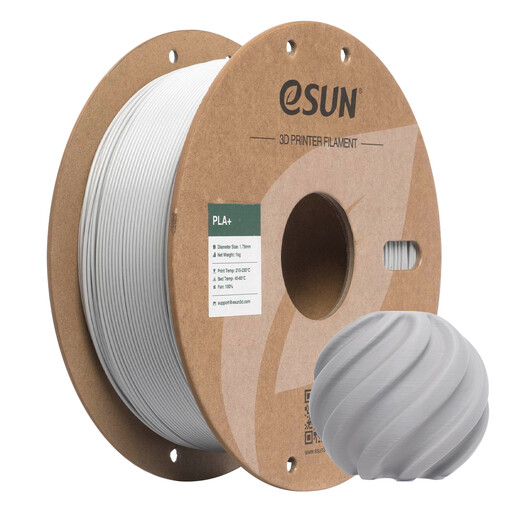
Why it suits this buyer: This reel combines a 1.75 mm diameter with a 1 kg weight and a neutral shade of grey. That makes it a practical option for first projects and general-purpose models.
The product information lists a diameter of 1.75 mm, a tolerance of ±0.03 mm and neat winding. Check these details against your own printer settings.
1 kg per reel, a 1.75 mm diameter and a PLA+ formula which the manufacturer says is designed for high toughness.
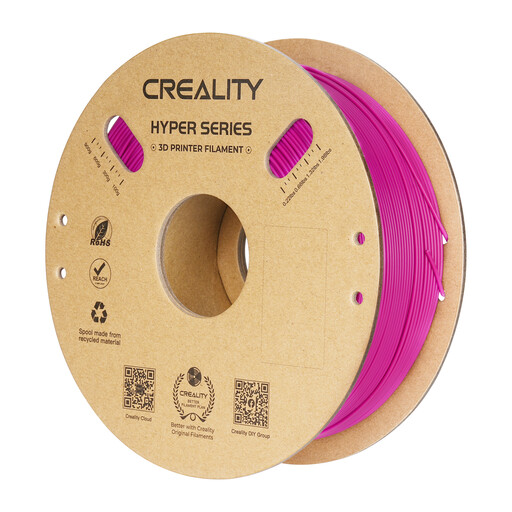
Why it suits this buyer: A good option for users with a printer set up for higher speeds who want to print in a striking shade of purple.
Treat the stated speed of 30–600 mm/s as a manufacturer’s specification. Check that your nozzle, cooling system and printer can handle this setting.
1 kg reel, purple colour and a manufacturer-stated dimensional accuracy of ±0.02 mm.
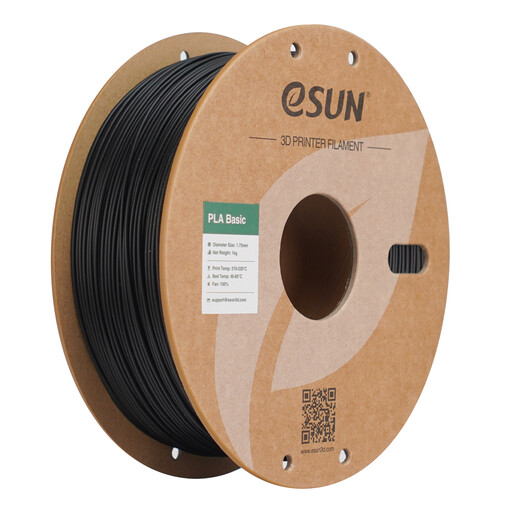
Why it suits this buyer: A practical choice for makers and small production teams who print lots of black parts, prototypes or props.
The product description lists a recommended speed of up to 300 mm/s and a flow rate of 35 mm³/s with a 0,4mm nozzle. Treat these as guidelines, not universal settings.
Black 1 kg reel, 1.75 mm diameter and designed for fast printing with compatible FDM printers.
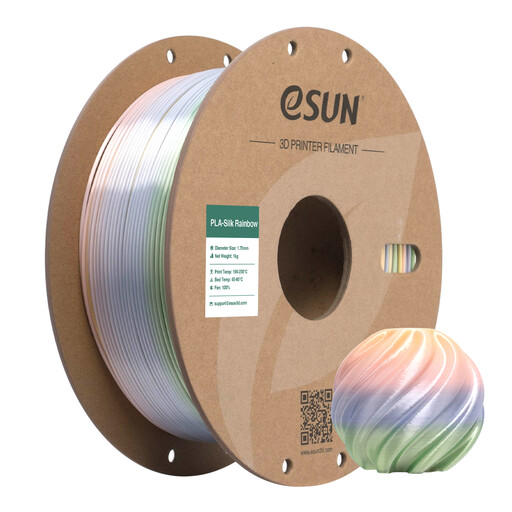
Why it suits this buyer: Ideal for users who value colour gradients and a silk finish more than a uniform colour for technical parts.
The product name specifies both 1.75 mm and 1 kg. Bear in mind that the colour gradient may look different depending on the model and the volume printed.
Rainbow colour gradient, silk finish and a 1 kg reel for decorative FDM projects.
We’ve put together a complete, up-to-date list of products that meet these strict selection criteria and the applicable European safety regulations.
First, check whether your printer uses 1.75 mm or 2.85 mm filament. Then check the nozzle temperature, print bed and recommended settings. PLA is often a practical choice for models and prototypes, but suitability depends on the specific printer and product.
It depends on the weight of your models, infill, wall thickness, supports and how many prints fail. A 1 kg reel of PLA filament can last for several projects if you’re printing lots of small models, but larger functional parts use considerably more material.
Some PLA+ products are designed for high toughness or faster print speeds, according to their product information. That doesn’t mean every PLA+ reel is automatically suitable for fast 3D printing. Check the recommended flow rate, temperature and speed, and adjust them to suit your printer, nozzle and cooling system.
