
Vandaag of morgen in huis

Kwaliteit gegarandeerd

Welkomstaanbiedingen ontgrendelen: GRATIS bezorging | Tot 80% korting | Gratis 30 dagen JoyPlus-proefperiode
Download de app
As a Joybuy Product Recommendation Officer, I see many 3D printing hobbyists struggle with rainbow filament. The promise is a print with a beautiful, smooth color gradient. The reality is often different: muddy colors, a brittle object, or a clogged nozzle. Before you invest in a new spool, it's wise to know what to look for.
Many disappointments can be traced back to a few common pitfalls. Here are the three most important ones to avoid:
To avoid these problems, it's helpful to check a few specifications. This will help you separate marketing hype from facts and choose a multicolor 3D printer filament that truly works for your projects.
The speed of the color change determines the final result. Manufacturers sometimes specify this, for example, "color change every 10 meters."
If the manufacturer doesn't specify this, look at photos of prints made by other users to get an estimate.
Rainbow filament usually comes in two varieties: standard PLA and Silk PLA. The choice between them is a trade-off between appearance and functionality.
All 3D printers are sensitive to filament diameter. The standard is 1.75mm filament. A consistent diameter is crucial to prevent clogs and irregular extrusion.
Look for a filament with a specified tolerance of ±0.03mm or, even better, ±0.02mm. A lower tolerance means more consistent flow and a more reliable printing process, which makes all the difference, especially on long, color-gradient prints.
Based on these criteria, we've selected a few products that suit different types of users.
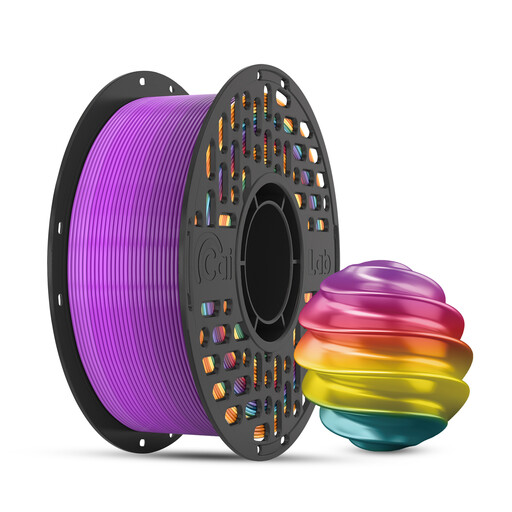
Why This Fits Their Persona: Ideal for those who want to experiment with color gradients without the hassle. This standard PLA filament is forgiving and prints with settings similar to normal PLA, which keeps the learning curve low.
This filament has a predictable color gradient, so you won't face any surprises. Because it's standard PLA, it's less sensitive to moisture than silk variants.
Easy to print; good layer adhesion; vibrant colors.
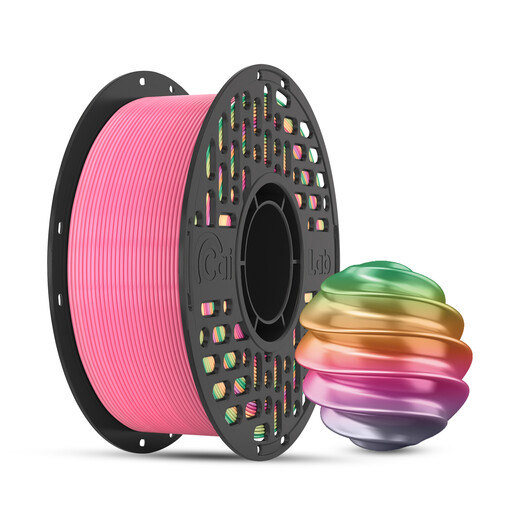
Why This Fits Their Persona: For those specifically seeking that deep, luxurious sheen for decorative pieces like vases, sculptures, or cosplay parts. The visual effect is the top priority here.
This is a true Silk PLA filament that delivers the promised sheen. The product information is transparent about the downsides (brittleness, moisture sensitivity), so you know what to expect.
Exceptional silk sheen; fast color transitions that are clearly visible on medium-sized objects.
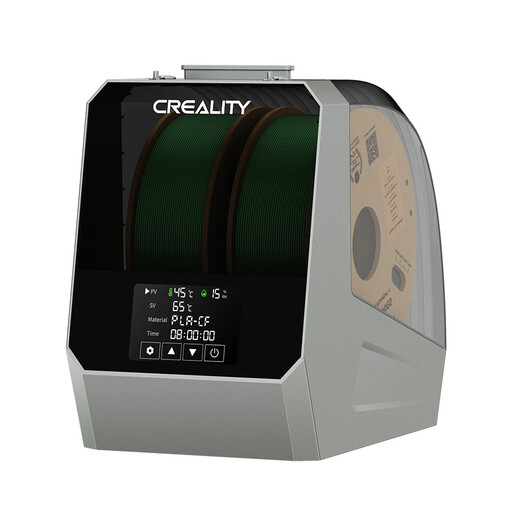
Why This Fits Their Persona: This user understands that the right tools are half the battle. Instead of hoping for a dry spool, this person takes matters into their own hands to guarantee print quality, especially with more expensive or sensitive filaments.
This is the definitive solution to the moisture problem. A filament dryer removes moisture from any spool, preventing issues like brittleness, stringing, and a rough surface.
Improves the print quality of all hygroscopic filaments (PLA, PETG, TPU); can dry two spools at once; printing directly from the box is possible.
We've compiled a complete, up-to-date list of products that meet these strict selection criteria and quality standards.
This varies greatly by brand and type. Some filaments, like the CAILAB filament, change color quickly (every 5-10 meters), which is ideal for smaller objects. Others have a much slower gradient (20 meters or more), which works better for large vases or statues. Check the product description or user reviews to get an idea of the color transition speed.
This is almost always caused by moisture. Silk PLA filament is extremely sensitive to humidity. When the filament absorbs moisture, its chemical structure weakens during printing, leading to poor layer adhesion (brittleness) and steam forming in the nozzle (rough surface). The solution is to dry the filament. A dedicated filament dryer set to 45°C for 4-6 hours will restore the material's properties. Always store opened spools in an airtight bag with desiccant.
While a good print can look great right off the printer, post-processing is often necessary to remove support material, smooth out imperfections, or create an extra-glossy finish. A multi-functional 3D print post-processing tool, like the TILSWALL 160W Multi-Function Power Tool Set, is perfect for this. Its various attachments allow you to sand, polish, engrave, and cut, helping you give your rainbow prints a professional finish.
