
Livraison le jour même et le lendemain

Qualité garantie

Débloquez vos offres de bienvenue: Livraison GRATUITE | Jusqu'à -80 % | 30 jours d'essai gratuits à JoyPlus
Téléchargez l'application
Creating a colourful model with 1.75 mm PLA rainbow filament sounds simple. However, choosing the wrong reel can result in colour changes that are barely visible, poor adhesion or filament that is not suitable for your FDM 3D printer. With 3D printer filament featuring a colour gradient, it is especially important not to rely on the product photo alone.
The colours on a rainbow reel change during printing. How often this happens depends partly on the length of each colour segment and the amount of filament your model uses. With a small figure, only one or two colours may be visible. A larger object will usually show more of the gradient.
A product image therefore does not always show exactly what your print will look like. Check whether the product name specifies a particular colour combination, and look at photos of the filament and any customer images.
Not all PLA filament has the same appearance. Standard rainbow filament may have a glossier surface, while matt PLA filament reduces light reflections. Silky filament is designed to create a smoother, more striking finish.
The finish does not automatically change your printer’s capabilities. However, the visibility of layer lines may vary. Choose matt filament for decorative models with a subtle appearance, and silky filament for figures, vases or accessories where colour and reflection form part of the design.
PLA is generally easy to use for FDM printing, but each reel may react differently to temperature, print speed and cooling. A product name containing “high speed printing” refers to the brand’s positioning or description; it does not guarantee that every printer can handle the same speed.
Start with the manufacturer’s recommended settings. When using a new reel, print a small calibration model first. This helps prevent you from printing a large object before you know whether the first layer, stringing and colour changes will turn out well.
For many FDM printers, 1.75 mm is the standard filament diameter. Check this in your printer’s manual and compare it with the product listing. The wrong diameter can cause problems with loading, the extruder and material feed.
Also pay attention to the reel dimensions. Even if the diameter is correct, the reel must fit in or alongside the filament holder. With an enclosed printer, check that the reel can rotate freely.
PLA filament is a popular choice for models, prototypes and decorative objects. It is easy to process and usually does not require a heated build chamber. For functional parts exposed to high temperatures, moisture or mechanical stress over long periods, another material may be more suitable.
Multicolour filament or gradient filament contains several colour zones on a single reel. The exact transition cannot be predicted completely: the visible colours depend on the model size, wall thickness, infill and print orientation.
A 1 kg filament reel provides more material for larger models, but not every rainbow variant has the same net weight. Check the product page before ordering. Also look at:
Store PLA in a dry place and keep it sealed as much as possible. Moisture can cause crackling sounds, small holes and a less even surface during printing. If you will not be using the reel for an extended period, preferably store it in an airtight box with desiccant.
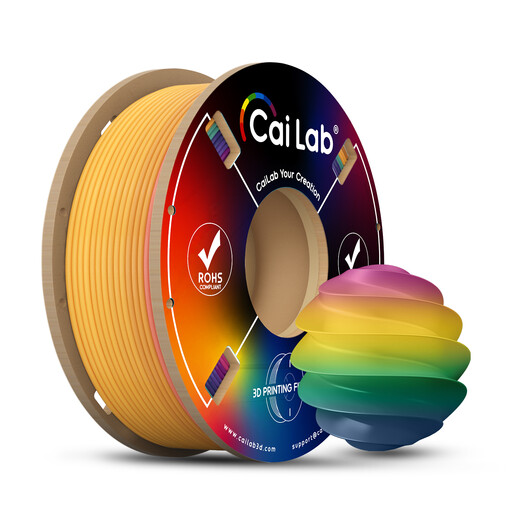
Why it suits this profile: The Garden variant is aimed at makers who want to try different colour accents with a single reel for decorative prints and small models.
The name explicitly mentions PLA, Rainbow and Gradient. This tells you in advance that it features a colour gradient rather than a solid colour.
PLA material and a rainbow gradient according to the product name; suitable as a starting point for colourful FDM prints.
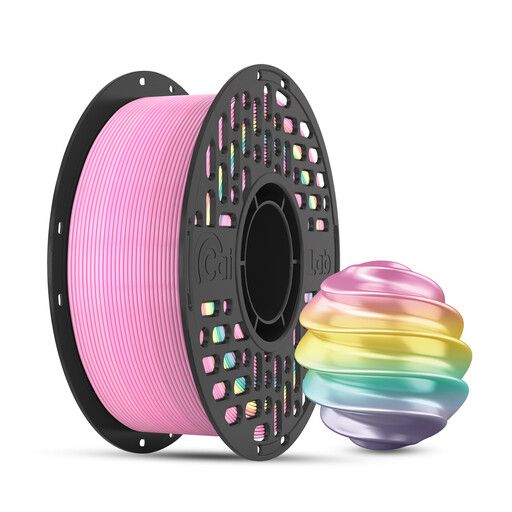
Why it suits this profile: The name “Silky Macaron” appeals to users who want to combine a colour gradient with a silky appearance in decorative designs.
The product name clearly identifies the chosen style. Before buying, however, check the current technical details, such as the diameter and recommended temperature.
PLA Rainbow Gradient according to the product name; “Silky Macaron” indicates the chosen colour and finish variant.
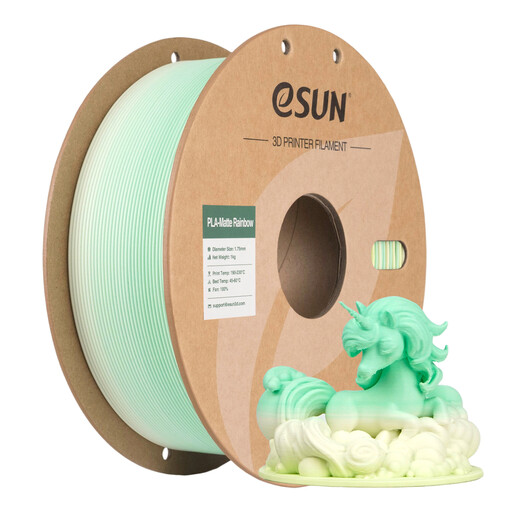
Why it suits this profile: This variant specifies 1.75 mm, 1 kg and a matt finish. That makes it a clear choice for users who buy based on diameter, quantity and appearance.
The product title states the filament diameter, weight and matt texture. You therefore do not have to work out this basic information from the colour image.
1.75 mm; 1 kg; PLA Matte Rainbow according to the product listing. The colour combination is specified as Yellow White Aqua.
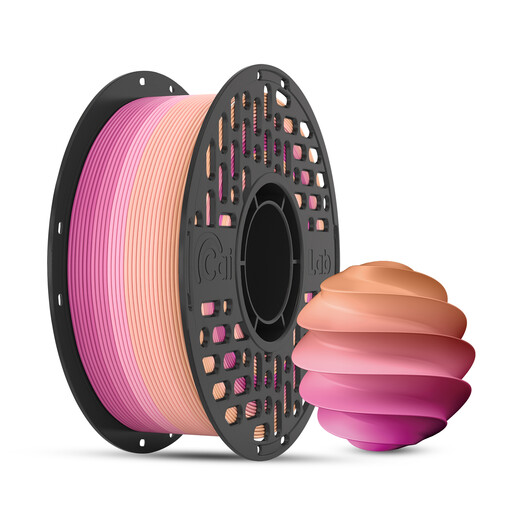
Why it suits this profile: The Plum variant is a good match for designs where you want a clearly named, fruit-inspired colour experience rather than a randomly chosen solid-colour reel.
The specific variant name helps you distinguish between different colour reels. Before checkout, also check printer compatibility and diameter.
PLA Rainbow Gradient according to the product name; Plum is the specified colour variant.
We have put together a complete, up-to-date list of products that fully meet these strict selection criteria and the applicable European safety regulations.
When using a new reel, print a small test object and pay attention to the following points:
A colour gradient is often more clearly visible on models with sufficient height and noticeable side surfaces. With a flat object, the colour zones may be less visible. Keep this in mind when designing and orientating your model.
No. The printer must support a 1.75 mm diameter and be suitable for PLA. Also check the maximum reel size, nozzle temperature and recommended settings. An FDM printer with a different feed system may use another filament size.
This depends on the reel’s weight and the amount of material used for each model. A 1 kg reel may be enough for several small objects, but large models with thick walls and substantial infill use considerably more. Your slicer will usually show an estimate of the required weight or filament length.
Choose a model with sufficient height, use a suitable layer height and check the print duration in your slicer. With a short model, the transition may barely be visible. A larger print or several smaller models printed one after another may show more colour zones, but the exact pattern will still depend on the reel and the amount of filament used.
