
Vandaag of morgen in huis

Kwaliteit gegarandeerd

Welkomstaanbiedingen ontgrendelen: GRATIS bezorging | Tot 80% korting | Gratis 30 dagen JoyPlus-proefperiode
Download de app
Choosing the right PLA filament can mean the difference between a perfect 3D print and a failed project. The market is flooded with options, and it's easy to get lost in marketing terms and vague promises. Many hobbyists and even professionals fall into the same traps, leading to wasted money and frustration. Let's look at how you can prevent this.
Before you buy a new spool, it's important to recognize the most common issues that can ruin the quality of your prints.
To make a good choice, focus on a few verifiable specifications instead of marketing jargon. Here's what really matters for your FDM filament.
This is perhaps the most important technical specification. Look for a filament with a specified dimensional tolerance of +/- 0.03 mm or, even better, +/- 0.02 mm. This precision ensures a consistent flow of material through your printer's nozzle, which is essential for a smooth finish and reliable prints.
Not all PLA is the same. The variant you choose depends on your project.
The standard size is a 1kg filament spool. This offers the best value for money for most users. Pay attention to product photos or descriptions that show neat, tight winding. This small detail can save you hours of frustration.
Below are some popular choices, matched with specific user profiles.
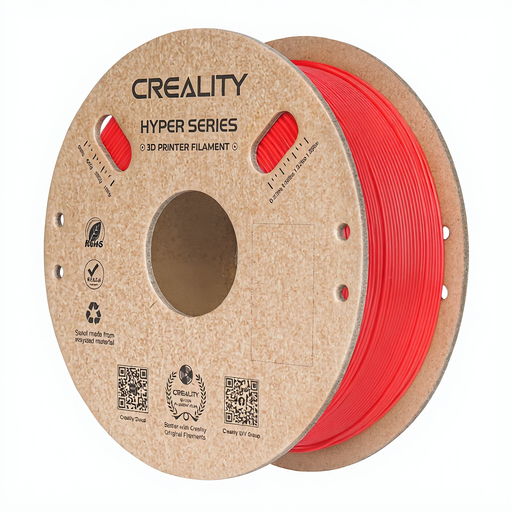
Why This Fits Their Persona: For users with a high-speed printer who create functional parts and prototypes. Time is money, and this filament is designed to drastically reduce print time without sacrificing reliability.
This filament is specifically made for high speeds. It bypasses the trap of using standard PLA that underperforms in modern printers. The specified dimensional tolerance of +/- 0.02 mm prevents issues caused by inconsistent diameter.
According to Creality, it's suitable for print speeds up to 600 mm/s. High dimensional accuracy ensures reliable results, even at high speed.
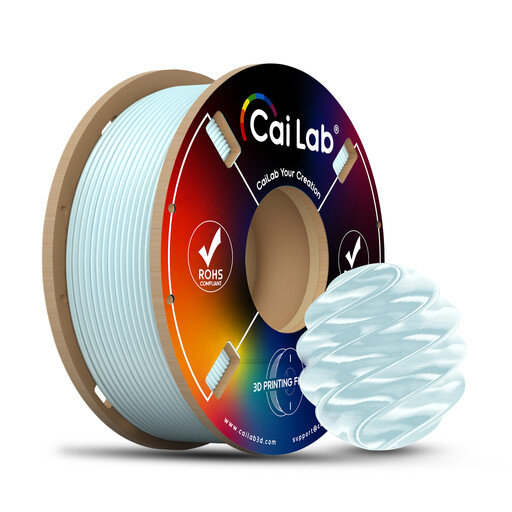
Why This Fits Their Persona: Ideal for hobbyists printing visually appealing objects. Think decor, jewelry, or figurines where the finish is just as important as the form.
This isn't a vague "Pro" filament, but a specific type of Silk PLA. You choose it deliberately for its unique glossy finish, not for ambiguous claims about strength. The focus is purely on the aesthetic result.
Provides a deep, silky sheen that hides layer lines and gives objects a premium look. Prints just as easily as standard PLA.
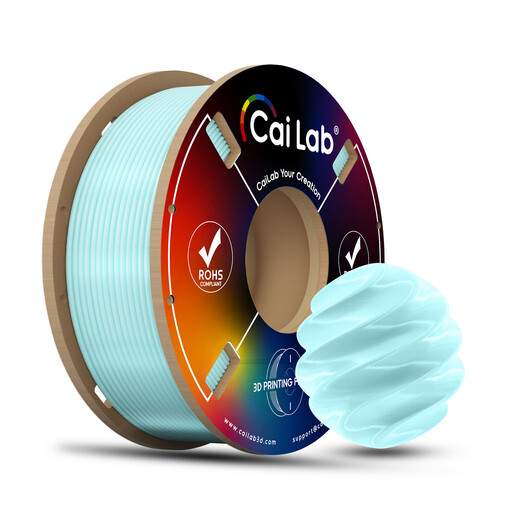
Why This Fits Their Persona: For the beginner or hobbyist looking for a reliable and user-friendly 3D printing material for all kinds of projects, from models to practical household items.
Although it's called 'PLA+', the focus is on reliability and ease of use. It's a predictable material with good adhesion and minimal warping, which reduces the chance of failed prints.
Consistent and easy to print with a wide temperature range. Good layer adhesion results in stronger prints than many basic PLAs.
We've compiled a complete, up-to-date list of products that meet these selection criteria.
PLA absorbs moisture from the air, which negatively affects print quality. The best way to store your filament is in an airtight container or bag, along with a sachet of silica gel to absorb any moisture. Keep the spools in a cool, dry place and out of direct sunlight.
There is no official industry standard for PLA+ filament. Generally, manufacturers use this term to indicate that additives have been included to make the material stronger, less brittle, or more impact-resistant than their standard PLA. Because the properties vary by brand, it's wise to check the manufacturer's technical specifications rather than relying on the name alone.
Yes, the 1kg filament spool is the most common size for both hobbyists and many professionals. This quantity offers a good balance between price and the amount of material for multiple projects. For trying out special materials or colors, smaller spools of 250g or 500g are also available.
