
Vandaag of morgen in huis

Kwaliteit gegarandeerd

Welkomstaanbiedingen ontgrendelen: GRATIS bezorging | Tot 80% korting | Gratis 30 dagen JoyPlus-proefperiode
Download de app
When you search for nuts and nut mixes online, you’ll quickly be faced with dozens of varieties. Unsalted nuts, salted nuts, raw nuts, roasted nuts, cranberry nut mix and muesli with nuts can all look similar at first glance. Yet the ingredients, salt content and added sugars can vary enormously.
A packet labelled “natural”, “fit” or “no added sugar” doesn’t tell the whole story. The ingredients list and nutrition table usually give you a much clearer picture. These checks will help you avoid a bad buy and choose more wisely for home, when you’re on the go or at breakfast.
A nut mix without added salt can still contain dried fruit, sugar or oil. You’ll see this, for example, in a cranberry nut mix. The G'woon Cranberry Mix Unsalted contains 30% sweetened cranberries alongside cashews, almonds and walnuts. The nutritional information shows 25.4 g of sugars per 100 g.
That doesn’t automatically make the mix unsuitable, but it is different from a pure mix of unsalted nuts. So always check:
Botanically, peanuts aren’t tree nuts, but they’re often combined with other nuts in snacks. A cocktail mix can therefore have a different taste and nutritional profile from what you might expect. The g'woon Cocktail Nuts Provençal, for instance, contains 50% peanuts along with potato, wheat and maize starch, sugar, salt and spices.
If you’re specifically after cashews, walnuts, hazelnuts, almonds or macadamias, it’s worth checking the percentages. Ingredients are usually listed in descending order of quantity.
Products with grains and dried fruit can naturally contain sugars. B+ Muesli Nuts and Fruit states 0 g of added sugar, yet the nutritional information shows 20.8 g of sugars per 100 g. Those sugars come from dried grapes and apricots, among other things.
Even with granola that has no added sugar, the overall nutritional value matters. So don’t just look at the front of the packet – compare the table per 100 g.
A nut mix can consist of pure nuts, but also of oil, spices, sugar, starch or dried fruit. For a simple composition, products like g'woon Nut Mix Raw & Unsalted are straightforward: 30% hazelnuts, 30% walnuts, 20% almonds and 20% cashews.
With a roasted variety, the preparation can add extra ingredients. G'woon Cashew Nuts Roasted & Unsalted lists only cashews as an ingredient. The macadamia mix from g'woon, on the other hand, contains peanuts, almonds, cashews, macadamias, maize, pecans, salt and sunflower oil.
Compare nutritional values per 100 g, not just per portion. A small portion can look favourable, even though the bag contains several servings. Pay particular attention to:
G'woon Dry Roasted Peanuts contains 1.5 g of salt per 100 g according to the product information. The raw, unsalted nut mix from g'woon lists 0.01 g of salt per 100 g. That’s a clear difference if you’re looking to limit your salt intake.
Nuts, peanuts, gluten-containing grains, milk and soya need to be checked carefully. A product may not contain a particular ingredient as a main component, but it can state that it may contain traces of other allergens.
The B+ muesli contains gluten-containing grains, hazelnuts and almonds, and may contain traces of peanuts, soya, milk, walnuts, cashews and pecans. If you have an allergy, always check the current packaging. Product information online can change.
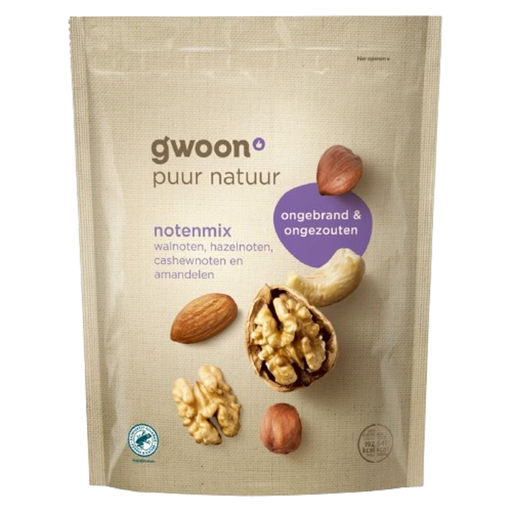
Why it fits this profile: The mix has a short ingredients list and combines hazelnuts, walnuts, almonds and cashews with no added salt.
The ingredients and percentages are clearly visible. According to the product description, no spices, sugar or syrup have been added.
200 g, 0.01 g of salt per 100 g and 19.1 g of protein per 100 g according to the label.
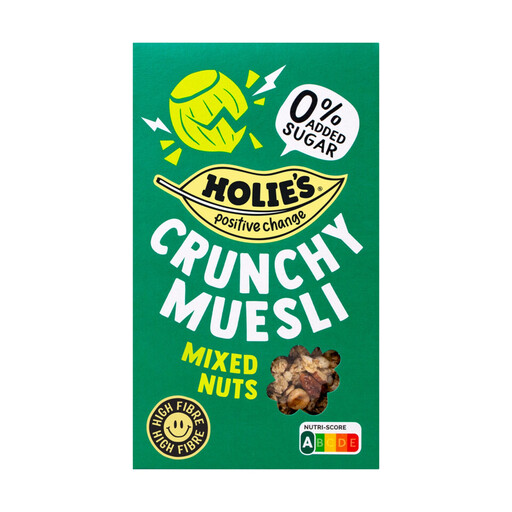
Why it fits this profile: This crunchy muesli combines wholegrain oat and spelt flakes with hazelnuts, almonds, pecans and Brazil nuts.
The product information states 0% added sugar. Do check the current ingredients list and allergens on the packaging.
21 g of fibre and 2.4 g of sugars per 100 g according to the stated nutritional values.
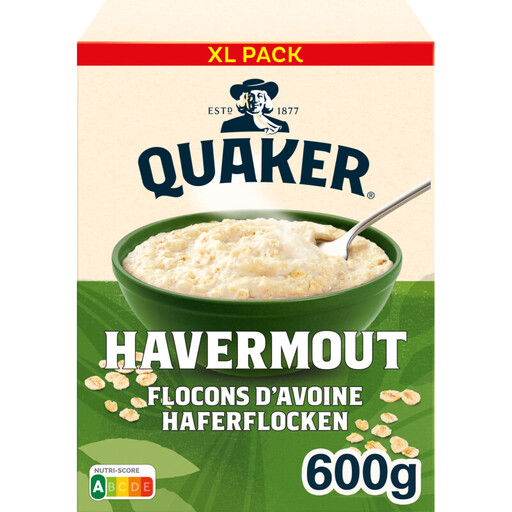
Why it fits this profile: For a simple breakfast without nuts or fruit, this 100% wholegrain porridge is easy to combine with your own toppings.
According to the product information, the composition is 100% wholegrain oats, with no hidden nut mix, fruit or flavourings.
600 g pack, 9 g of fibre and 3.6 g of beta-glucans per 100 g according to the label.
Choose muesli with nuts if you want to combine grains, seeds and fruit in one breakfast. B+ Muesli Nuts and Fruit contains wholegrain flakes, sunflower seeds, hazelnuts, almonds, raisins and apricot, among other things. For a crunchy texture, Holie's Crunchy Muesli Mixed Nuts is a better fit.
Granola with no added sugar can also be an option, but check the amount of oil, fibre and total sugars. If you’re mainly after a snack, it’s better to look for a short ingredients list and a resealable packet. When ordering online, also consider the size: 150 to 200 g is handy for trying a flavour first, while 400 to 600 g can be more practical for a family or regular breakfast.
We’ve put together a full, up-to-date list of products that fully meet these strict selection criteria and comply with current European safety regulations.
Raw nuts haven’t been roasted and often have a milder flavour. Roasted nuts usually have a more intense taste and crunchy texture due to the heating process. With both types, check whether salt, oil or spices have been added.
Keep the packet in a cool, dry place away from direct sunlight. Seal an opened bag tightly to keep out moisture and prevent loss of quality. Always follow the storage advice and best-before date on the packaging.
Compare the ingredients, allergens, nutritional values, net weight and packaging. Also check whether the nut mix is unsalted, sweetened, roasted or raw. If you have an allergy, the current product packaging is the definitive guide.
