
Vandaag of morgen in huis

Kwaliteit gegarandeerd

Welkomstaanbiedingen ontgrendelen: GRATIS bezorging | Tot 80% korting | Gratis 30 dagen JoyPlus-proefperiode
Download de app
Buying breakfast cereal seems straightforward until you are standing in front of a shelf or browsing an online product selection. Muesli, granola, cruesli, porridge oats and chocolate breakfast cereals can differ considerably in ingredients, sugar content, fibre, protein and serving size. Attractive packaging tells you little about what actually ends up in your bowl.
Three common pitfalls come up time and again:
Ingredients are listed in descending order by weight. If wholegrain oats, wheat or another cereal grain appears first, it generally makes up a significant part of the mix. Then look at oil, syrup, sugar, chocolate, dried fruit and added fibre.
Always compare nutritional values per 100 grams. This makes different packs easier to compare fairly. Pay particular attention to:
A claim such as “high in fibre” is not a personal nutritional recommendation. Check the exact value on the label and consider your overall diet.
Many breakfast cereals contain gluten from wheat, barley, rye or spelt. Milk, soya, peanuts, almonds, hazelnuts and other nuts are also common ingredients. If you have an allergy, read the wording “may contain traces of” as well. This warning can vary from product to product.
A product containing oats is not automatically gluten-free. If you are looking for gluten-free granola, check that this is explicitly stated and review the allergens listed on the label. The same applies to vegan breakfast cereals: a recipe without milk does not automatically mean that it contains no other animal-derived ingredients or that there is no risk of cross-contamination.
Muesli often consists of flakes, nuts, seeds and fruit, and is usually not baked. Granola and cruesli are generally crunchy because they are baked or roasted. As a result, they may contain more oil, syrup or other binding agents. A crunchy texture is enjoyable, but compare the nutritional values with those of ordinary flakes.
Consider how you will use it:
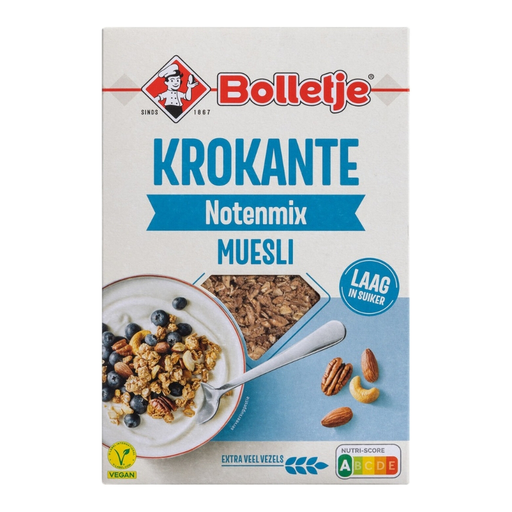
Why it suits this profile: An approachable crunchy muesli for anyone who wants to compare nuts and a low sugar value per 100 g without immediately choosing a large pack.
The table states 5 g of sugar, 13 g of fibre and 12 g of protein per 100 g. This allows you to check the “low in sugar” claim in concrete terms.
375 g, with spelt and oat flakes, almonds, cashews and pecans. According to the product information, the product carries a vegan V-Label.
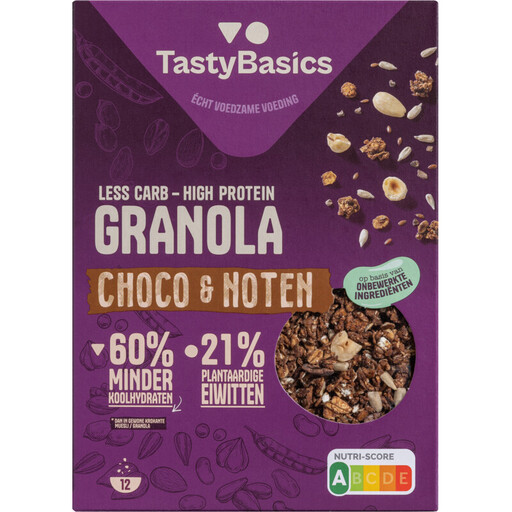
Why it suits this profile: A compact granola for adults who want to combine chocolate, nuts and seeds with clearly presented macronutritional values.
The product information states that no sugar has been added. However, do check the total sugar value: it is 6.8 g per 100 g.
Per 100 g: 28 g of fibre, 21 g of protein and 26 g of carbohydrates. Contains soya, oats, hazelnuts and almonds.
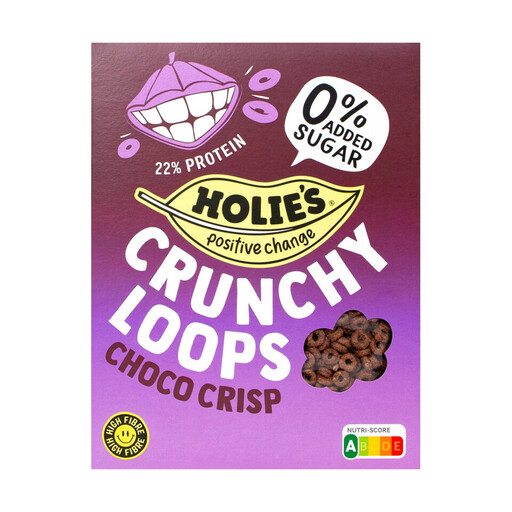
Why it suits this profile: Designed for anyone consciously seeking a high-protein, granola-style breakfast option and wanting to adjust the serving to suit active or sports-focused days.
The “0% added sugar” statement is supported by verifiable figures: 4.7 g of sugar, 22 g of protein and 26 g of fibre per 100 g.
Chocolate cereal rings made with wholegrain wheat flour, peanut flour and chicory root fibre. Contains wheat and peanuts.
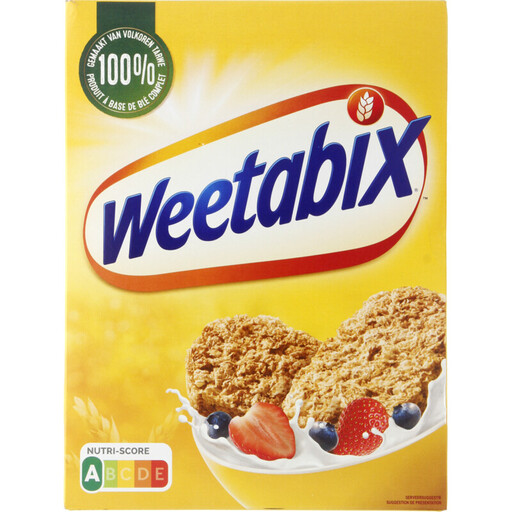
Why it suits this profile: A simple base that you can combine with cold or warm milk, yoghurt, fruit or a plant-based alternative.
The product information states that it contains 95% wholegrain cereals and 4.2 g of sugar per 100 g. This keeps the base easy to assess before you add toppings.
430 g pack, with 10 g of fibre and 12 g of protein per 100 g. Contains wheat and barley, so it is not suitable for a gluten-free diet.
We have compiled a complete, up-to-date list of products that fully meet these strict selection criteria and the applicable European safety regulations.
Muesli is usually an unbaked mix of cereal flakes, nuts, seeds and fruit. Granola is generally roasted or baked, while cruesli is a term used for a crunchy muesli mix. Always check the ingredients and nutritional values, as the composition varies by brand and flavour.
Compare the “of which sugars” value per 100 grams. Products with no added sugar can still contain natural sugars from fruit. For example, Quaker Cruesli Choco Zero Sugar states 3.4 g of sugar per 100 g, while a variety containing raisins may have different sugar values. “Sugar-free breakfast cereals” is therefore not the same as “no added sugar”.
Store the pack in a cool, dry place away from direct sunlight. Seal an opened bag securely and, ideally, use an airtight storage container. Check the best-before information on the packaging before use and do not consume the product if the packaging is damaged.
