
Same-day & Next-day Delivery

Quality Guaranteed

Unlock Your Welcome Offers: FREE Delivery | Up to 80% OFF | Free 30-day JoyPlus trial
Download the APP
A bag of muesli may seem easy to choose, but the differences between ordinary muesli, cruesli, granola and breakfast cereals are significant. One variety may contain plenty of wholegrain cereals and fibre, while another consists mainly of syrup, sugar or oil. Terms such as “no added sugar”, “high in protein” and “with nuts and fruit” do not tell the whole story either.
With this practical selection guide, you can assess the nutrition table, ingredients and ease of use. That way, you can choose muesli that suits your breakfast habits, budget and preferences.
Muesli with no added sugar may still contain sugars that occur naturally in ingredients such as raisins, fruit or grains. So always check the of which sugars figure per 100 grams. For example, Quaker Zs Cruesli Raisin & Hazelnut lists 9.4 grams of sugar per 100 grams, while Quaker Cruesli Zero Sugar Added Strawberry & Peach lists 4.4 grams.
Also look out for ingredients such as glucose syrup, honey, date syrup and maltodextrin. A product may contain no added sugar, yet still taste relatively sweet or contain high levels of naturally occurring sugars.
Cruesli and granola are usually baked or toasted. This creates a crunchy texture, but it can also mean that oil, syrup or sugar has been added. According to the product information, Quaker Cruesli 4 Nuts contains 19 grams of fat and 462 kcal per 100 grams. That does not make it unsuitable, but choosing a sensible portion is important.
So do not compare products based only on taste or packaging. Look at energy, fat, sugar and fibre per 100 grams. This allows you to compare products fairly, regardless of the recommended serving size shown on the front.
A 300 to 450-gram pack may seem good value, but individual sachets can be more convenient when you are out and about while also working out more expensive per portion. Brinta Wake Up Natural contains sachets which, according to the product information, can be prepared with warm or cold water in around one minute. This is practical for a quick breakfast, but differs from a large bag of porridge oats or muesli that you portion yourself.
If you use it regularly, calculate the price per portion and check how many grams you actually eat. The statement “10 portions” is only useful if the stated portion matches your eating habits.
For a wholegrain breakfast, look at the ingredients list. If wholegrain oats, wholegrain wheat or another wholegrain cereal appears near the top, it makes up an important part of the product. Also check the fibre content. Products with around 6 grams of fibre or more per 100 grams are often described as high in fibre in practice, but the exact figure on the label is what matters most.
Quaker Zs Cruesli Nuts & Seeds lists 23 grams of fibre per 100 grams. Quaker Cruesli 4 Nuts lists 10 grams. The preparation method and ingredients differ, so comparing products based only on the front of the packaging can be misleading.
If you are looking for a high-protein breakfast, compare the protein content per 100 grams. Holie's Crunchy Muesli Protein Nuts lists 22 to 23 grams of protein per 100 grams, depending on the nutrition table displayed. According to the product information, Quaker Oats Express Protein contains 22 grams of protein per 100 grams and consists of 85% wholegrain oats and 15% soya protein.
Look out for allergens such as soya, gluten, milk and nuts. A high protein content may be due to added soya or wheat protein. Also check whether the flavour, texture and portion size suit you.
“Muesli with nuts and fruit” can have a wide variety of ingredients. According to the label, B+ Muesli Nuts and Fruit contains, among other ingredients, 22% dried grapes, 5% apricot, 1.5% hazelnuts and 1% almonds. Family Whole nuts, fruits, and oat flakes lists 5% nuts and 4% fruit.
Always check:
“Organic”, “natural” or “free from artificial additives” does not in itself indicate how much sugar, fat or fibre the product contains. Use the nutrition table to check.
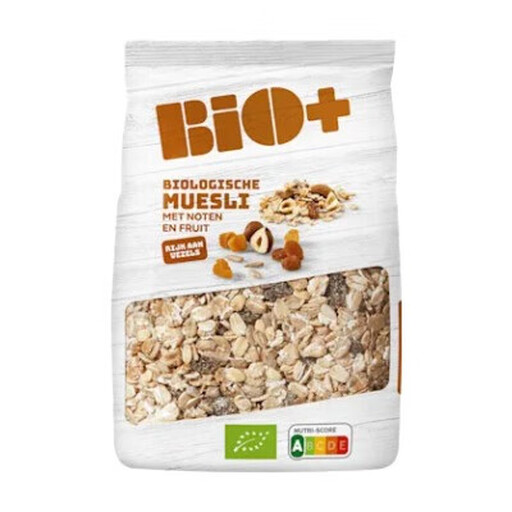
Why it suits this profile: A familiar blend of wholegrain flakes, seeds, dried fruit and nuts for anyone who wants to get started without making complicated comparisons.
The nutrition information lists 0 grams of added sugars and shows the percentages of fruit and nuts. This allows you to check the composition.
9 grams of fibre and 10.9 grams of protein per 100 grams; can be combined with milk, yoghurt or used as a topping.
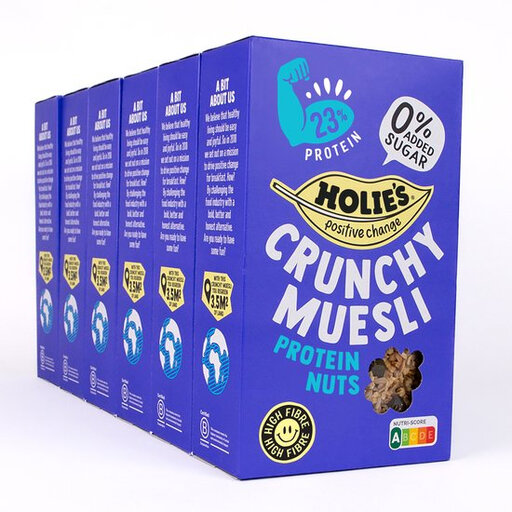
Why it suits this profile: For anyone specifically looking for high-protein muesli with nuts and a multipack for everyday use.
The figures show that the crunchy texture is not based solely on sweetness: the product lists 2.1 grams of sugar and 0 grams of added sugar per 100 grams.
22 to 23 grams of protein and 19 to 21 grams of fibre per 100 grams according to the product information; pack of 6 x 400 grams.
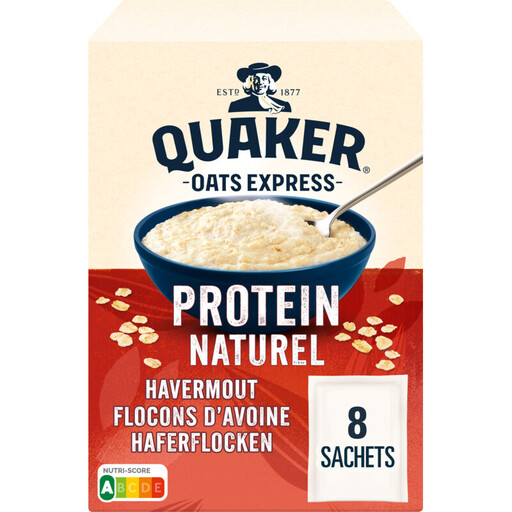
Why it suits this profile: Convenient for active consumers and busy mornings, thanks to a preparation time of around two minutes.
The composition is straightforward: 85% wholegrain oats and 15% soya protein. According to the product information, it contains no added sugar.
22 grams of protein, 7.2 grams of fibre and 383 kcal per 100 grams; suitable with water or milk.
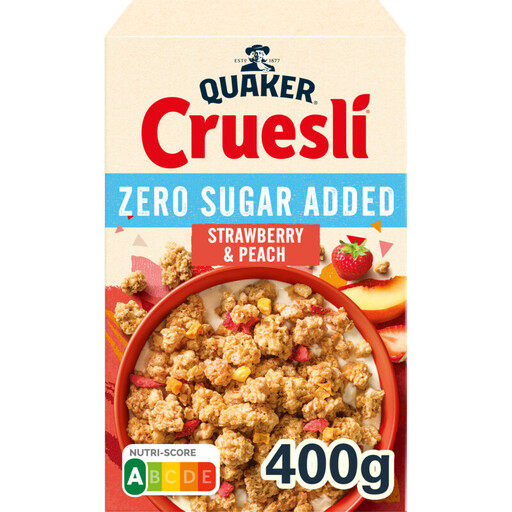
Why it suits this profile: A good choice for anyone who wants a crunchy breakfast with fruit pieces while keeping an eye on the amount of sugar on the label.
The packaging states that it contains no added sugars or sweeteners. The nutrition table also shows 4.4 grams of sugars and 24 grams of fibre per 100 grams.
Contains 41% wholegrain oats and 17% wholegrain wheat flakes; suitable with milk, yoghurt or a plant-based alternative.
We have put together a complete, up-to-date list of products that fully meet these strict selection criteria and the applicable European safety regulations.
Muesli usually consists of an uncooked mix of flakes, seeds, nuts and dried fruit. Cruesli is a brand name for crunchy muesli. Granola is generally toasted and may contain oil, syrup or sugar. The exact composition varies from product to product, so check the label.
Store muesli according to the product information in a cool, dry place, away from moisture, heat and direct sunlight. Seal the packaging securely. This helps crunchy breakfast cereals retain their texture for longer. Also check the best-before date before use and do not consume the product if the packaging is damaged.
The recommended portion varies by product. Some packs are based on 30 grams, while others use 40 or 45 grams. Use the portion stated on the label as a starting point, then add milk, yoghurt, fruit or nuts to taste. Always compare nutritional values per 100 grams and per portion, particularly if you eat muesli every day.
