
Vandaag of morgen in huis

Kwaliteit gegarandeerd

Welkomstaanbiedingen ontgrendelen: GRATIS bezorging | Tot 80% korting | Gratis 30 dagen JoyPlus-proefperiode
Download de app
A measuring jug might seem like a simple kitchen tool, but small differences can make a big impact on how much you enjoy using it. A scale that fades quickly, an awkward pouring spout or a capacity that’s too small can cause daily frustration when you’re baking, cooking or making coffee.
Pay particular attention to these three common pitfalls:
Think about the quantities you usually measure:
A larger measuring jug isn’t automatically more convenient. For small amounts, the markings can be close together, making them less precise to read. If you make different types of recipes, you might prefer a measuring jug set with multiple sizes.
A glass measuring jug lets you see the contents clearly and generally doesn’t absorb much odour or colour. Borosilicate glass is known for its resistance to thermal shock. However, careful use is still needed: avoid a big temperature change, such as putting a hot jug directly under cold water.
A plastic measuring jug is lightweight and therefore suitable for everyday use. Always check the product information for hot food. An indication such as dishwasher-safe or microwave-safe must be specifically stated for that product.
For coffee lovers, a stainless steel jug can be of interest. A 304 stainless steel model with an engraved scale is designed for measuring and frothing milk. However, metal is not suitable for use in the microwave.
A good measuring jug with measurement marks should be readable from several angles. Check whether the scale includes millilitres, for example, and whether the markings are more than just a sticker. With regular use, printed lines can wear off; engraved markings are less prone to this.
A measuring jug with a pouring spout helps when dosing milk, oil, batter and sauces. Also pay attention to the handle: a wide, sturdy grip gives you more control when the jug is full. At high temperatures, a handle alone isn’t enough protection; always follow the manufacturer’s safety instructions.
The choices below are linked to different usage scenarios. The selection is based on the stated capacity, material, accessories and described product features.
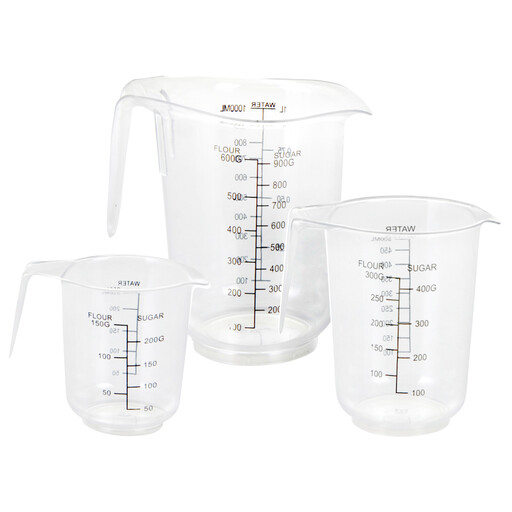
Why this suits the profile: Three transparent plastic jugs offer different sizes for cooking, baking and everyday drinks. The set is practical for anyone who wants one kitchen measuring jug but needs to measure multiple quantities.
The set means you don’t need a separate jug for every quantity. The product information states clear measurement marks, a handle and a pouring spout.
Transparent plastic, three pieces, 1 litre capacity per jug according to the product description and dishwasher-safe according to the product description. Not suitable for the microwave.
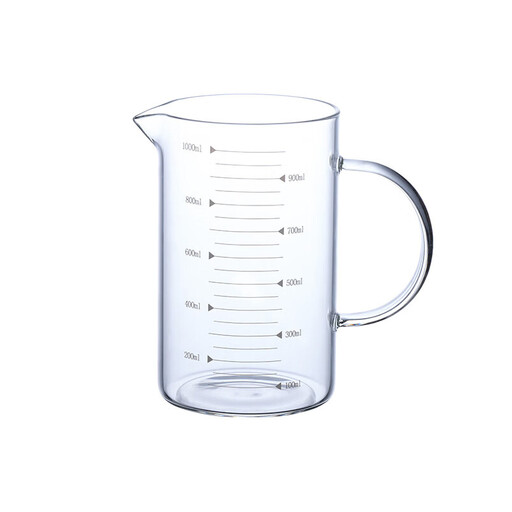
Why this suits the profile: This large glass measuring jug is ideal for home chefs and bakers who want to measure lots of liquid at once and see the contents clearly.
The 1000 ml capacity reduces the risk of spillage with larger recipes. According to the product description, the markings are clear and the glass is suitable for hot liquids and the microwave; check the label before use.
Borosilicate glass, 1000 ml capacity, transparent design and a non-porous surface that is described as easy to clean.
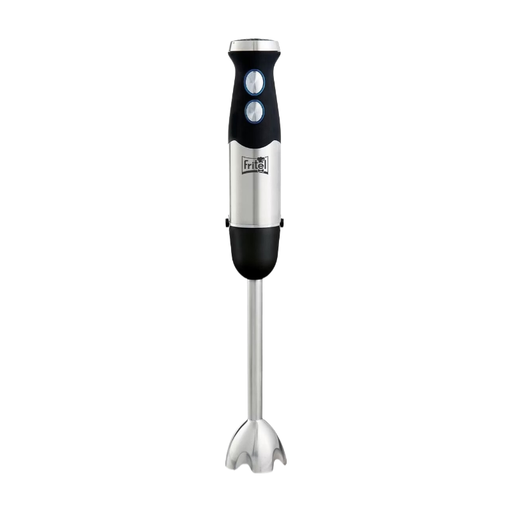
Why this suits the profile: If you not only measure but also make soups, sauces or purées, you can choose a stick blender that comes with a measuring jug and accessories.
The included measuring jug means you don’t have to search for a separate mixing vessel. The product information states a 25 cm blending shaft, 800 W, two speeds, a chopper and two whisks.
A 700 ml measuring jug is included. The stainless steel blending shaft is removable and the instructions limit blending hot liquids to a maximum of 60 °C.
Check these points on the product page:
With glass, caution is important, even if it’s borosilicate. With plastic, check the heat resistance and the permitted cleaning method. Do not use a measuring jug on a hob unless the manufacturer expressly allows it.
We’ve put together a full, up-to-date list of products that fully meet these strict selection criteria and comply with current European safety regulations.
That depends on how you use it. Glass is transparent, generally doesn’t absorb much odour and can be nice for hot preparations when the product is designed for that. Plastic is lighter and often more convenient for everyday use. Always check the specific temperature and cleaning instructions.
For many recipes, a capacity of 500 ml to 1000 ml is practical. A 500 ml measuring jug is suitable for milk, oil and smaller quantities. For batter, water or larger mixtures, a 1000 ml measuring jug offers more space. A measuring jug set is handy if you regularly use both sizes.
Use the product according to the cleaning instructions. Avoid abrasive scouring pads if the manufacturer advises against them, and check whether the jug is dishwasher-safe. With heavy use, engraved markings or a scale that’s moulded into the material can stay readable for longer than simple printed ones.
