
Vandaag of morgen in huis

Kwaliteit gegarandeerd

Welkomstaanbiedingen ontgrendelen: GRATIS bezorging | Tot 80% korting | Gratis 30 dagen JoyPlus-proefperiode
Download de app
A glass measuring jug is handy for measuring water, milk, oil, stock and other liquids. However, not every model is suitable for everyday use in the kitchen. Small markings, unclear information about the material or an awkward shape can make it harder to measure accurately — or put you off using the jug altogether.
For home bakers, home cooks and households, there are three main pitfalls to watch out for:
So don’t just focus on appearance. Check the capacity, type of glass, measuring scale and care instructions before making your choice.
The capacity you need depends on your cooking habits:
A 1000 ml measuring jug gives you more room, but also takes up more space in a kitchen cupboard. A large jug is heavier when full, too. So check that the handle is sturdy enough and that the spout is practical.
A borosilicate glass measuring jug is often chosen for its combination of clarity and resistance to changes in temperature. According to the product descriptions for the BJ models, borosilicate glass is intended for use with hot liquids and rapid temperature changes. This is a claim made in the manufacturer’s product information, so always read it alongside the instructions for use.
Even with heat-resistant glass, care is still needed. Don’t put a hot jug straight into iced water, and don’t place a warm glass measuring jug on a very cold surface without checking it is suitable. This helps reduce the risk of thermal shock.
You should be able to read a glass measuring jug with markings from different angles. Look for:
Clear glass makes it easier to check the amount, but only if the scale is easy to see. For accurate baking, kitchen scales are often the best choice for dry ingredients. A measuring jug is particularly handy for liquids.
The recommendations below are based on the capacities, materials and features listed in the product information. Always check the latest specifications, dimensions and care instructions on the product page before buying.
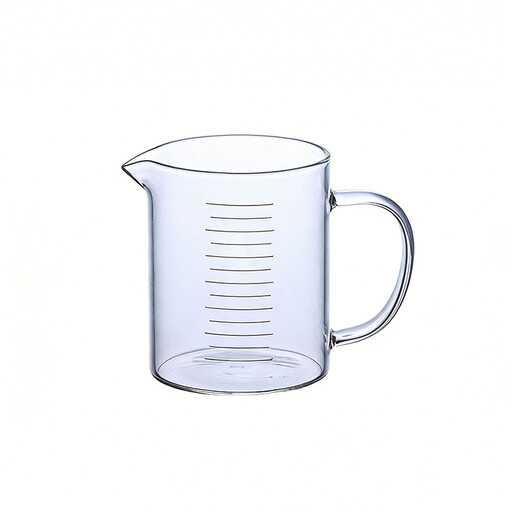
Why it suits this profile: The 350 ml capacity is ideal for small portions, sauces, milk and everyday baking recipes. Its compact size takes up very little space.
The product name mentions borosilicate glass, heat resistance and measuring marks. Check the product page for details of the scale and any limits on how it can be used.
350 ml capacity; borosilicate glass according to the product listing; measuring marks.
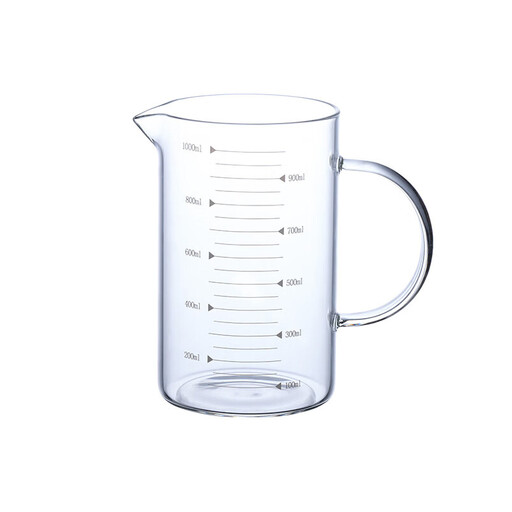
Why it suits this profile: This large glass measuring jug is aimed at households that regularly measure, mix or prepare larger quantities.
The stated 1000 ml capacity means you don’t have to measure several smaller portions. The product description mentions clear volume markings and use with hot liquids.
1000 ml capacity; clear borosilicate glass according to the product information; suitable for mixing and larger quantities.
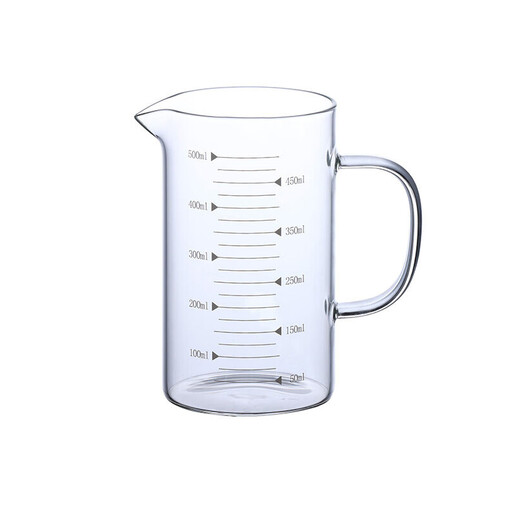
Why it suits this profile: The 500 ml capacity is ideal for everyday cooking and baking, without being as large as a one-litre model.
The product name mentions both borosilicate glass and markings. This means the model covers the key points to check, but always follow the official label when using it with heat.
500 ml capacity; measuring marks according to the product name; clear borosilicate glass according to the listing.
A glass mixing jug will stay in good condition for longer if you look after it properly:
Glass surfaces generally don’t absorb odours like some porous materials do. This makes a glass measuring jug handy for use with different ingredients, including milk, coffee, oil and sauces. Don’t use damaged glass, even if the crack looks small.
We’ve put together a complete, up-to-date list of products that meet these strict selection criteria and the applicable European safety regulations.
That depends on the material and the product instructions. Product information for a heat-resistant measuring jug made from borosilicate glass may state that it is suitable for use with hot liquids. Even so, avoid sudden changes in temperature and always check the label.
Accuracy depends mainly on the quality and position of the measuring scale, not just the material. Glass does give you a clear view of the liquid and generally doesn’t absorb odours. For dry ingredients, weighing them on kitchen scales is usually more suitable.
A 500 ml model is a versatile choice for many households. If you often make larger quantities of soup, batter or drinks, consider a large 1000 ml glass measuring jug. For small portions, a model of around 300 to 350 ml should do the job.
