
For a smart finish
You want to take care over creases and folds. Adjust the steam to suit the fabric and follow the care label; the Irish Linen Guild recommends ironing linen while it is slightly damp.


For a small weekly pile of linen napkins, a standard steam iron is usually a sensible choice; the Dutch Consumers’ Association considers this type suitable for smaller ironing sessions and limited storage space. If you have a large amount to iron in one go, a steam generator may be more appealing thanks to its larger tank, but it takes up more room. Follow the care label and compare adjustable steam settings and maintenance requirements. This is a choice between types of appliance, not confirmation that a specific model is suitable.
You want to take care over creases and folds. Adjust the steam to suit the fabric and follow the care label; the Irish Linen Guild recommends ironing linen while it is slightly damp.
You iron a small pile and would rather have an appliance that takes up little storage space. The Dutch Consumers’ Association considers a standard steam iron suitable for smaller ironing sessions.
You iron lots of napkins or other laundry in one go and want to refill the water less often. A steam generator generally has a larger tank, but takes up more room.
Suitable for: a small pile of napkins and limited storage space.
The trade-off: the tank is smaller and you move the iron over the fabric yourself.
Suitable for: lots of ironing in one go, if you have room for the larger appliance.
The trade-off: you refill it less often, but need more storage space and should check that your ironing board is suitable.
| What to consider | What should you look for? | Who is this most important for? |
|---|---|---|
| Creases and neat folds | Check whether the steam output is adjustable and follow the care label. | I want to achieve a neat finish on creases and folds; around 36% of consumers give this the highest priority. |
| Quick sessions and storage | Compare the size and weight of the iron you hold. | I want to iron a small pile without having to store a large appliance; around 29% of consumers prioritise quick sessions and minimal storage space. |
| Lots of ironing in one go | Compare tank capacity and how easy it is to refill, and check the space available around your ironing board. | I want to iron lots of napkins or other laundry in one session; around 21% of consumers give getting through a large pile the highest priority. |
| Long-term maintenance | Check the maintenance instructions and descaling system for the complete model number. | I want to avoid the appliance producing less steam with regular use; around 14% of consumers prioritise maintenance. |
A quoted steam output is not the same as an independent test of how well your linen napkins are smoothed.
Where available, compare independent test results for the exact model and follow the care label.
A generator takes up more room than a standard steam iron. Also check that your ironing board is suitable for the appliance.
Think about how much you iron at a time and check the space available on and around your ironing board in advance.
Limescale can block the steam channels. The Dutch Consumers’ Association includes maintenance in line with the manual in its tests of long-term use.
Follow the cleaning and descaling instructions for the exact model.
The Easygliss Plus FV5736E0 is a standard steam iron worth comparing if you’re looking for adjustable steam settings.
The TexStyle 5 SI5277GR is a standard steam iron worth comparing if manual temperature selection and a precision tip matter to you.
The PerfectCare PSG7200/20 represents the steam generator option for longer ironing sessions.
Below are product picks for both types of appliance: standard steam irons for smaller piles and steam generators for longer sessions. Check the applicable product safety information for the specific item and follow the care label on your napkins.
 No image available
A standard steam iron for shorter ironing sessions when you want to adjust the steam to suit the fabric.
The product information lists a 200 ml water tank, a Durilium Airglide soleplate, adjustable steam and a spray function.
 No image available
A steam generator to compare if you have longer ironing sessions and want to refill less often.
The product information lists a 1,8 l tank, variable steam control and Calc Clear technology.
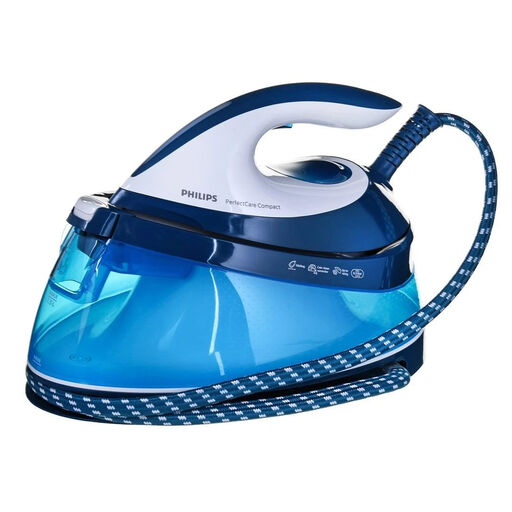 No image available
A steam generator to consider if you’re weighing up a larger water tank and automatic temperature selection.
The product information lists a 1,5 l tank, automatic temperature selection and Smart Calc-Clean.
 No image available
A standard steam iron to compare for shorter ironing sessions and tackling creases.
The product information lists a precision tip, a 300 ml water tank and a self-cleaning system.
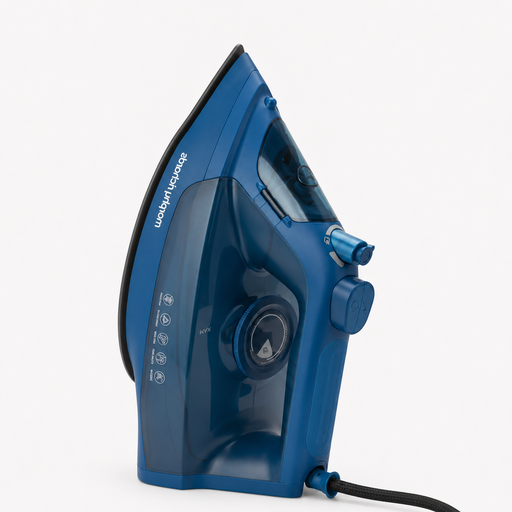 No image available
A standard steam iron to compare for shorter ironing sessions when you want to adjust the steam to suit the fabric.
The product information lists a ceramic soleplate, variable steam control, a spray function, and anti-scale and self-cleaning functions.
Check the care label first. The Irish Linen Guild recommends ironing linen while it is slightly damp and re-dampening dry linen. If the fabric is a blend or has a special finish, test carefully first.
No, you don’t need a steam generator to create a neat fold. The Dutch Consumers’ Association considers a standard steam iron suitable for shorter sessions; a generator may be more appealing when you have lots to iron in one go. Adjustable steam helps you choose the right setting.
Follow the cleaning and descaling instructions for the exact model. The Dutch Consumers’ Association explains that limescale can block the steam channels and reduce steam output.
No. According to the Dutch Government, there is no fixed period for the statutory guarantee in the Netherlands; what you can expect depends, among other things, on the product and how it is used. A manufacturer’s warranty is additional, and the retailer is your point of contact if a product is faulty.
For electrical equipment covered by the Dutch Electrical Equipment Regulations, the Netherlands Food and Consumer Product Safety Authority describes the applicable safety requirements and mandatory CE marking. The Low Voltage Directive described by the Authority applies to a nominal AC voltage of 50 V to 1000 V; check whether it applies to the specific model.