
Vandaag of morgen in huis

Kwaliteit gegarandeerd

Welkomstaanbiedingen ontgrendelen: GRATIS bezorging | Tot 80% korting | Gratis 30 dagen JoyPlus-proefperiode
Download de app
A steam iron can make ironing quicker, but not every model suits every household. A compact appliance is handy for ironing a shirt in the morning, while a steam generator iron is better suited to a large laundry basket. Focusing only on wattage or an impressive steam boost can therefore lead to an impractical purchase.
1. Looking only at the wattage
Higher wattage usually indicates a powerful heating element and a short heat-up time, but it does not tell you everything about the ironing performance. Continuous steam output, the soleplate and temperature control also matter. For example, a 2,800-watt steam iron may have a small water tank, meaning you need to refill it more often.
2. Confusing steam boost with continuous steam
A steam boost is used briefly to tackle stubborn creases. Continuous steam output, measured in grams per minute, has more of an impact on how comfortable it is to iron larger amounts of laundry. So look at both figures.
3. Using a garment steamer for every type of crease
A garment steamer works without an ironing board and is suitable for freshening up hanging clothes, dresses, blazers and curtains. For thick cotton, linen or sharp creases in shirts, a traditional steam iron usually gives you more control. A handheld steamer is therefore not automatically a replacement for a full-size iron.
For everyday use, a continuous steam output of around 20 to 60 g/min is a useful point of comparison for standard steam irons. A higher figure can help with thicker fabrics, but it often also increases water consumption.
The tank determines how often you need to stop. Models with around 200 to 350 ml are relatively compact. A steam generator iron usually has a separate tank with a capacity of 1.4 to 2 litres. This is practical for large amounts of laundry, but it requires more storage space.
A ceramic soleplate is often mentioned in product descriptions because of its smooth gliding action and even heat distribution. Also check whether the soleplate has a precision tip for collars and the areas around buttons.
Manual temperature control requires you to pay attention to the care labels. An automatic setting can be easier, particularly when ironing different fabrics one after another. Always follow the instructions on the garment; steam is not suitable for every material or finish.
Look out for these features:
Only use the type of water specified in the manual. Do not add perfume, fabric softener or unauthorised descaler. Only fill or empty the tank after unplugging the appliance and allowing it to cool sufficiently.
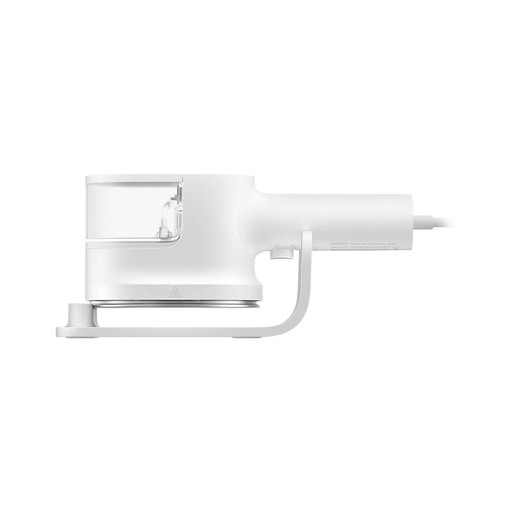
Why it suits this profile: The combination of dry and steam ironing, a weight of 0.77 kg and a 150 ml tank makes it suitable for students, smaller households and people with limited storage space.
The vertical steam function and manual control make it clear that this is a compact aid, rather than a large-scale ironing solution for full laundry baskets.
1200 watts, up to 22 g/min of steam and a heat-up time of around 30 seconds according to the product specifications.
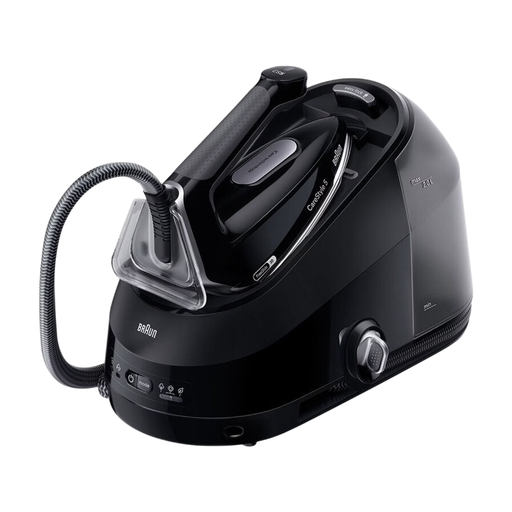
Why it suits this profile: For households that regularly iron large amounts of clothing, bed linen or shirts, the separate 2-litre tank provides longer use between refills.
The product specifications list anti-drip, automatic shut-off and a removable tank. This makes the maintenance and refilling requirements clear.
Up to 150 g/min of steam, a 510 g/min steam boost and 7.5 bar according to the supplied specifications.
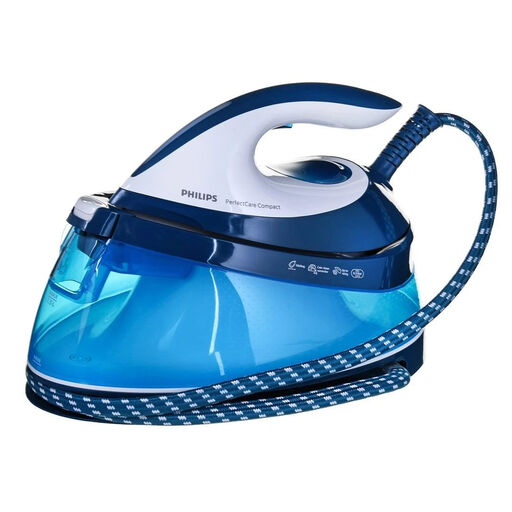
Why it suits this profile: Suitable for families who want to treat different fabrics one after another while combining a large tank with a vertical steam function.
According to Philips, the automatic temperature technology is designed to handle different ironable fabrics without manually selecting the temperature. However, always check the care label.
A 1.5-litre tank, 120 g/min of continuous steam, a 400 g steam boost and automatic shut-off.
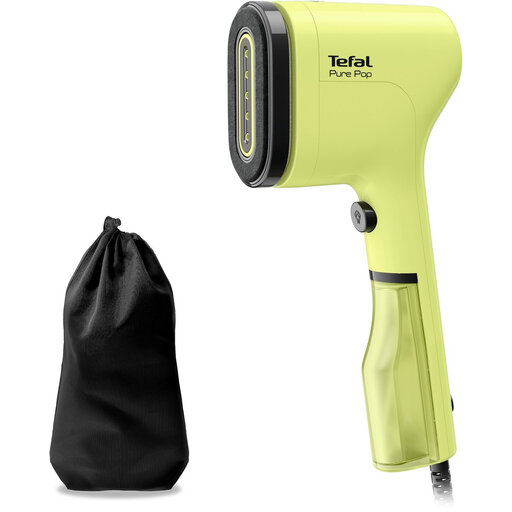
Why it suits this profile: With its compact design, weight of 0.71 kg and heat-up time of around 15 seconds, this model is well suited to use as a travel garment steamer.
The 70 ml tank capacity and single heat setting make it clear that this appliance is intended for quick freshening-up, not a full ironing session.
1300 watts, up to 20 g/min of steam and a reversible accessory included, according to the product information.
We have put together a complete, up-to-date list of products that fully meet these strict selection criteria and the applicable European safety regulations.
That depends on the usage time, power rating and amount of clothing. A garment steamer is ready quickly for one or two garments, while a steam iron can be more efficient when ironing several shirts or pairs of trousers one after another. Compare the wattage and how long the appliance remains switched on, rather than looking only at the purchase price.
The lifespan depends, among other things, on water quality, descaling and usage. Empty the tank after use when instructed to do so in the manual, keep the steam vents clear and use the self-cleaning function according to the instructions. In the Netherlands, limescale deposits may require extra attention. The statutory guarantee for many of the models mentioned is at least two years; check the specific product terms and conditions.
Only if the model has a vertical steam function and the fabric is suitable for it. Hang the garment securely and hold the appliance at the recommended distance. For sharp creases and pressing thick fabrics, a stable ironing board remains more practical.
