
Vandaag of morgen in huis

Kwaliteit gegarandeerd

Welkomstaanbiedingen ontgrendelen: GRATIS bezorging | Tot 80% korting | Gratis 30 dagen JoyPlus-proefperiode
Download de app
A steam iron can save time, but not every model suits the same ironing routine. A garment steamer is handy for a quick refresh, while a steam generator is better suited to a larger household with plenty of laundry. The key question is therefore not which appliance makes the biggest promises, but how many clothes you iron, which fabrics you work with and where you store the appliance.
Pay particular attention to these three common pitfalls:
Continuous steam output is usually shown in grams per minute (g/min). This gives you a useful indication of how much steam the appliance produces during normal use. A higher figure can help with thicker fabrics, but the result also depends on the soleplate, temperature control and the way you iron.
The powerful steam boost is designed for stubborn creases. Check whether the manufacturer clearly distinguishes between continuous steam and the maximum steam boost. With a steam generator, continuous output is often higher than with a compact iron.
A vertical steaming function is practical for dresses, jackets, curtains or clothes you simply want to freshen up. A handheld or garment steamer can do this without an ironing board. Keep the fabric on a hanger and follow the manufacturer's distance and safety instructions.
For ironing a few garments at a time, a tank holding between 70 and 350 ml is often sufficient. A large water tank of 1.3 to 2 litres is better suited to families or users who work through several loads of washing in succession.
Pay attention to these points:
In areas with hard water, limescale can affect the steam vents more quickly. An anti-scale iron can make maintenance easier, but always check exactly what the manufacturer means by “anti-scale”. According to Tefal's product information, for example, the Ultimate Pure uses a Micro-Calc filter; this is a product specification from the brand, not a guarantee that maintenance is no longer required.
A ceramic soleplate is often chosen for its smooth contact with the fabric. Also look at the shape and precision tip, which can help you work around buttons, collars and seams. A coating can wear when you iron over zips or other hard parts, so take care.
A short heat-up time is useful for a quick morning ironing session. The product specifications for various models put this at around 15 to 60 seconds. A steam generator may take longer because of its larger base unit; Philips states around two minutes for certain models.
Automatic switch-off is an important safety feature. Check whether it operates when the appliance is resting on its soleplate, standing on its heel or left unused for a certain length of time. Never leave a hot appliance unattended, and never direct steam at people, animals or electrical equipment.
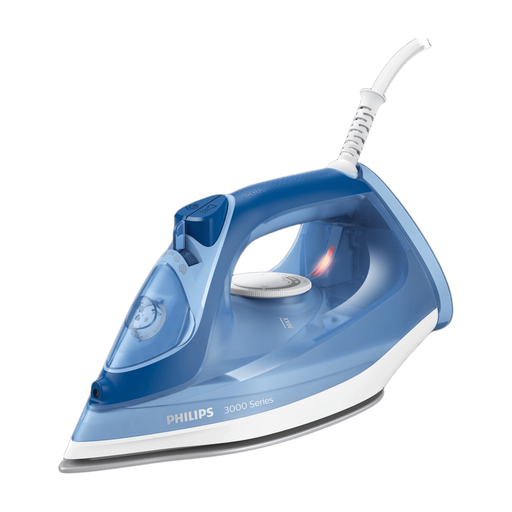
Why it suits this profile: This model is suitable for small to medium-sized everyday ironing sessions without a separate steam generator. Its 300 ml capacity and 35-second heat-up time are practical for a household that irons regularly, but not for hours at a time.
The product information lists 40 g/min continuous steam and a 180 g steam boost separately. This makes it clearer what each figure refers to.
Ceramic soleplate, vertical steaming function, anti-drip function and automatic switch-off.

Why it suits this profile: This steam generator is designed for large ironing sessions. According to the product information, it delivers up to 190 g/min of continuous steam and has a 2-litre tank.
The large tank reduces interruptions when working through a substantial amount of laundry. However, check beforehand that you have enough room for the base unit.
2-litre water tank, continuous vertical steam and a FreeGlide 3D soleplate, according to Braun.
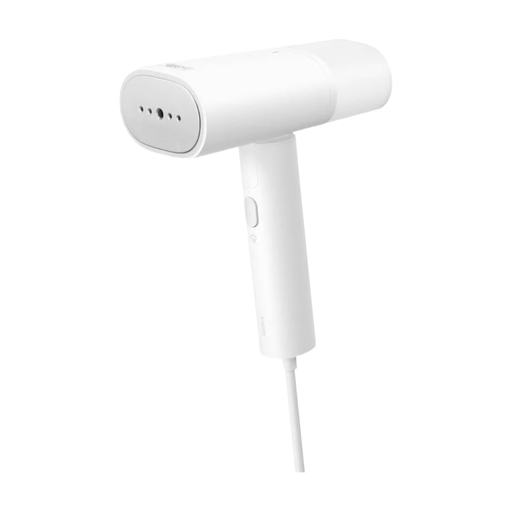
Why it suits this profile: A handheld steamer for travelling, quick touch-ups and treating clothes while they are on a hanger. According to the product specifications, the appliance weighs 0.80 kg and has a 160 ml water tank.
Its compact size means you do not need an ironing board for small creases. Because of its limited tank capacity, it is less suitable for a full laundry basket.
Heat-up time of around 25–30 seconds, maximum steam of 22 g/min and a 1.9-metre cord.
We have put together a complete, up-to-date list of products that fully meet these strict selection criteria and the applicable European safety regulations.
That depends on how you use it. A garment steamer is handy for dresses, jackets and quick refreshes without an ironing board. A steam iron with a soleplate gives you more control over collars, cuffs and flat creases. For large amounts of laundry, a steam generator can be more efficient thanks to its larger water tank and higher continuous steam output.
Its lifespan depends on usage, water quality, cleaning and storage. Empty the tank after use if the manual instructs you to do so, and follow the descaling programme. An anti-scale system helps with maintenance, but check the steam vents and soleplate regularly. Only store the appliance once it has cooled down completely.
Power consumption depends on the wattage, heat-up time and duration of the ironing session. A 2,400-watt model uses more power while heating up than a compact 1,300-watt model, but a more powerful appliance may, according to the product specifications, get through a large amount of laundry more quickly. Use an eco mode when available and switch the appliance off as soon as you have finished.
