
Vandaag of morgen in huis

Kwaliteit gegarandeerd

Welkomstaanbiedingen ontgrendelen: GRATIS bezorging | Tot 80% korting | Gratis 30 dagen JoyPlus-proefperiode
Download de app
A steam generator iron is designed for households that regularly get through large loads of laundry. Its separate water tank lets it produce steam for longer than a standard steam iron. This is useful for shirts, bedding, jeans and curtains.
However, a powerful steam generator isn’t automatically the right buy. Marketing often focuses on a high wattage or a powerful steam boost, but other features can be just as important. Look out for these three common pitfalls:
When choosing a steam generator iron, check its continuous steam output, measured in grams per minute. Models in this selection, for example, produce 120 or 150 g/min. This is the amount of steam available during normal use.
The steam boost is a short, extra burst of steam. A figure of 350 to 510 g can be useful for thick fabrics, seams and deep-set creases. Don’t use this as your only point of comparison: a high boost doesn’t make the size of the tank or an awkward soleplate any less important.
Steam pressure is usually measured in bar. Higher pressure can help push steam deeper into the fabric, but the results also depend on the soleplate, steam distribution and how you iron.
A large water tank means fewer interruptions. A capacity of 1.3 to 1.5 litres is suitable for regular household use. If you iron several baskets of laundry in one go, a 1.7 or 2-litre tank may be a better fit.
Also check:
A 2-litre tank is practical, but it can also make the base unit heavier. So check the dimensions and weight if you need to put the appliance away after every ironing session.
A vertical steam function is useful for hanging clothes, jackets and curtains. It won’t always replace ironing on a board, but it’s handy for a quick refresh and for easing out light creases.
Automatic temperature settings can mean less sorting before you start ironing. Philips PerfectCare models, for example, feature OptimalTEMP. According to Philips’ product description, there’s no need to select a separate temperature for different ironable fabrics. Always check the care label and instruction manual.
An automatic shut-off is a useful safety feature if the appliance is left unused for a while. The soleplate and steam stay hot: never direct steam at people, animals or electrical appliances, and let the appliance cool down before emptying or storing it.
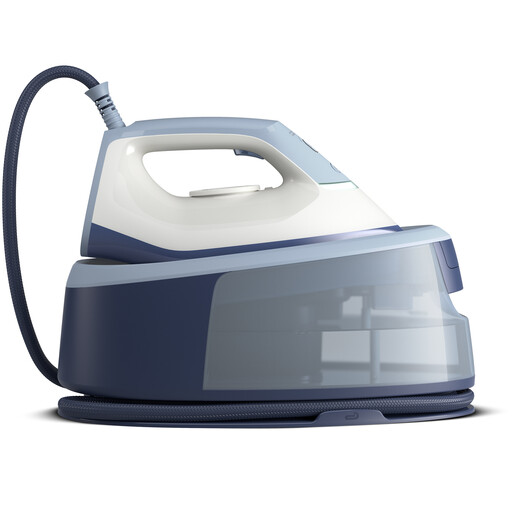
Why it suits this type of user: This compact model combines 2400 watts, 120 g/min of continuous steam, a 350 g steam boost and a 1.4-litre water tank. It’s a good choice for households looking for more capacity than a standard steam iron offers, without going straight for a large base unit.
The specifications list both continuous steam and steam boost, so you can assess the appliance more thoroughly than by looking at wattage alone. It also features automatic shut-off and vertical steam.
Ceramic soleplate, heats up in around two minutes, removable tank and vertical steam function.
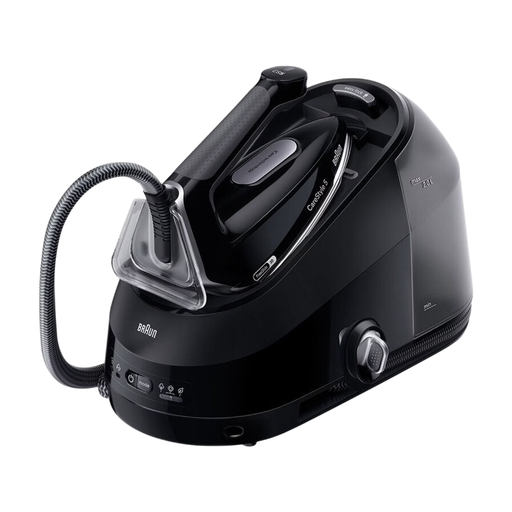
Why it suits this type of user: With a 2-litre tank, 150 g/min of continuous steam and a 510 g boost, this model is designed for longer ironing sessions and larger loads of laundry. Its automatic programme setting is designed to adjust the temperature to suit the fabric.
The large tank means fewer interruptions, while the specifications distinguish between continuous steam and steam boost. The anti-drip function is designed to help prevent leaks and water marks while ironing.
2-litre removable tank, maximum pressure of 7.5 bar, FreeGlide 3D soleplate, vertical steam and automatic shut-off.
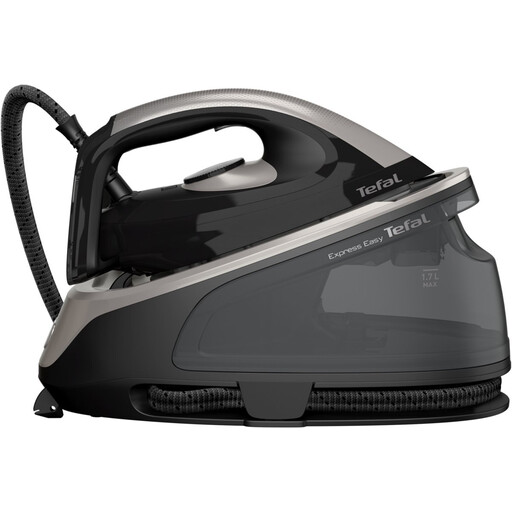
Why it suits this type of user: This model is designed for people who want to iron horizontally but also steam clothes and curtains vertically. The combination of 120 g/min of continuous steam, a 350 g steam boost and a 1.7-litre tank makes it suitable for regular use.
The specifications include a removable tank, the option to refill it during use and Calc Clear technology. Before buying, check the recommended maintenance steps in the manual.
1.7-litre water tank, 5.8 bar pump pressure, locking system, vertical steam and compact design.
We’ve put together a complete, up-to-date list of products that meet these strict selection criteria and the applicable European safety requirements.
It depends on the model, how long you use it and the steam setting you choose. A steam generator can get through larger loads of laundry more quickly, but it often uses around 2400 watts. Use an eco setting if available, and switch the appliance off when you’ve finished.
This depends on your water hardness, how often you use the appliance and the manufacturer’s instructions. Follow the appliance’s reminder or check the manual. A model with Calc-Clean, a limescale collector or a similar system can make maintenance easier to manage, but it won’t always eliminate the need to descale.
Yes, if the appliance has a vertical steam function. Hang the curtains securely, keep a safe distance and check the care label first. Never direct hot steam at people, animals, sockets or other electrical appliances.
