
Vandaag of morgen in huis

Kwaliteit gegarandeerd

Welkomstaanbiedingen ontgrendelen: GRATIS bezorging | Tot 80% korting | Gratis 30 dagen JoyPlus-proefperiode
Download de app
A steam iron can be a quick solution for shirts, bedding, curtains and other fabrics. However, a high wattage or a powerful steam boost doesn’t automatically mean a model is right for your household. The key differences often come down to the combination of steam output, soleplate, water tank and maintenance.
A power rating of 2,400 or 2,800 watts mainly tells you how quickly the iron heats up and how much energy it uses during operation. On its own, it doesn’t tell you how much steam the iron produces or how smoothly the soleplate glides over fabric. So always check the continuous steam output in grams per minute, as well as the steam boost.
A steam boost is designed for stubborn creases. For a full basket of laundry, continuous steam is what matters most. A model with, for example, 40 to 50 g/min of continuous steam may suit regular use at home, while a steam generator with around 120 g/min offers more capacity for larger loads.
Also check how manufacturers present their figures. According to the brand’s own information, a particular steam boost may be suitable for thick fabrics or vertical steaming. Your actual experience will also depend on the temperature, type of fabric and condition of the appliance.
Limescale can block the steam vents and leave marks on clothes. An anti-scale system, self-cleaning function or limescale collector makes maintenance easier, but doesn’t replace cleaning the iron as instructed in the manual. Also check whether you can use tap water and how often the tank needs to be emptied after use.
A standard steam iron is usually enough for light ironing. Look out for these figures:
A powerful steam iron with a good balance between continuous steam and steam boost is often more practical than a model with a high peak figure alone.
According to the product description, a steam iron with a ceramic soleplate generally glides smoothly over different fabrics and is easy to clean. A precision tip is useful for collars, seams and buttons. Also check whether the model has an anti-drip function. This is designed to help prevent water droplets and damp patches at lower temperatures.
The soleplate should suit the way you use your iron. For everyday ironing, smooth gliding, even heat distribution and easy maintenance matter more than a striking design.
A small tank keeps the iron light, but means you’ll need to refill it more often. An iron with a large water tank is more convenient for longer ironing sessions. Models with a capacity of 300 to 350 ml are suitable for many household tasks; a steam generator may have a capacity of over 1 litre.
A steam iron with automatic shut-off provides an extra safety feature if the appliance is left unused for a while. Check the specifications to see how long it takes to switch off when left in a vertical or horizontal position. Always place a hot iron on a stable surface and never direct steam at people or animals.
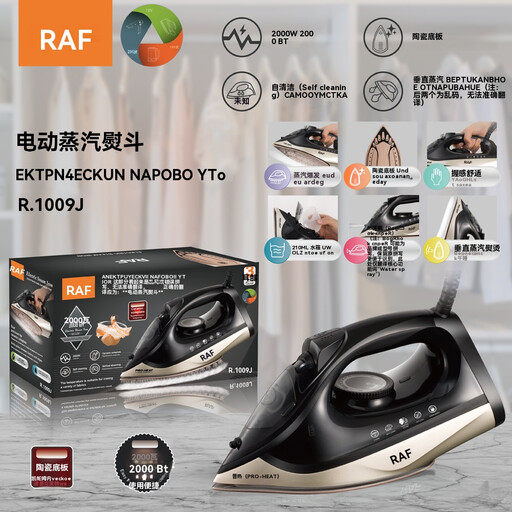
Why it suits this type of user: This model combines 2,000 watts of power, a ceramic soleplate and a visible 210 ml water tank. It’s suitable for basic use without the bulk of a steam generator.
As well as the power rating, the product description mentions vertical steaming, a burst function and a self-cleaning system. So you can compare more than just the wattage.
Ceramic soleplate, vertical steam function, self-cleaning and dual voltage, according to the product details.

Why it suits this type of user: If you value easy maintenance and powerful specifications, this 3200W model has a 350 ml water tank and a Micro-Calc system, according to the manufacturer.
The product information specifically mentions a limescale filter, self-cleaning and a filter maintenance alert. This makes the maintenance requirements clearer.
60 g/min variable steam, a 250 g/min steam boost, automatic shut-off and anti-drip, according to the product specifications.
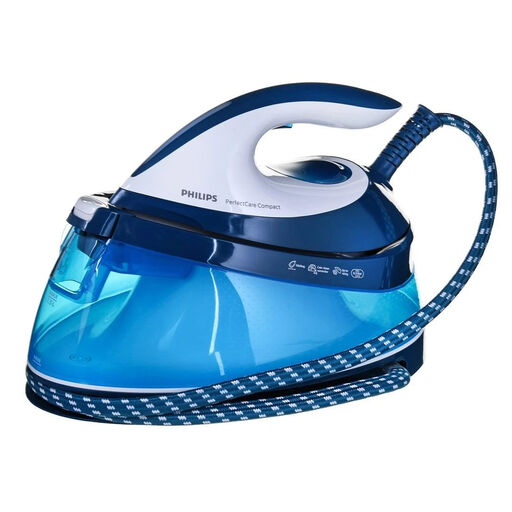
Why it suits this type of user: A household with lots of shirts, bedding or curtains can benefit from a steam generator with a 1.5-litre tank and a vertical steam function.
The large tank means fewer refills during longer sessions. The manufacturer also mentions automatic temperature selection and Smart Calc-Clean maintenance.
120 g/min continuous steam, a 400 g steam boost, a 1.5-litre tank and automatic shut-off, according to the product details.
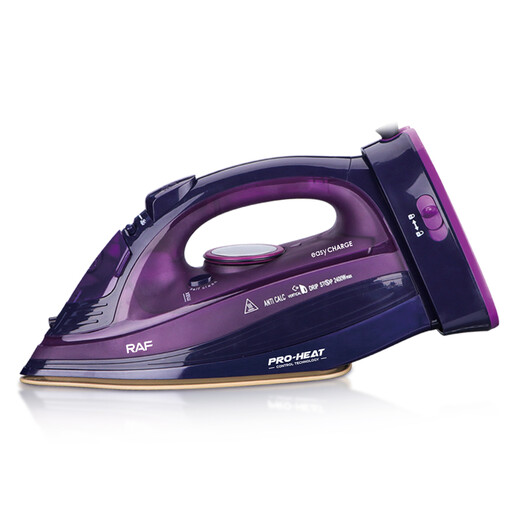
Why it suits this type of user: This cordless steam iron is designed for people who move around a lot at the ironing board or tackle larger pieces of fabric.
The product description mentions a 360° charging base, anti-drip and self-cleaning. Before ordering, check how long you can use it between charges.
Ceramic soleplate, 320 ml tank, 15–25 g/min steam output and a cordless design, according to the product information.
We’ve put together a complete, up-to-date list of products that meet these strict selection criteria and the applicable European safety regulations.
It depends on how long you use it, the programme you choose and the power rating. A steam generator usually has a larger tank and produces more continuous steam, so you can iron for longer without refilling. For just a few items of clothing, a compact steam iron may be more practical.
Its lifespan depends on how often you use it, the hardness of your water, how you clean it and how you store it. Use the self-cleaning or anti-scale function as instructed in the manual, empty the tank after use and only put the appliance away once the soleplate has cooled completely.
Energy use is mainly affected by the wattage and the total time you use the iron. According to the product information from some brands, an eco mode can reduce energy and water use. So don’t just compare the purchase price: also consider the tank capacity, heat-up time, maintenance and how much laundry you iron in each session.
