
Vandaag of morgen in huis

Kwaliteit gegarandeerd

Welkomstaanbiedingen ontgrendelen: GRATIS bezorging | Tot 80% korting | Gratis 30 dagen JoyPlus-proefperiode
Download de app
You may notice dry air at home through tight-feeling skin, static clothing or an uncomfortable atmosphere in the bedroom. A humidifier can help you manage humidity levels, but not every model is right for every home.
A large water tank may sound convenient, until you find the appliance difficult to clean. A humidifier might also be described as quiet, yet a bright display or distracting control sounds can still disturb your sleep. Keep these points in mind to avoid a disappointing purchase.
A 5 or 10-litre tank doesn’t automatically mean you can go for days without refilling it. How long it lasts also depends on the humidification output in millilitres per hour, the mist setting you choose and the size of the room.
A bedroom humidifier usually needs less capacity than a model for a large living room. Always check:
A rating such as 20, 25 or 28 dB sounds appealing if you’re a light sleeper. However, noise levels can vary between modes. Some brands only state the figure for sleep mode. Also check whether the humidifier has a dedicated sleep mode, a dimmable display and automatic shut-off when the tank is empty.
A bedroom humidifier should also stand firmly in place. Vibrations on a lightweight cabinet or table can create more noise than the technical specifications suggest.
Water left in a tank for too long can become contaminated. Safety information from various manufacturers advises changing the water regularly and cleaning the tank as instructed in the manual. For example, Xiaomi says the water in the Humidifier 2 Lite should be changed regularly and the tank cleaned thoroughly.
Check the design:
An ultrasonic humidifier uses vibrations to disperse water as a fine, cool mist. This type is generally quiet and often uses little electricity. Use clean water and clean the appliance regularly. With hard water, mineral deposits may become visible on furniture.
An evaporative model draws air through a damp filter or evaporation element. According to its product description, the Blueair DreamWell H38i uses mist-free InvisibleMist technology, a washable filter and a filter with a stated lifespan of up to twelve months. How often you actually need to replace it depends on usage and water quality.
Warm-mist models can use more energy. The Luxaid 6L offers both cool and warm mist, with a stated power consumption of 25 W for cool mist and 150 W for warm mist. Always check the warnings about hot parts and children when choosing this type.
Don’t choose a higher capacity than you need. An overly powerful humidifier can cause moisture to settle on windows, walls or furniture if you don’t adjust the setting properly. A built-in hygrometer or automatic mode can help you keep humidity closer to your chosen level.
Examples from the range:
Use the stated room size as a guide, not a guarantee for every home. Ceiling height, ventilation and the layout of the room all affect the results.
A humidifier with aromatherapy isn’t always designed for oil to be added directly to the water. With the Homvana H101, essential oil should only be added to the designated aroma tray. The Blueair DreamWell H38i uses an aroma stone. The Xiaomi Smart Evaporative Humidifier Pro, on the other hand, states that essential oils must not be added to the water tank.
Check this before use. Adding oil incorrectly can damage parts and affect the warranty. A humidifier with a night light can be handy in a dark bedroom, but ideally choose one where you can turn the light off completely.
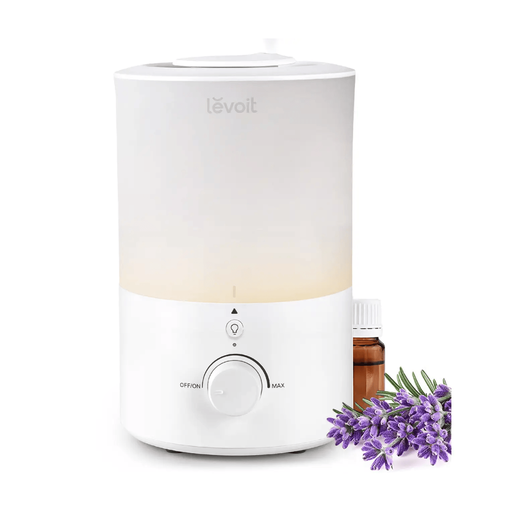
Why it suits this profile: This compact model is a straightforward choice if you’re buying your first humidifier for a bedroom or small living space. It has simple button controls.
The 3-litre tank, automatic shut-off and top-fill design make the essential features clear and simple to use. According to the product information, the stated 25 dB applies to quiet operation.
3-litre capacity, stated running time of up to 25 hours, night light and aroma function.
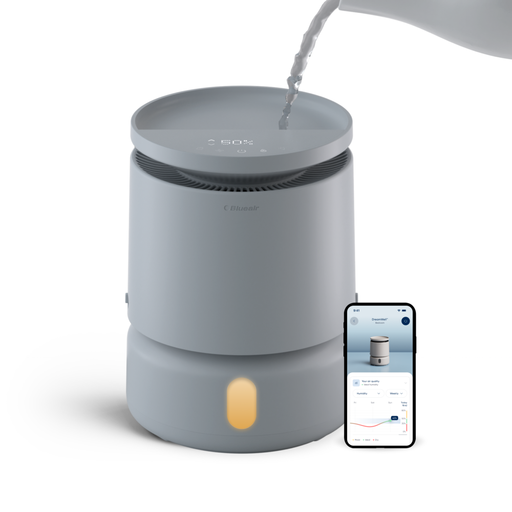
Why it suits this profile: This model is a good fit if you value app control, mist-free operation and easy maintenance in a bedroom or nursery.
The product description specifies a washable filter, a dishwasher-safe tank and top-fill refilling, making the maintenance requirements clear.
Stated running time of up to 48 hours, 20 dBA according to the product information, app control and an aroma stone.
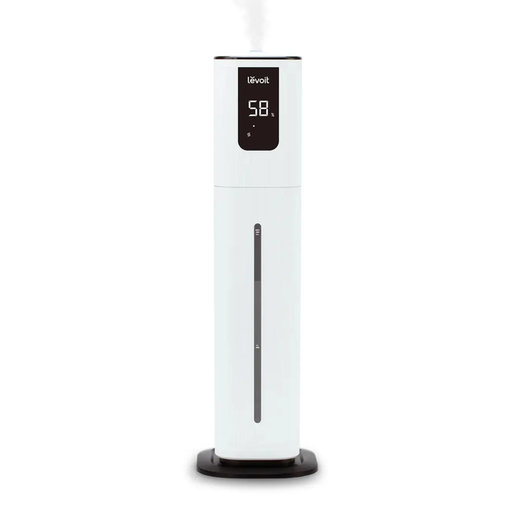
Why it suits this profile: A practical choice if you want to combine coverage for a large room with long running times and smart controls.
The wide opening makes refilling easier. The app and automatic mode let you adjust the settings without relying solely on a fixed timer.
10-litre tank, stated running time of up to 100 hours, 350 ml/h output and control via VeSync, Alexa and Google Assistant.
Place the humidifier on a flat, water-resistant surface, away from walls, curtains, sockets and electronic devices. Don’t direct the mist straight at a bed, cot or wooden furniture.
Only use liquids permitted by the manual. Add essential oil to an aroma tray or aroma stone only when this is specifically stated. Empty the tank if the appliance won’t be used for an extended period, and always unplug it before filling or cleaning.
Take extra care when using a humidifier in a nursery: keep it out of children’s reach, don’t let a child operate it and check regularly for moisture settling on nearby surfaces.
We’ve put together a full, up-to-date list of products that meet these strict selection criteria and current European safety regulations.
Always follow the manual for your chosen model. In practice, it’s important to empty, rinse and dry it regularly. With frequent use, cleaning the tank and base weekly is often a practical routine. Don’t wait until the tank is empty before changing the water.
Lifespan depends on build quality, how often you use it and how well you maintain it. A model with a filter may have a replaceable one; the Blueair DreamWell H38i is stated to have a filter life of up to twelve months. Also check the warranty terms and availability of replacement parts.
It depends on the power rating and how many hours you use it. A 25 W model running for ten hours uses 0.25 kWh in theory. Warm-mist models can use considerably more power. So look beyond the purchase price and check the wattage, selected setting and any filter costs.
