
Vandaag of morgen in huis

Kwaliteit gegarandeerd

Welkomstaanbiedingen ontgrendelen: GRATIS bezorging | Tot 80% korting | Gratis 30 dagen JoyPlus-proefperiode
Download de app
A humidifier can be useful when the air in your home feels dry, for example during the heating season. Even so, many people choose a device based on one eye-catching feature: a large water tank, a low decibel rating or attractive LED lighting. That does not always tell you enough about everyday use.
Pay particular attention to these three common pitfalls:
The tank capacity is measured in litres, while mist output is usually given in millilitres per hour. A humidifier with a large water tank is not automatically suitable for a large living room. Also check the stated room size, mist setting and operating time.
A compact tank may be enough for a bedroom. If you want to use a device for extended periods in a living room, office or plant room, a model with a capacity of 4 to 6 litres may be more suitable. Bear in mind that the stated runtime often applies to a low or sleep setting. On a high setting, the tank may run empty much faster.
A quiet humidifier is particularly useful for light sleepers, nurseries and home offices. Check whether the stated noise level applies to the sleep setting or to the device as a whole. A timer, automatic shut-off and night mode are practical if you use the device overnight.
Smart models can be controlled via an app or use a sensor to monitor humidity. This is useful if you want to set fixed schedules, but it is not essential for everyone. A simple rotary dial may actually be less prone to errors.
A top-fill humidifier is filled from above. This often prevents spills when handling a separate tank. Also check whether the tank can be removed completely and whether the opening is large enough to clean by hand or with a brush.
Always follow the instructions regarding water use. Some ultrasonic models recommend distilled or purified water. For other models, the manufacturer states that tap water can be used. According to product information from various brands, the water should be replaced regularly and the tank cleaned; CONOPU, for example, warns against leaving water standing for longer than a few days.
A humidifier with aromatherapy should ideally use a separate aroma tray, aroma pad or aroma stone. Do not add oil to the water tank unless this is explicitly permitted. A separate aroma diffuser with scented sticks is an alternative for adding fragrance to your home, but it does not increase humidity.
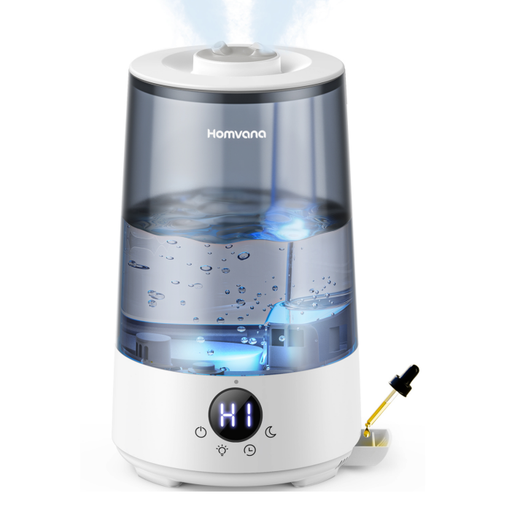
Why it suits this profile: This model combines a top-fill tank with an aroma tray, timer settings and a night light. According to the product information, it has a 3.6-litre tank and a stated runtime of up to 34 hours in sleep mode.
The instructions identify a separate aroma tray, so oil does not need to go into the water tank. The top filling opening makes refilling more straightforward.
3.6-litre capacity, five timer options, a stated 16 dB noise level and a seven-colour night light.
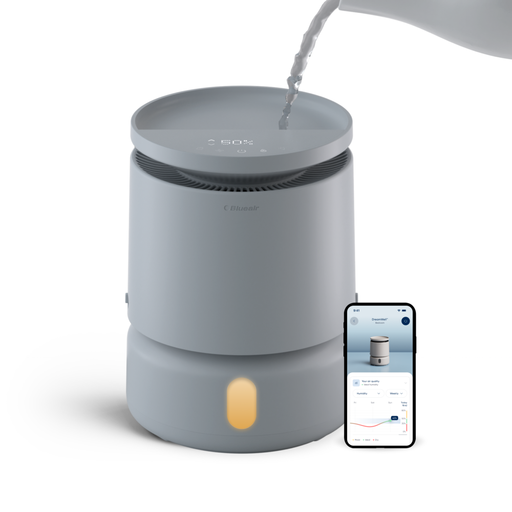
Why it suits this profile: For a bedroom or nursery, the stated 20 dBA, night mode and mist-free operation are appealing specifications. According to Blueair, the model is designed for rooms of up to 55 m² and features app control, an aroma stone and adjustable lighting.
According to the description, the tank is dishwasher-safe and the wick filter is washable. This makes regular maintenance easier to manage than with a tank that has a small opening.
A stated runtime of up to 48 hours, app control, an aroma stone and a washable filter with a claimed lifespan of up to 12 months.
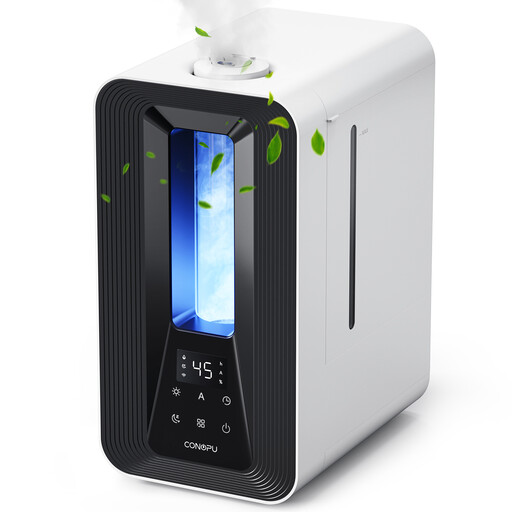
Why it suits this profile: This ultrasonic humidifier is designed for anyone wanting to humidify a larger room, bedroom, office or plant corner. The product information lists a 5-litre tank, automatic humidity control, two rotating nozzles and a timer of up to 24 hours.
Automatic shut-off when the water level is low prevents unnecessary operation. The wide top-fill tank and removable parts are designed to make maintenance easier.
5-litre capacity, a stated coverage area of up to 40 m², automatic control between 40% and 80% and an aroma tray.
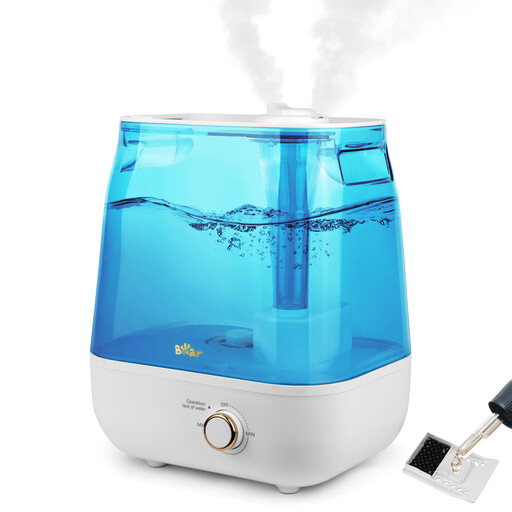
Why it suits this profile: The combination of a 6-litre capacity, carry handle, dual rotating nozzles and aromatherapy tray is well suited to households that move the device regularly or use it for extended periods.
The product description mentions a removable tank and a generous opening for maintenance. Automatic shut-off prevents the device from operating when the water has run out.
6-litre tank, a stated 28 dB noise level, 360° mist control and rotary-dial operation.
We have put together a complete, up-to-date list of products that fully meet these strict selection criteria and the applicable European safety regulations.
Place the device on a flat, stable and water-resistant surface, not directly next to bedding, curtains or wooden furniture. Do not direct the mist straight at a baby, child or other person. A humidifier for a nursery should be kept out of children’s reach and must not be used as a toy.
If necessary, measure the humidity with a separate hygrometer. A higher setting is not automatically better: excessive moisture can cause condensation on windows and damp surfaces. Stop using the device or reduce the mist output as soon as the surroundings become damp.
Clean the tank according to the instructions, replace the water regularly and allow all parts to dry completely. Only use essential oil if the device is designed for it. Scented sticks and crystal diffusers, such as some Atmosphera and Zooly products, are not a substitute for a humidifier because they do not disperse water.
This varies by model, but regular cleaning is essential. Do not leave water standing unnecessarily long and follow the manufacturer’s maintenance instructions. With intensive use, cleaning the tank and base weekly is a practical rule of thumb, unless the instructions specify a different schedule.
It can be, particularly if the device has a sleep setting, timer and automatic shut-off. With ultrasonic models, pay extra attention to the recommended type of water and possible mineral deposits. Do not place the device so close to the bed that condensation or mist can reach fabrics.
The cost depends on the power consumption, the selected mist setting and how long the device is used. A low wattage generally means lower electricity consumption, but a warm-mist model may require more power. A timer and automatic shut-off help prevent unnecessarily long operation.
