
Vandaag of morgen in huis

Kwaliteit gegarandeerd

Welkomstaanbiedingen ontgrendelen: GRATIS bezorging | Tot 80% korting | Gratis 30 dagen JoyPlus-proefperiode
Download de app
Dry air at home can be noticeably uncomfortable, especially during the heating season. A humidifier can help you manage humidity levels, but not every model is right for every room. A compact ultrasonic humidifier for the bedroom needs different features from a unit designed for a large living room.
Most disappointing purchases come down to three common assumptions:
Look at three separate details:
A humidifier with a large water tank isn’t necessarily powerful enough for a large living room. Conversely, a powerful unit in a small bedroom could add too much moisture too quickly. A built-in hygrometer or automatic mode is useful, as the product description may state that the unit can maintain your chosen humidity level.
A top-fill humidifier is handy for everyday use. You can fill the tank from the top without lifting the whole reservoir out of the casing. Check that the opening is wide enough to clean the inside, though.
If you’re looking for a humidifier for a bedroom or nursery, you’ll probably check the noise level. Manufacturers list figures such as 16, 20, 25 or 28 dB, but only compare them when the measurement conditions are the same.
For comfortable overnight use, a quiet humidifier should ideally have:
Don’t place the unit right next to a bed, cot, wall or electronic equipment. Otherwise, fine mist could settle on nearby surfaces. If you’re using a humidifier in a nursery, always supervise it and keep the cord, tank and loose parts out of children’s reach.
Water needs careful attention. A reservoir containing standing water should be emptied and cleaned regularly, following the instructions. With ultrasonic models, minerals in tap water can leave a white residue on furniture. Some brands therefore recommend distilled or purified water, while others state in their product descriptions that their models can be used with tap water.
Before buying, check for:
Never add essential oil to the water unless the manufacturer specifically says you can. Only use the aroma tray, aroma stone or oil reservoir if the manufacturer explicitly recommends it. A humidifier with an aroma diffuser isn’t automatically suitable for every type of oil.
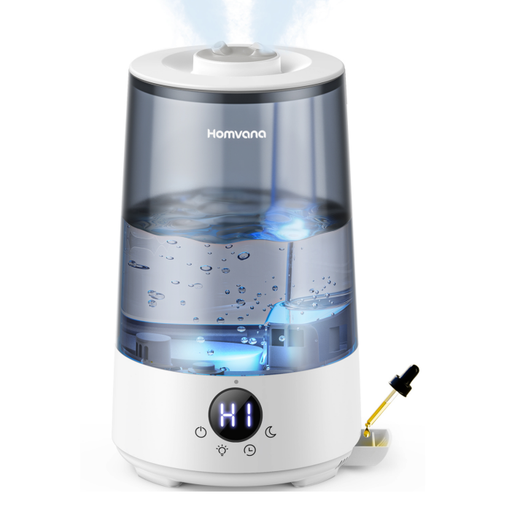
Why it suits this profile: This model combines a top-fill design with an aroma tray, timer and night light. According to the product information, its stated noise level is 16 dB and it can run for up to 34 hours in sleep mode.
The separate aroma tray keeps oil out of the water tank. The timer and automatic controls help prevent the unit from running for longer than necessary.
3.6-litre capacity, five timer settings, aroma tray and seven-colour night light, according to the product description.
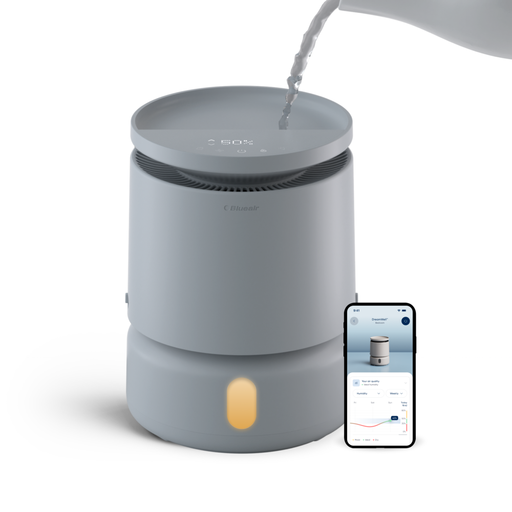
Why it suits this profile: The product description mentions invisible humidification, app control, an adjustable night light and up to 48 hours of use. It’s a good fit if you want less visible mist and more automatic control.
The manufacturer describes a washable wick filter and a dishwasher-safe tank. Check the maintenance schedule and replacement costs before buying.
According to the product information: 20 dBA, app control, and support for schedules and voice commands.
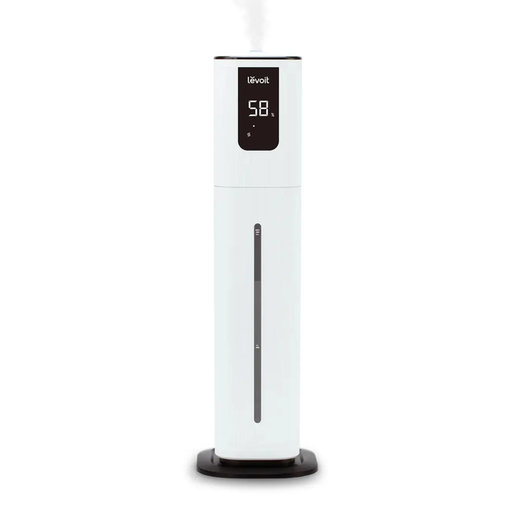
Why it suits this profile: With its 10-litre tank, stated running time of up to 100 hours and recommended room size of 55 m², this model is suited to extended use in a larger living space.
The large tank means you’ll often need to refill less, while the automatic mode is designed to help prevent over-humidification. Regular cleaning is still essential.
10-litre capacity, 350 ml/h humidification output, 28 dB, and control via VeSync, Alexa and Google Assistant, according to the product information.
We’ve put together a complete, up-to-date list of products that meet these strict selection criteria and current European safety requirements.
A humidifier’s electricity consumption depends on its wattage, the setting you choose and how many hours you use it. A 20 to 30-watt model may use less electricity with regular use than a unit with a warm mist function. According to the specifications, that function can require considerably more power.
Follow a simple routine:
A humidifier for dry air is only convenient when cleaning is part of your routine. A large reservoir saves time when filling the unit, but not when cleaning it.
It depends on the model and water quality. Empty the tank regularly, dry the unit when it isn’t in use and follow the cleaning schedule in the instructions. If you use it often, more frequent cleaning is usually a good idea.
Yes, as long as the model has a low noise rating, sleep mode and automatic shut-off. Place it on a stable surface, away from bedding and electronic equipment. If you use tap water, check whether it could leave a mineral deposit.
As well as the purchase price, your main costs are electricity, water and any replacement filters. Compare the stated wattage, filter life and availability of replacement parts. A larger tank may mean fewer refills, but it doesn’t tell you the total running costs on its own.
