
Vandaag of morgen in huis

Kwaliteit gegarandeerd

Welkomstaanbiedingen ontgrendelen: GRATIS bezorging | Tot 80% korting | Gratis 30 dagen JoyPlus-proefperiode
Download de app
Dry indoor air is often noticeable through dry skin, static clothing, creaking wooden furniture or an unpleasant feeling in the bedroom. A humidifier can help regulate humidity more effectively. However, not every appliance suits every room or lifestyle.
When buying, pay particular attention to three common pitfalls:
An ultrasonic humidifier uses vibrations to turn water into a fine mist. This type generally operates quietly and often has low energy consumption. On the other hand, minerals from tap water can settle as a white residue. Check whether the manufacturer permits tap water and whether filtered or distilled water is recommended.
An evaporative model passes air over a wet filter or moist evaporator. No visible mist is required. According to the product description, the Blueair DreamWell H38i model uses so-called InvisibleMist technology and is designed for rooms of up to 55 m². This type of system may be worth considering if you want to minimise white deposits on furniture, but bear in mind the filter maintenance and replacement costs.
Don’t look at the number of litres alone. Compare these factors too:
A humidifier for large rooms often needs a larger tank or higher capacity. For example, the Levoit OasisMist 1000S lists a 10-litre tank, an output of 350 ml/h and a recommended area of 55 m². The actual runtime depends on the selected setting.
For a bedroom or nursery, quiet humidifiers with a night mode are a pleasant choice. Pay attention to the stated noise level, but only compare figures when they have been measured in the same way. Automatic shut-off when the tank is empty or removed is an important practical safety feature.
A humidifier with a top-fill water tank is usually easier to refill than a model where you have to turn the entire tank upside down. However, check that the filling opening is large enough to clean the inside properly.
A hygrometer or automatic mode can measure humidity and adjust operation accordingly. This means you don’t have to rely solely on timers. Set the desired humidity according to the instructions and regularly check that the room doesn’t feel damp or show signs of condensation.
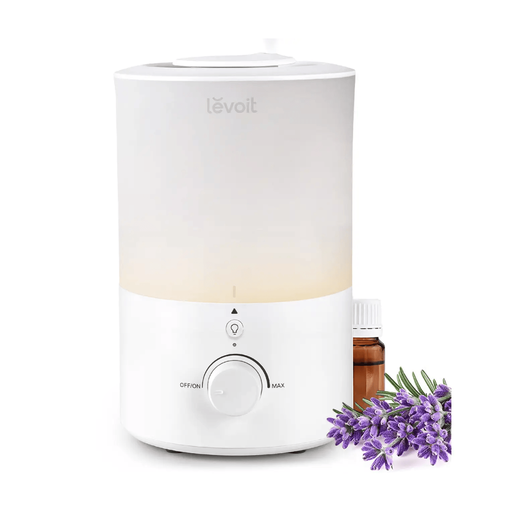
Why it suits this profile: This compact model is designed for bedrooms and smaller living spaces. It has simple button controls and a 3-litre tank.
The stated specifications list both a runtime of up to 25 hours and automatic shut-off when the tank is empty or removed. This means you don’t have to rely solely on a timer.
25 dB according to the product specifications, top-fill tank, night light and aroma function. Only use essential oil as stated in the instructions.
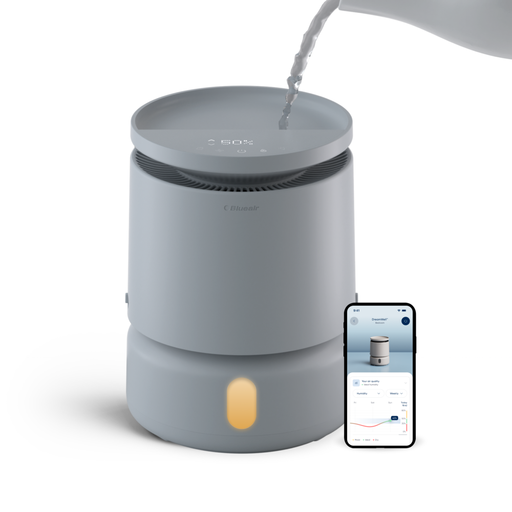
Why it suits this profile: Ideal for anyone looking for a quiet humidifier with app controls, scheduling and a subtle lighting function for a bedroom or nursery.
The product description mentions invisible mist, a dishwasher-safe tank and a washable filter. This makes the maintenance requirements more specific than a general claim about ease of use.
Stated runtime of up to 48 hours, a noise level of 20 dBA and support for app and voice controls. According to the description, the wick filter lasts for up to 12 months.
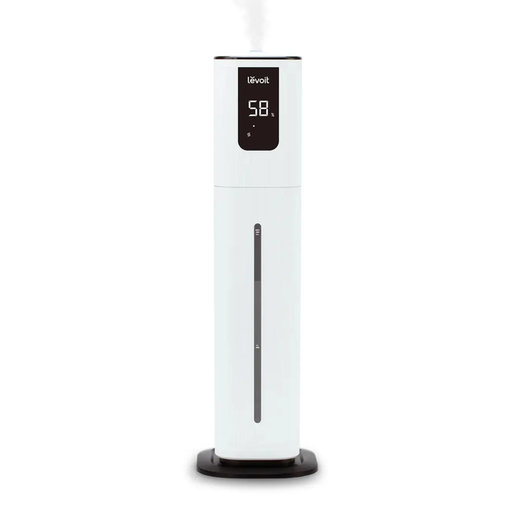
Why it suits this profile: This model is aimed at larger living spaces, plant enthusiasts and users who value automatic and smart controls.
The stated output of 350 ml/h and coverage of up to 55 m² provide more useful guidance than simply calling it ‘high capacity’. The wide top-fill opening makes regular cleaning easier.
10-litre tank, stated runtime of up to 100 hours, automatic mode and control via the VeSync app, Alexa or Google Assistant. The noise level is stated as 28 dB.
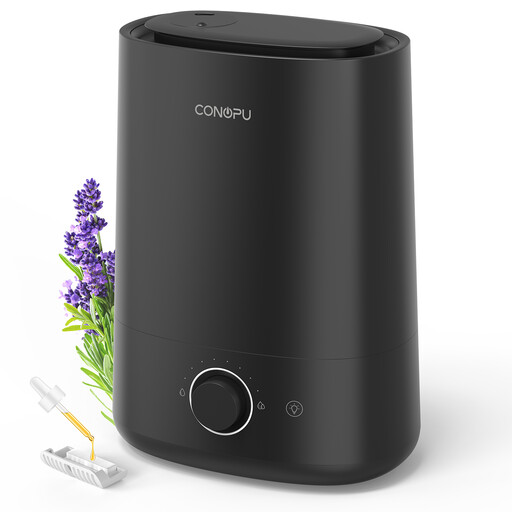
Why it suits this profile: A practical choice for anyone looking for a humidifier with aromatherapy, a night light and long operating time for a bedroom, children’s room or living room.
The aroma function works via a separate oil tray. According to the product information, this means you don’t need to add essential oil directly to the water. Always check this in the instructions.
5-litre tank, stated runtime of up to 50 hours, top-fill design, adjustable 360° mist direction and automatic shut-off when the water level is low.
We’ve put together a complete, up-to-date list of products that fully meet these strict selection criteria and the applicable European safety regulations.
A humidifier only works well when you maintain it consistently. Follow these points:
A night light is a comfort feature, not a safety device. Place a nursery humidifier out of children’s reach and make sure the cable and tank cannot be pulled over.
Its lifespan depends on the build quality, water, cleaning routine and any filters. An appliance with a replaceable filter can remain practical to use for longer when you replace the filters on time. Store the humidifier empty and dry if you’re not going to use it for an extended period.
Consumption depends on the wattage and the number of operating hours. A 25-watt model running for ten hours theoretically uses 0.25 kWh. Multiply this by your current electricity tariff. Warm-mist models often use more power than cool-mist models, so compare the wattage if energy costs are important to you.
Place the appliance on a flat, water-resistant surface with space around the mist outlet. Don’t direct the mist straight at a wall, bed, plant or electronic device. Ideally, measure the humidity in the room and adjust the mist setting if the windows steam up or surfaces become damp.
