
Vandaag of morgen in huis

Kwaliteit gegarandeerd

Welkomstaanbiedingen ontgrendelen: GRATIS bezorging | Tot 80% korting | Gratis 30 dagen JoyPlus-proefperiode
Download de app
Perfectly uniform slices of carpaccio, paper-thin salami for your charcuterie board, or a freshly baked loaf of bread that doesn't get crushed. Slicing food yourself not only yields better results but is also often more cost-effective, and your products stay fresh longer. However, the search for a good home food slicer can be overwhelming. What power level do you need? Is a serrated blade always better? And should you choose a foldable food slicer or a robust metal model?
As a Joybuy Product Recommendation Officer, I'm here to guide you. In this article, we'll explore the most important specifications and provide concrete recommendations, so you can make an informed choice that suits your kitchen and your needs.
Before we dive into the products, it's helpful to know which features are important. Pay attention to the following three points to find the right food slicer for your needs.
The first choice is between an electric food slicer and a manual model.
bread slicer or for processing larger cuts of meat.salami slicer.The heart of any food slicer is its blade. Most models for home use have a serrated blade. This is an all-rounder, suitable for products with a hard crust (bread) and a soft interior. For slicing deli meats like ham paper-thin, a smooth blade might be a better option, but these are less common on consumer models.
The power, expressed in watts, indicates the strength of the motor. A machine with a higher wattage (e.g., 150W or more) will have less trouble with harder foods like aged bread or firm cheeses.
Food slicers are available in plastic, metal, or a combination of both. A metal housing is typically heavier and more stable, which enhances safety during slicing. Plastic models are lighter and often more affordable. If you have limited kitchen space, a foldable food slicer is a practical consideration. You can store it compactly in a kitchen cabinet after use.
Based on the criteria above, we have curated a selection of popular choices from our range for you.
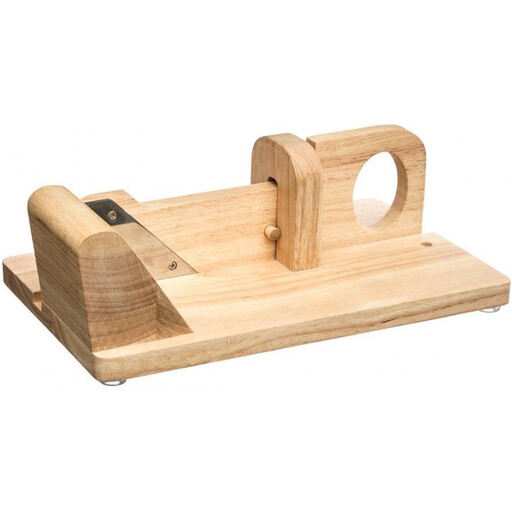
Why It Stands Out This manual model combines functionality with an elegant design. The beechwood base and stainless steel blade make it a stylish addition to any serving table. It operates without electricity and is purely designed for slicing charcuterie.
Specifications
Who Is It For? For the charcuterie board enthusiast looking for a functional and decorative salami slicer. Perfect for slicing dry sausages and smaller pieces of cheese right at the table.
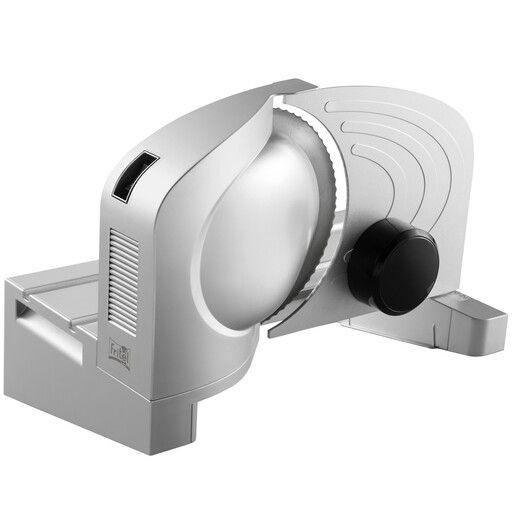
Why It Stands Out This Fritel food slicer is a powerful all-rounder. Its metal housing ensures stability, and the gear drive delivers consistent performance. The carriage is tilted at a 15-degree angle, which the manufacturer claims makes slicing more efficient. The continuously adjustable slicing thickness up to 20 mm makes it highly versatile.
Specifications
Who Is It For? For the serious home chef seeking a robust and versatile electric food slicer. Suitable as a meat slicer for large cuts and as a bread slicer for the crustiest loaves.

Why It Stands Out This foldable food slicer from Fritel is the solution for kitchens with limited storage space. Despite its compact and foldable design, it offers plenty of functionality for daily use, such as slicing bread, cheese, and deli meats.
Specifications
Who Is It For? Ideal for families and home cooks who want the benefits of an electric slicer but don't have space for a large appliance. A practical choice for those who value convenience and compact storage.
A food slicer is a versatile appliance, but perhaps you're specifically looking for a tool to slice cheese. For hard Dutch cheeses or soft French varieties, there are specialised tools available.
Check out our range of cheese slicers for more specialised options.
1. Can I slice any type of food with a food slicer? Most food slicers are designed for bread, deli meats, cheese, and firm vegetables. A serrated blade is a good all-rounder. They are not suitable for frozen foods or bones. Always read the manufacturer's manual to see what is and isn't recommended.
2. How do I safely clean a food slicer? Safety first. Always unplug the machine before you start cleaning. Many models have a removable blade and carriage, which makes cleaning easier. Use a damp cloth with mild soapy water and dry all parts thoroughly before reassembling the machine.
3. What is the main difference between a budget-friendly and a premium model? The price is often determined by the material (plastic vs. metal), the motor's power, and the precision of the components. More expensive models typically have a stronger motor, a more stable construction, and a more precisely adjustable slice thickness, resulting in more consistent slices and a longer lifespan with heavy use.
