
Vandaag of morgen in huis

Kwaliteit gegarandeerd

Welkomstaanbiedingen ontgrendelen: GRATIS bezorging | Tot 80% korting | Gratis 30 dagen JoyPlus-proefperiode
Download de app
Buying an espresso machine may seem straightforward, until you discover how many differences there are between capsules, coffee beans, portafilter machines and fully automatic models. A low price can be tempting, but a machine that is difficult to clean or does not fit beneath your kitchen cupboards can quickly disappoint.
Pay particular attention to three common pitfalls:
A fully automatic espresso machine grinds coffee beans, dispenses water and prepares an espresso or coffee at the touch of a button. Some models also make cappuccino and latte macchiato automatically. This type is ideal for households and small offices where speed and convenience matter.
Pay attention to the capacity of the bean hopper, the number of grind settings and how the milk system is cleaned. An automatic system reduces the number of manual steps, but still requires regular rinsing, emptying and descaling.
A semi-automatic espresso machine, also known as a portafilter machine, gives you more control over the grind, quantity, tamping and extraction time. You use ground coffee or an integrated grinder. This is suitable for home baristas who enjoy experimenting.
A steam wand is useful if you want to make cappuccino or latte macchiato, but frothing milk takes some practice. Clean the wand immediately after use to prevent milk residue from building up.
A Nespresso coffee machine works quickly and neatly with capsules. Preparation is simple and the serving size is often programmable. However, you are tied to a capsule system and generally use more packaging than with whole coffee beans or ground coffee.
Before buying, check which system is supported: Nespresso Original, Vertuo and other capsule systems are not interchangeable.
Product pages often mention a 15-bar espresso machine or 20-bar espresso machine. This figure usually refers to the maximum pump pressure. It does not, on its own, determine how the espresso will taste in the cup. Grind size, dosage, tamping, temperature and coffee quality also play a part.
For example, the De'Longhi Dedica EC685 has a pump pressure of 15 bar, while the Xiaomi Semi-Automatic Espresso Machine lists a specification of 20 bar. So compare the complete system rather than focusing only on the highest figure.
Measure the available space, including the clearance above the machine needed to fill the bean hopper or water tank. A compact espresso machine is convenient in a flat, student room or small office, but it may sometimes have a smaller tank.
Examples from the range:
If you make milk-based drinks every day, maintenance should be a key consideration. A manual steam wand gives you control, but it must be wiped and rinsed after every use. An automatic system, such as the LatteCrema system described in the De'Longhi Magnifica Evo product information, is designed for one-touch preparation. According to the product information, this model also features automatic cleaning of the milk system.
Also check whether the brew group is removable, whether components are dishwasher-safe and whether the machine indicates when descaling is required. Claims about flavour or foam quality come from the brand's product information, so focus primarily on the functions that can be verified.
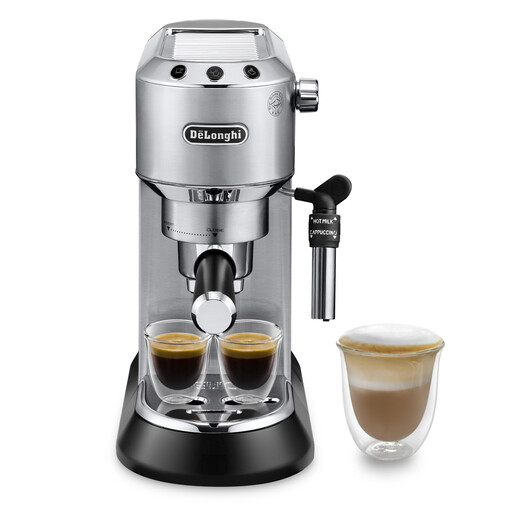
Why it suits this profile: This portafilter machine is suitable for ground coffee and can be used with E.S.E. pods using a separate filter. The model is 14.9 cm wide and prepares up to two cups at once.
Its compact dimensions and removable water tank make it easier to place and refill the machine in a smaller kitchen.
15-bar pump pressure, manual milk frother, cup warmer and automatic shut-off.
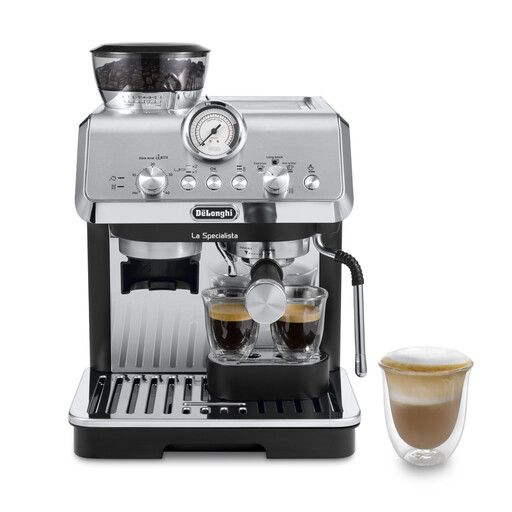
Why it suits this profile: This model combines a portafilter machine with an integrated bean grinder. According to the product information, it has eight grind settings and three pre-set recipes.
The integrated grinder means you do not need to buy a separate grinder straight away. The steam wand keeps milk preparation manual and controllable.
Integrated bean grinder, eight grind settings, 15-bar pump pressure and a 1.5-litre water tank.

Why it suits this profile: This fully automatic espresso machine is designed for households that regularly prepare coffee, espresso and milk-based drinks without having to tamp the coffee manually each time.
The product information lists a removable brew group, automatic cleaning of the milk system and a descaling alert.
1.8-litre water tank, 250-gram bean hopper, 13 grind settings and preparation of up to two cups at once.
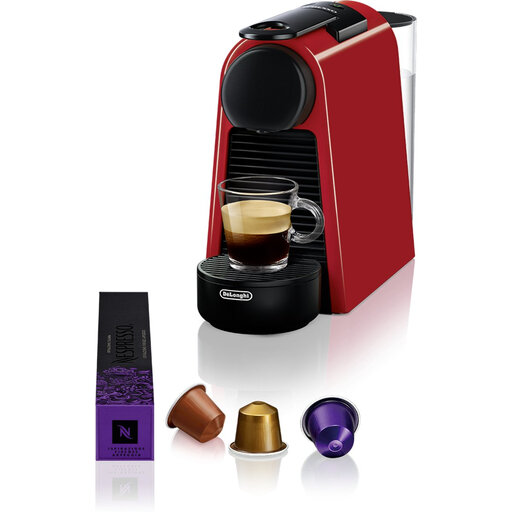
Why it suits this profile: This compact capsule machine takes up very little space and has two programmable settings for espresso and lungo.
Its dimensions are well suited to a small worktop. However, check beforehand that you have deliberately chosen the Nespresso Original system.
Approximately 11 cm wide, 0.6-litre water tank, 19-bar pump pressure and automatic shut-off.
We have put together a complete, up-to-date list of products that fully meet these strict selection criteria and the applicable European safety regulations.
As well as the purchase price, you pay for coffee, filters, descaler and, where applicable, capsules. With bean-to-cup machines, coffee beans are usually the main ongoing expense. Capsule machines can be inexpensive to start with, but compare the price per capsule and the amount of coffee in each serving. An automatic shut-off or eco function can help reduce electricity consumption.
The lifespan depends on usage, water hardness, maintenance and the availability of parts. Descale the machine according to the instructions, empty the drip tray regularly and clean the milk system after use. With a semi-automatic machine, the filter holder and steam wand must also be kept clean. Before buying, check the warranty and whether servicing or replacement parts are available.
For quick preparation, a fully automatic espresso machine with a bean grinder is a good choice. If you want control over grinding and milk frothing, choose a portafilter machine. For a small kitchen and set coffee recipes, a compact capsule machine can be practical. Base your choice on how often you will use it, the available space, maintenance requirements and the types of coffee you want to make.
