
Vandaag of morgen in huis

Kwaliteit gegarandeerd

Welkomstaanbiedingen ontgrendelen: GRATIS bezorging | Tot 80% korting | Gratis 30 dagen JoyPlus-proefperiode
Download de app
A fully automatic coffee machine can grind coffee beans, brew coffee and sometimes even froth milk at the touch of a button. However, a long list of features does not automatically mean that a machine will suit your kitchen, drinking habits or budget. Three pitfalls come up particularly often: underestimating the maintenance required, not paying enough attention to the dimensions and confusing different coffee systems.
For example, a bean-to-cup coffee machine needs more cleaning than a capsule coffee machine. A compact model may be convenient in a flat, but it may have a small water tank. And a coffee machine with a milk frother is useful for making cappuccino, but the milk system needs to be cleaned carefully after use.
In this guide, I compare the most important options based on verifiable specifications and practical use.
There are roughly four systems:
If you mainly drink espresso and regular coffee, bean-to-cup machines such as the Philips 1200 Series or De’Longhi Magnifica S are logical options to compare. If you make lots of cappuccinos and latte macchiatos, an automatic milk system is more convenient. Anyone with limited space or who prioritises speed may want to consider a compact capsule coffee machine.
Product pages often mention 15, 19 or 20 bar. This is the maximum pump pressure, but the figure alone does not predict how your coffee will taste. Also look at the grind size, adjustable coffee strength, temperature control and the way the machine forces water through the coffee.
A fully automatic coffee machine with 15 bar pump pressure can be perfectly adequate for home use. A higher figure does not automatically make a machine more suitable.
A cappuccino function sounds appealing, but milk leaves residue in tubes, nozzles and reservoirs. Check whether the parts can be removed, whether they can be rinsed under the tap or placed in the dishwasher and whether an automatic cleaning cycle is available.
A manual steam wand requires more steps, but gives you control over the amount of froth. A LatteGo or milk-reservoir system is easier to use, but consists of extra parts that need cleaning.
Do not just measure the width. Also check the height, depth, the space needed to open the bean hopper and the position of the water tank. With top-loading machines, a kitchen cupboard can make refilling difficult.
Also consider the capacity. A 0.6-litre water tank is suitable for one user who drinks a few cups a day, but less practical for a household with several coffee drinkers.
A coffee machine with a built-in grinder grinds the coffee shortly before brewing. This gives you flexibility when choosing beans, but means regularly emptying the coffee-grounds container and cleaning the grinder and brewing unit. Some models also accept ground coffee, which is useful if you want to use decaffeinated coffee.
Capsule models are simpler and often narrower. However, check the system: Nespresso Original, Nespresso Vertuo, L’Or, Dolce Gusto and other capsules are not automatically interchangeable.
For home use, reservoirs of between approximately 1 and 2 litres are practical when several people use the machine. A larger reservoir means less frequent refilling, but it usually also makes the machine more bulky.
A bean hopper holding 250 to 275 grams is suitable for regular use. If you often switch between different types of beans, you may benefit from a smaller hopper or a separate inlet for ground coffee.
Check whether the brewing unit can be removed, how the machine is descaled and whether it supports a water filter. Always follow the manual and the maintenance alerts. Water hardness varies by region in the Netherlands, so the required descaling frequency is not the same for every household.
A statutory guarantee of at least two years applies to many new consumer products in the EU. Also check the seller’s terms and conditions and any additional manufacturer service.
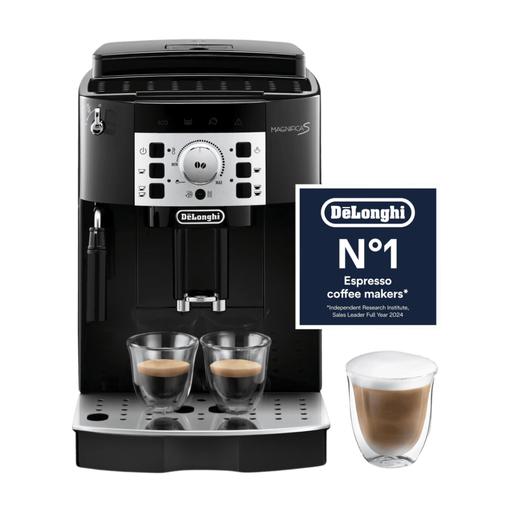
Why it suits this user profile: This fully automatic coffee machine grinds beans, accepts ground coffee and has a manual steam wand for making cappuccino. It offers basic flexibility without a milk reservoir.
The product specifications state that it has a removable brewing unit and a 1.8-litre water tank. You can therefore maintain the machine yourself and refill it less often.
15 bar pump pressure, two cups at once, adjustable grind size and a width of 23.8 cm.

Why it suits this user profile: According to the product description, this model offers 20 coffee recipes, two user profiles and a LatteGo system for milk-based drinks. This makes it suitable for households with different preferences.
According to the product information, the milk components can be cleaned under the tap or in the dishwasher in around 10 seconds. However, check the exact variant before buying.
Ceramic grinder, 12 grind settings, QuickStart function and automatic recipes for hot and cold coffees.
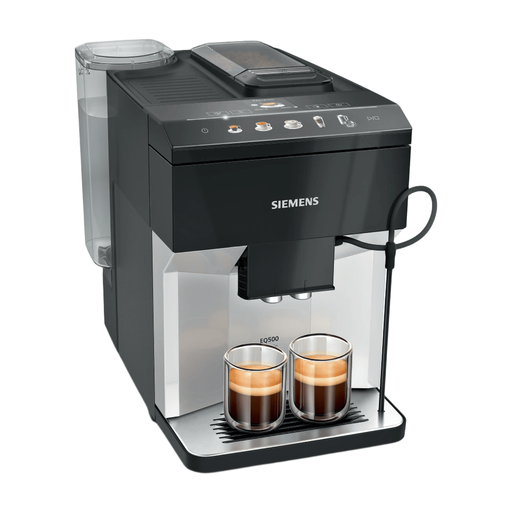
Why it suits this user profile: The oneTouch function, cappuccinatore milk system and ability to prepare coffee, latte and cappuccino make it suitable for everyday use by several coffee drinkers.
The brewing unit is removable and the machine provides cleaning and descaling instructions. According to the operating instructions, the milk system must nevertheless be rinsed through daily.
15 bar pump pressure, ceramic grinding discs, stated noise level of 69 dB and oneTouch operation.
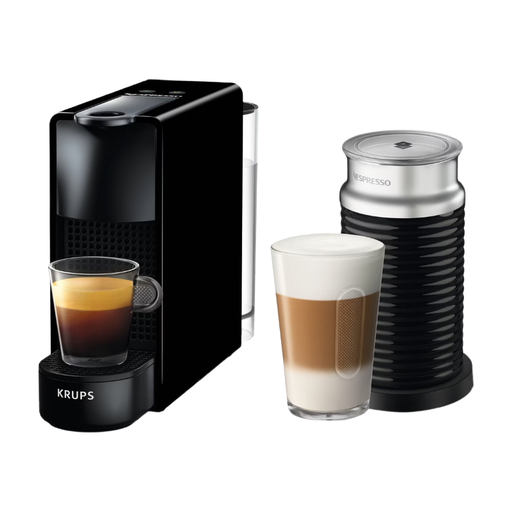
Why it suits this user profile: This compact capsule model is suitable for a small kitchen, home office or student room where speed and simple operation are the top priorities.
The dimensions are compact and, according to the product description, the machine heats up in 25 seconds. Bear in mind that it has a smaller reservoir and is compatible with Nespresso Original capsules.
19 bar system, two adjustable cup sizes, Aeroccino3 milk frother and automatic switch-off.
We have put together a complete, up-to-date list of products that fully meet these strict selection criteria and the applicable European safety regulations.
Rinse the coffee outlet and drip tray regularly, and empty the coffee-grounds container as soon as the machine indicates that it is full. Clean the brewing unit according to the manual. If the machine has a milk frother, it is best to clean it after every use to remove milk residue. Descale the machine when it indicates that this is necessary or when the water hardness requires it.
In addition to the purchase price, you will pay for coffee beans, water, filters, cleaning tablets and descaler. Capsules can work out more expensive per cup, while bean-to-cup machines require more maintenance. So do not just compare the price of the machine; also consider the expected number of cups per day and the cost of consumables.
The lifespan depends on usage, maintenance, water quality and the availability of spare parts. A machine that is cleaned and descaled regularly is less likely to develop problems caused by coffee residue or limescale. Keep the manual and check in advance which service and guarantee terms apply to the model.
