
Vandaag of morgen in huis

Kwaliteit gegarandeerd

Welkomstaanbiedingen ontgrendelen: GRATIS bezorging | Tot 80% korting | Gratis 30 dagen JoyPlus-proefperiode
Download de app
A descaler may seem like a straightforward cleaning product, but choosing the wrong one can be costly. A product for the bathroom is not automatically suitable for a coffee maker. Conversely, a coffee machine descaler is often not intended for taps, tiles or shower screens.
Households in the Netherlands also have to contend with different levels of water hardness. As a result, limescale can build up more quickly in a kettle, espresso machine, shower head or washbasin. Choosing the right product helps you remove existing limescale and avoid buying something that is unsuitable for the job.
Some packaging states that a liquid descaler is suitable for multiple appliances. Even so, always check your coffee maker’s manual. A coffee machine may require specific doses, programmes or branded maintenance products. A powerful bathroom product may damage components, coatings or seals.
When looking for a product for a coffee appliance, search specifically for coffee maker descaler, coffee machine descaler or a product explicitly suitable for your brand and model.
A 900 ml bottle may seem like good value, but the dosage determines how many maintenance cycles you can get from it. With tablets, the key factor is how many are needed per descaling programme. So don’t just compare millilitres or the number of tablets; check the instructions for use as well.
Descalers contain acids or other active ingredients. Some products may cause skin irritation or serious eye irritation. Always read the label, use the recommended protective equipment and keep the product out of reach of children and pets. Never mix a limescale remover with bleach or other cleaning products.
Choose a product that the product description states is suitable for your appliance. Descaling tablets are convenient when the machine has a dedicated programme and you want to use a pre-set dose. A liquid descaler is practical when the manual instructs you to mix a solution with water.
Pay attention to the following:
According to De’Longhi’s own research, EcoDecalk consists of ingredients of plant origin and is intended for espresso, filter and piston machines, among others. This is a product information claim; always use your own appliance’s manual as your guide.
A kitchen limescale remover may be suitable for kettles or other appliances, but this varies from product to product. Check whether the product is intended for use with appliances and whether it must be rinsed off thoroughly after use.
A water filter for limescale prevention works preventively rather than removing existing limescale. Filter cartridges such as BRITA Maxtra Pro Extra are intended for compatible BRITA water filter jugs. The product information states a capacity of 150 litres and replacement after four weeks, depending on which limit is reached first.
A bathroom descaler in spray or gel form is intended for surfaces such as taps, shower screens, tiles, washbasins and baths. Check the material restrictions carefully. Acid-sensitive natural stone, some metals, coatings and delicate finishes may not be suitable.
For stubborn deposits, a gel can be left in place for longer. A spray works more quickly on larger surfaces and is convenient for regular maintenance. Ventilate the room and prevent the product from drying out if the packaging instructs you to do so.
The statement “for coffee makers” is not enough if you own a fully automatic espresso machine. Check the system type: fully automatic, filter machine, piston machine or Tassimo appliance. For bathroom use, check which surfaces the product is approved for.
Calculate the cost per descaling cycle. According to the product information, a pack of 36 JURA tablets is sufficient for 12 descaling cycles when using three tablets per cycle. The JURA pack containing nine tablets is described as suitable for three cycles.
For liquids, the pack size and recommended dilution are decisive. The De’Longhi EcoDecalk DLSC500 contains 500 ml and is stated in the product information to be suitable for five applications. The Philips Saeco CA6700/10 contains 250 ml. The actual usage period depends on the appliance and the instructions.
Never choose a product based solely on its acidity or a marketing name. Follow the instructions on the label and in the appliance manual. For surfaces, it is advisable to test the product on an inconspicuous area first. After the cycle, rinse coffee appliances according to the prescribed steps to ensure that no residue remains in the water system.
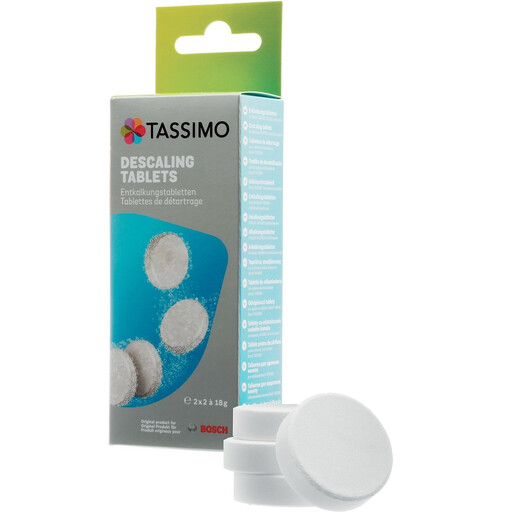
Why it suits this profile: This compact pack is specifically intended for Tassimo appliances, helping you avoid using a general descaler at the wrong dosage.
The product description lists Tassimo appliances as a suitable application. Check the exact model in your manual before ordering.
Tablet format, compact packaging and an explicit connection with Bosch Tassimo systems.
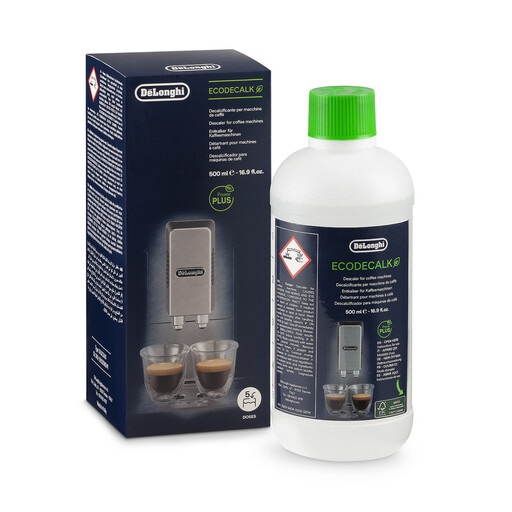
Why it suits this profile: Convenient for users looking for a liquid descaler for several types of De’Longhi coffee systems.
The description lists the suitable machine types and a volume of 500 ml. The dosage still depends on the appliance manual.
Liquid formula, 500 ml capacity and, according to the product information, suitability for espresso, filter and piston machines.
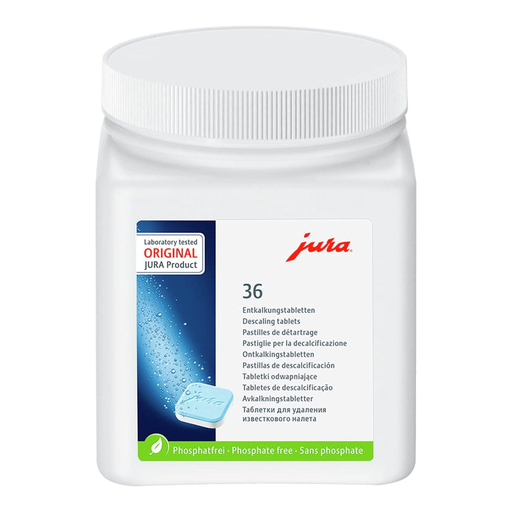
Why it suits this profile: The large pack is ideal for households that regularly maintain a JURA fully automatic coffee machine.
The pack contains 36 tablets and the product information states that it provides 12 descaling treatments. This makes the dosage easy to manage.
36 tablets, suitable for JURA fully automatic machines and, according to the description, a phosphate-free formula.
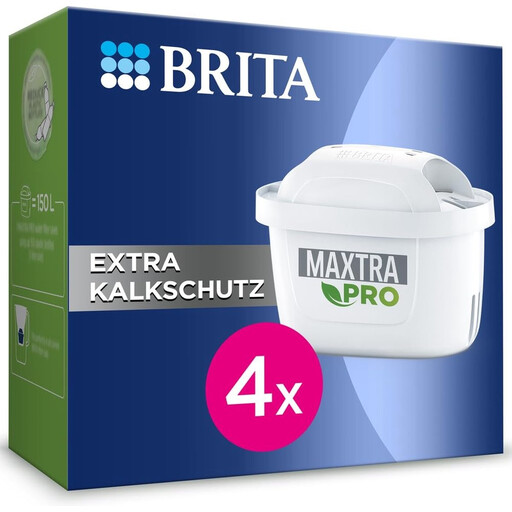
Why it suits this profile: These filters are intended for preventative use in a compatible BRITA water filter jug.
It is not a substitute for a descaling cycle. Use it beforehand to help limit limescale formation in water and appliances.
Four cartridges, a 150-litre capacity according to the product details and compatibility with the BRITA PerfectFit system.
We have put together a complete, up-to-date list of products that fully meet these strict selection criteria and the applicable European safety regulations.
This depends on the water hardness, the number of cups prepared and the manufacturer’s instructions. An appliance with a built-in descaling programme may display a notification automatically. Don’t rely solely on the notification if you notice clear limescale deposits or a change in the flow rate.
Neither format is suitable for every appliance. Tablets provide a fixed dose and are practical for machines with a dedicated programme. Liquid is convenient when the manual specifies a diluted solution. Always check compatibility and the number of cycles required.
This is not recommended unless the manufacturer expressly permits it. Bathroom descaler may leave behind odours or product residue and is not automatically suitable for a coffee appliance’s internal water system. For a coffee machine, use a product specifically intended for that purpose, such as De’Longhi descaler, JURA descaling tablets or Philips Saeco descaler.
